3D technology allows a business consultant to transform abstract data into virtual models. Instead of presenting a PDF with colored bars, you can show a three-dimensional prototype of a new office or an animated logistics flow. For example, to redesign a warehouse, you model the space, simulate the movement of shelving, and see bottlenecks before moving a single pallet. Key programs include SketchUp for quick sketches, Blender for detailed models, and Twinmotion for real-time virtual tours.
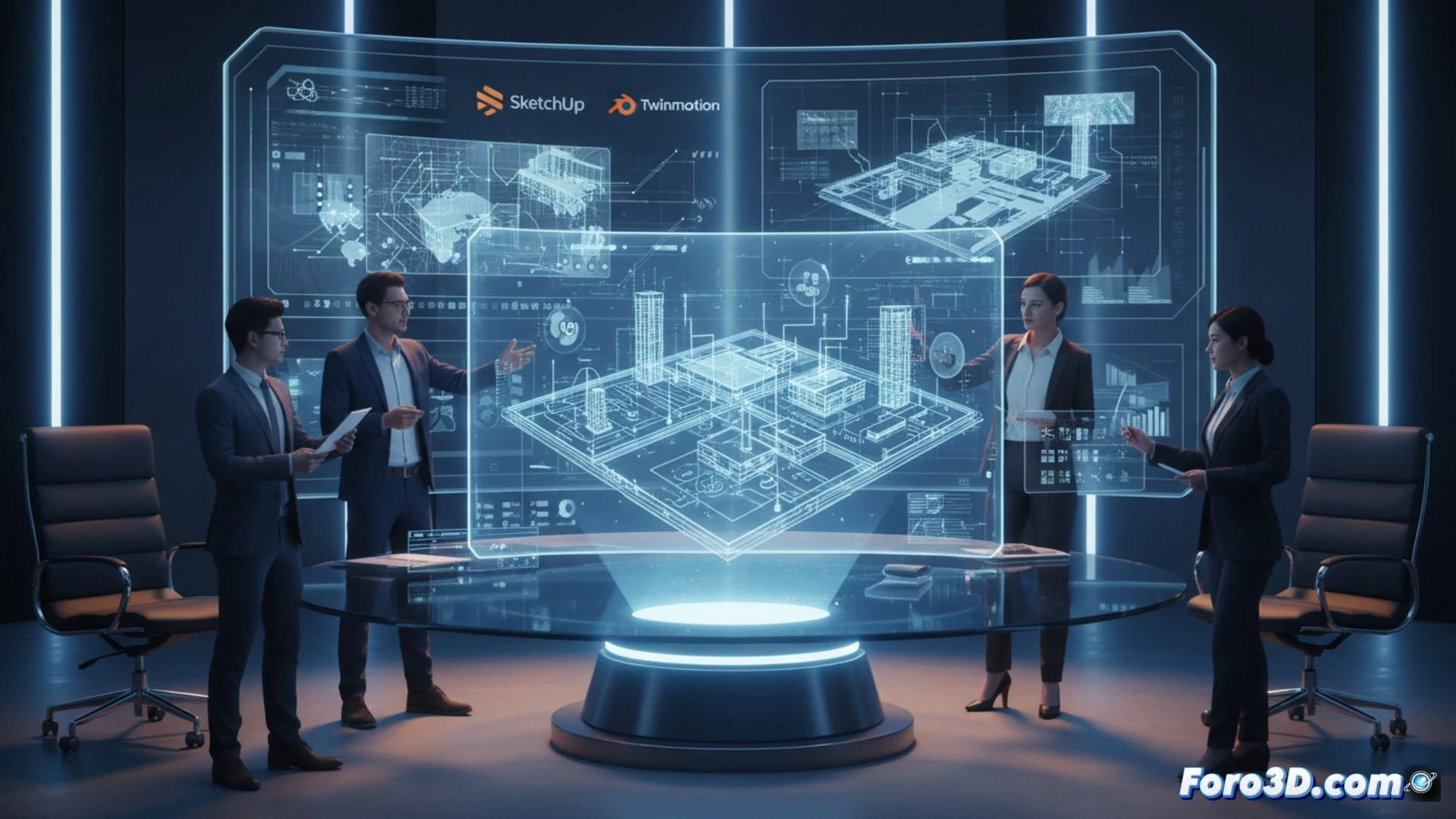
Digital prototyping: from the whiteboard to the interactive model 🚀
The technical flow starts with capturing client data (blueprints, measurements, needs). With SketchUp or Revit, you build a digital twin of the space. Then, you import that model into an engine like Unreal Engine or Twinmotion to add lights, textures, and animations. The consultant can connect a virtual reality headset (Oculus or HTC Vive) so the client can walk through the final result. If the client asks to change the layout, you modify the 3D file in minutes. Simulation software like FlexSim even allows testing flows of people or machinery within the model.
PowerPoint is stuck in the dinosaur age 🦖
Before, the consultant would arrive with their laptop, open a PowerPoint full of bullet points, and the client would nod while dreaming of coffee. Now, with a virtual reality headset, the client can walk through their future office, bump into a poorly placed table, and say: I don't like this. The consultant, from their chair, moves the table in the model and the client exclaims: now that's better. The funniest part is watching an executive try to grab a virtual object. 3D technology doesn't prevent bad advice, but at least it makes it look more real.