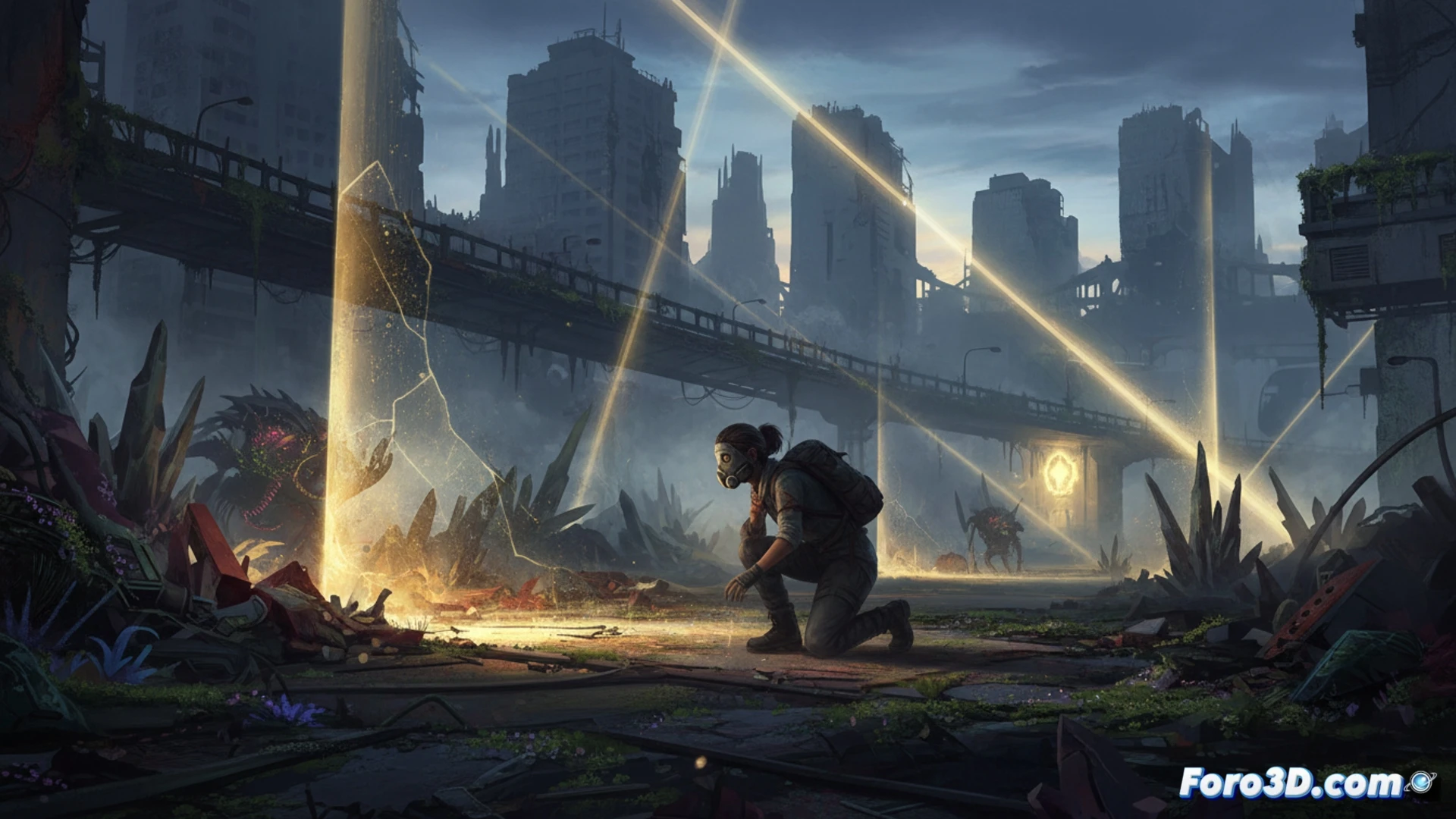
The development of A Quiet Place: The Road Ahead represents a fascinating case study on how Unreal Engine 5 can enhance environmental storytelling. The team has prioritized volumetric lighting not just as a visual embellishment, but as a gameplay tool. By utilizing UE5's VDB (Volumetric Data Blocks) system, they make every ray of light and every projected shadow dynamic, creating an oppressive atmosphere that forces the player to move cautiously, knowing that the slightest glimmer can give away their position.
Organic Workflow: From Maya to UE5 🎨
The artistic pipeline begins in Maya, where the creatures are sculpted with a high level of polygonal detail to capture the texture of their skin and the biomechanics of their limbs. Subsequently, these models are passed to Substance Painter, where PBR (Physically Based Rendering) texture maps are generated to simulate the roughness and displacement of the flesh. The real challenge occurs during import into UE5: the team applies Nanite techniques to manage high-density geometry without sacrificing performance, and uses the Lumen system so that lighting bounces off the creatures' viscous surface, generating subtle reflections that alert the player to their presence before they appear on screen.
Sound as the Development Engine 🔊
In this title, sound design is not a complement; it is the core mechanic. The team has developed a spatial audio system in UE5 that reacts to the player's physical environment. Walking on dry leaves, opening a rusty door, or breathing too heavily generates sound waves that propagate across the map. The developers explain that the graphics engine and the audio engine are synchronized to the millisecond: if the volumetric lighting detects movement, the ambient sound adjusts to simulate how that noise would travel through the geometry, forcing the level designer to think in acoustic terms before visual ones.
How is the detection of player sound managed in Unreal Engine 5 so that the stealth and narrative of A Quiet Place: The Road Ahead function without breaking immersion?
(PS: a game developer is someone who spends 1000 hours making a game that people complete in 2)