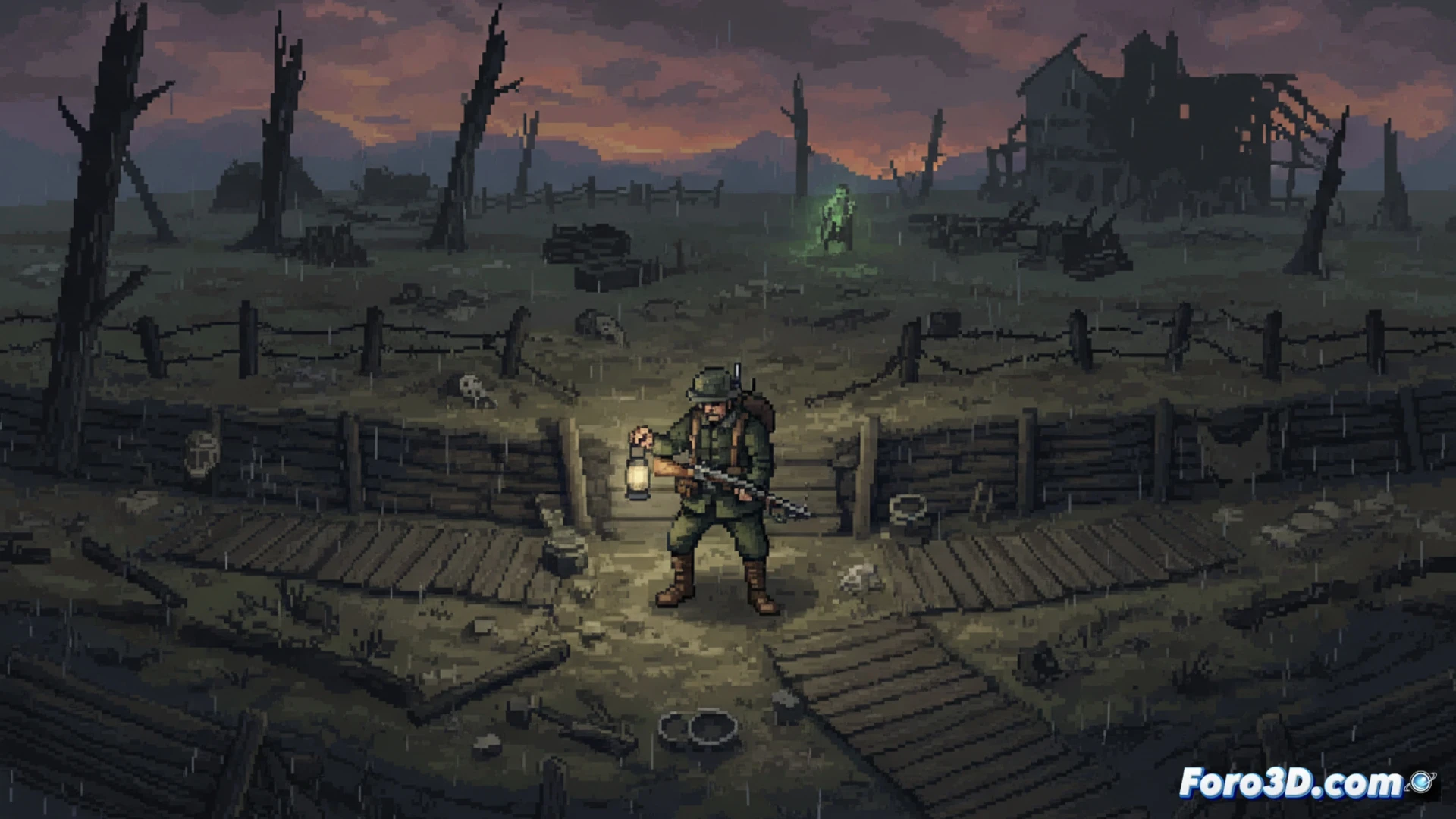
The independent survival horror game Conscript demonstrates that narrative power does not reside in the most complex engines, but in artistic direction. Developed in GameMaker Studio 2, the title opts for a 32-bit pixel art aesthetic to immerse us in the trenches of World War I. Far from polished graphics, the game exploits a muted and dirty color palette to convey the harshness of the conflict, combining a top-down perspective with the tension inherent to the genre.
Technical Pipeline: Aseprite, Photoshop, and Optimization in GameMaker Studio 2 🛠️
To achieve this look, the team combined Aseprite and Photoshop in a specific workflow. Aseprite was used for pure pixel art: character sprites, frame-by-frame animations, and the creation of modular tilesets for the trench environments. Subsequently, Photoshop came into play for palette post-processing, applying noise filters and contrast adjustments to achieve that sense of grime and wear. In GameMaker Studio 2, the technical key was the use of surfaces to apply real-time color correction shaders, allowing dynamic lighting to affect static sprites without overloading performance. A tip for indie developers: limiting the palette to no more than 16 colors per sprite helps maintain visual coherence and reduces the final file size in GameMaker.
Dirt as a Visual Language in Survival Horror 🎨
The decision to use a muted palette is not just aesthetic, but functional. In Conscript, the brown, gray, and rusty red tones not only set the World War I atmosphere but also hide vital information from the player. By eliminating vibrant colors, the player's eye is forced to scan every pixel in search of enemies or resources, mimicking the real confusion of a soldier in a trench. This approach demonstrates that, in indie development, technical limitations (such as those of GameMaker Studio 2) can become a narrative advantage if applied with a clear artistic intention.
Would you use LODs or nanite to maintain performance?