The South Korean startup Config has closed a $27 million seed round led by Samsung Venture Investment, with Hyundai Motor, LG Technology Ventures, and SKT America as co-investors, reaching a valuation of over $200 million. Its proposal is ambitious: to become the TSMC of data for robots, a specialized provider that does not compete with its clients but supplies them with the essential fuel for training foundational robotics models. 🚀
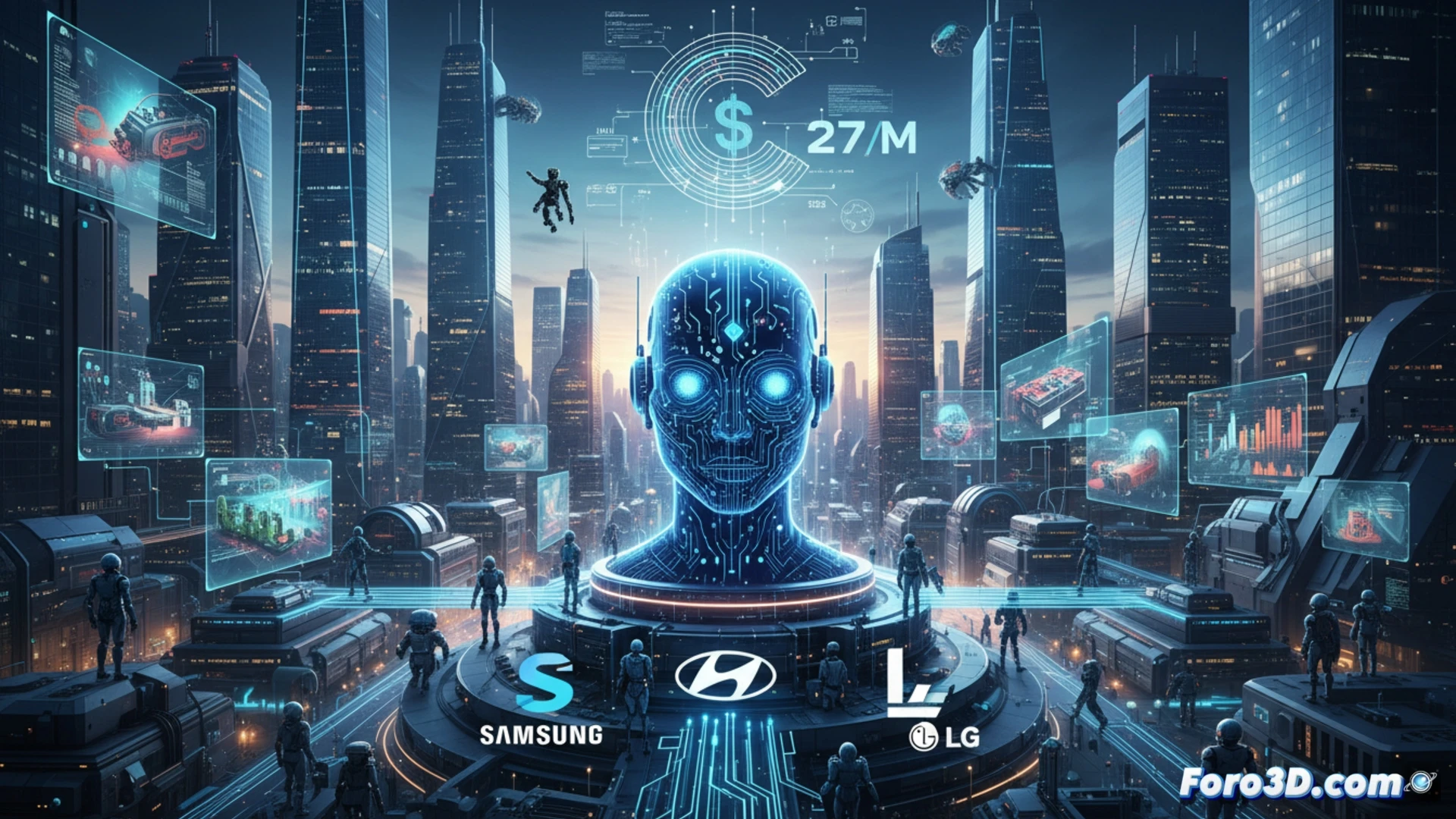
Physical vs. Digital Data: The Challenge of 3D Simulation 🤖
Unlike traditional AI, which feeds on abundant digital data extracted from the internet, robotics requires physical data generated in the real world. Every movement, every interaction with an object or surface must be captured using physical robots, test spaces, and human operators, making the process more expensive and slower. Config's key is not just accumulating data, but transforming it: they take recorded human movements and adapt them to robotic behavior before training. This normalization process is critical for 3D simulation of manufacturing environments, where models need to understand not only the geometry of a space, but the forces, frictions, and dynamics that only physical data can provide.
The Business Model That Avoids Direct Competition ⚙️
Config already has nearly 300 employees and has accumulated over 100,000 hours of human movement data. Its strategy is clear: not to build robots or software platforms that compete with its clients, but to act as the TSMC of data, offering a critical and standardized input. For manufacturers integrating 3D models into their production lines, this proposal eliminates the need to invest in costly data collection infrastructure, allowing the optimization of machine-environment interactions to accelerate without conflicts of interest.
What implications does it have for the automation industry that a startup like Config seeks to standardize the generation of robotic data, imitating TSMC's manufacturing model, and how could this affect competition among robot manufacturers and AI developers?
(PS: Simulating robots is fun, until they decide not to follow your orders.)