In a rural village near Bangalore, India, the IEEE Connecting the Unconnected program demonstrated its potential by connecting a remote community with broadband. Co-chaired by Ashutosh Dutta and Sudhir Dixit, the event featured engineer Vinay Kumar Taragi and developer Ritu Srivastava. The goal is clear: identify innovators developing solutions for the billions of people without internet access, using technologies such as community radio to expand coverage in underserved regions.
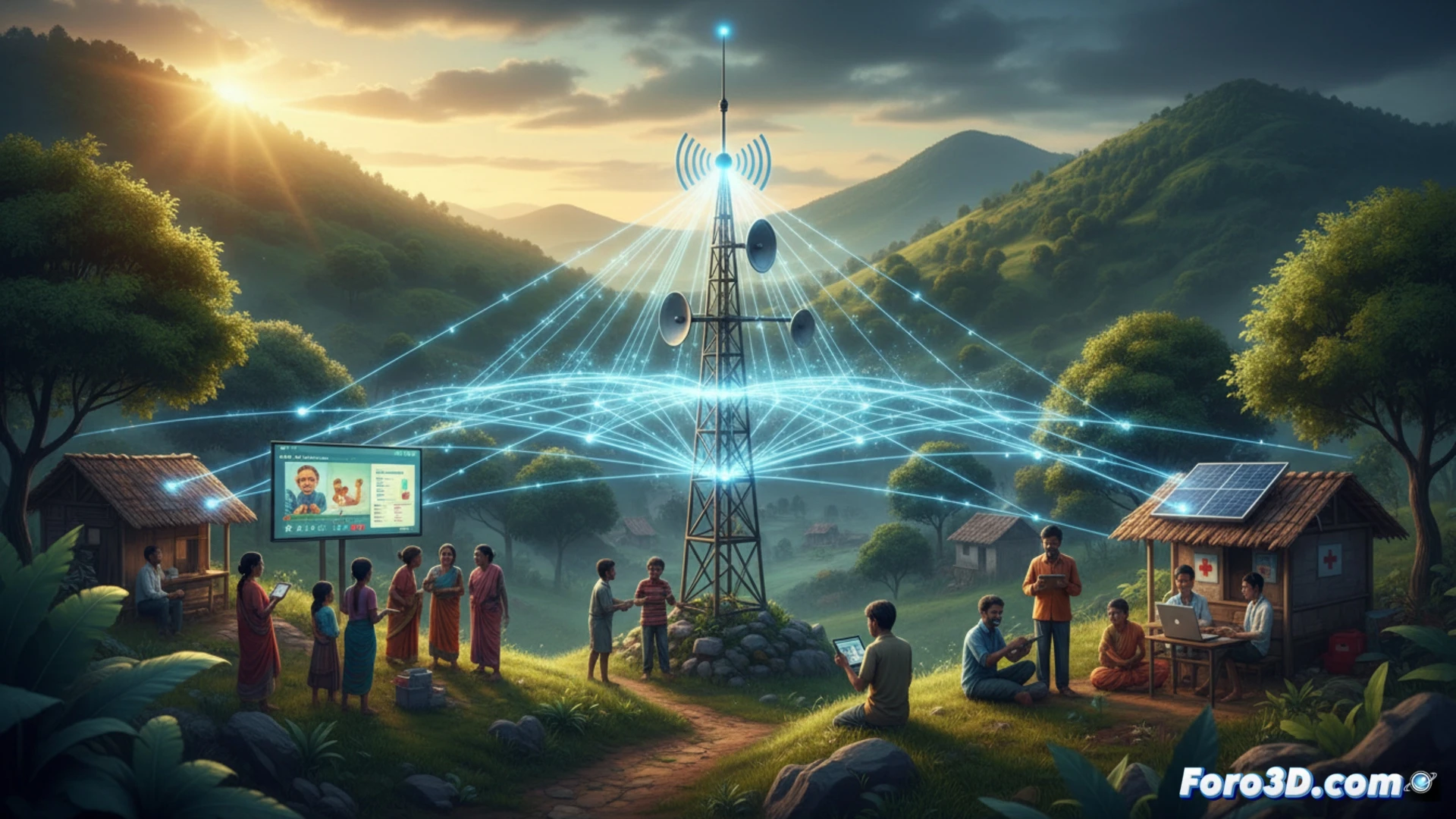
Community radio and broadband: tools against inequality 🌐
The initiative is not limited to deploying infrastructure; it seeks to enable an ecosystem where connectivity becomes a driver of social development. Community radio, for example, allows transmitting educational and health information without the need for expensive smartphones. By combining it with broadband, a hybrid bridge is created that reduces technological friction. This approach recognizes that digital inequality is not just a lack of cables, but also a lack of accessible models. Local innovators are key to adapting these solutions to specific contexts, maximizing impact on education and the economy.
The future of inclusion: AI at the service of connectivity 🤖
The program lays the groundwork for integrating artificial intelligence in the future. AI could optimize the use of the radio spectrum in communities with limited bandwidth, or translate educational content into local languages in real time. By treating connectivity as an enabling right, IEEE demonstrates that technology should be a bridge, not a barrier. Collaboration between engineers and communities is the first step to ensure the digital revolution leaves no one behind, transforming remote villages into active nodes of the digital society.
As a fundamental right, connectivity can redefine digital inclusion, but how does IEEE's plan ensure that communities like the rural village near Bangalore not only access the network but also develop technological sovereignty and avoid dependence on external infrastructures?
(PS: trying to ban a nickname on the internet is like trying to cover the sun with a finger... but in digital)