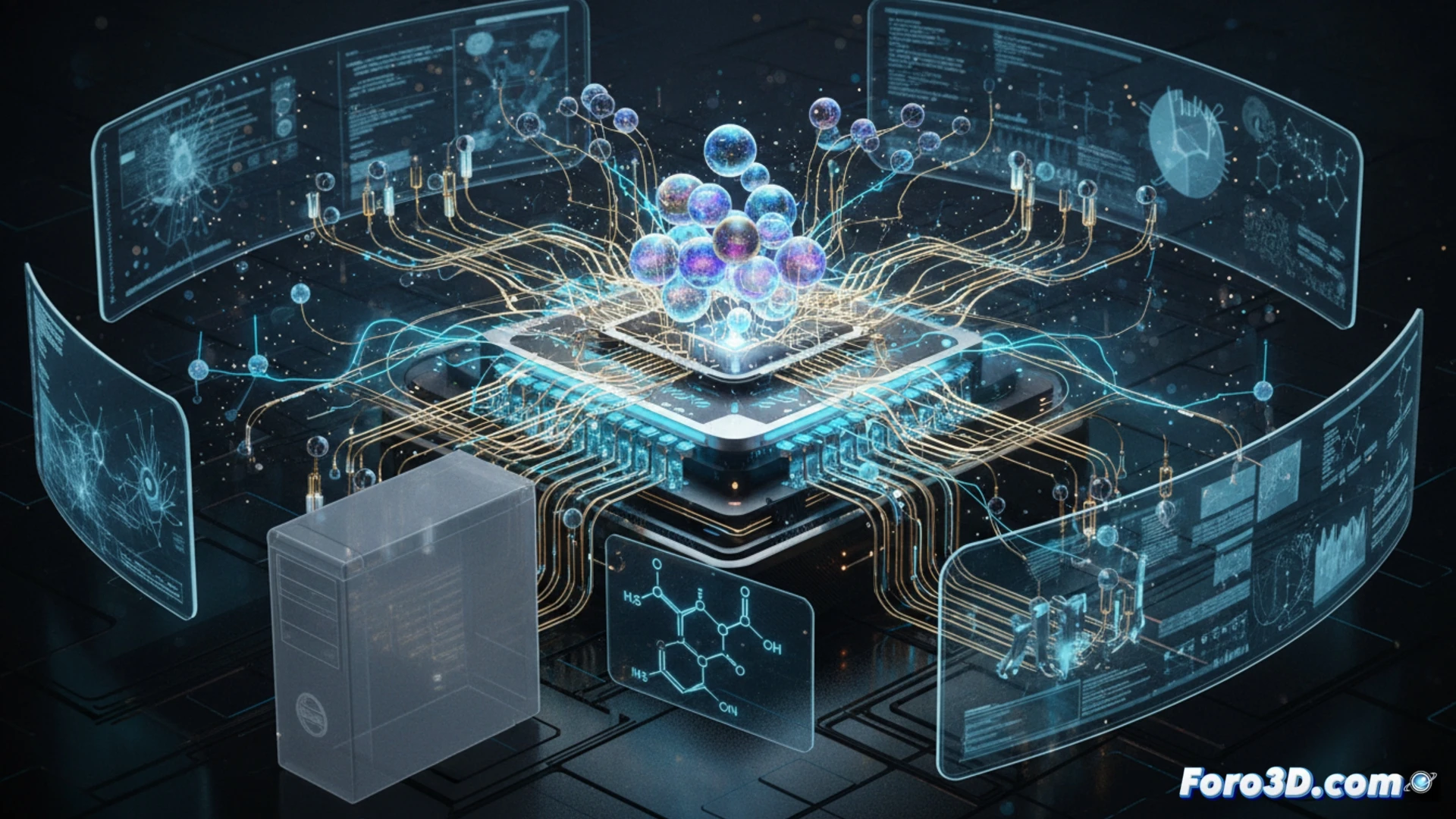
Quantum computing advances supported by principles such as superposition and entanglement, where qubits can be 0 and 1 at the same time. This capability allows exploring multiple paths in parallel, surpassing classical bits in very specific problems. Although it will not replace your home computer, it promises to revolutionize areas like drug design and new materials, efficiently simulating complex molecules such as caffeine.
Stable qubits: the great technical challenge of the industry ⚛️
Maintaining stable qubits remains a considerable technical obstacle due to their extreme sensitivity to environmental noise. Tech giants, with investments exceeding $35 billion, compete to achieve a fault-tolerant quantum computer. Google, IBM, and Microsoft research different platforms, from superconductors to trapped ions. The first practical impact for users will not be in daily processing, but in cryptography, where this technology could redefine current digital security.
Your PC is not going to turn into a qubit (don't worry) 🖥️
No, you are not going to replace your desktop tower with a cabinet full of magnets and liquid helium. Quantum computing will not be used to open the browser faster or to make Word load without pauses. Its true utility lies in simulating molecules, not in running your text editor. Meanwhile, tech giants invest astronomical sums so that, someday, we can say that caffeine is simulated on a quantum computer, even though you still drink it from a regular cup.