The tax inspector operates on the border between regulatory compliance and social pressure. Their work, essential for tax collection, entails specific occupational risks: chronic stress from tight deadlines, direct threats from hostile taxpayers, traffic accidents during travel to companies and homes, eye strain from long hours in front of screens, and mental overexertion derived from analyzing large volumes of financial data. This article analyzes how digital compliance tools and 3D visualization can transform the management of these hazards.
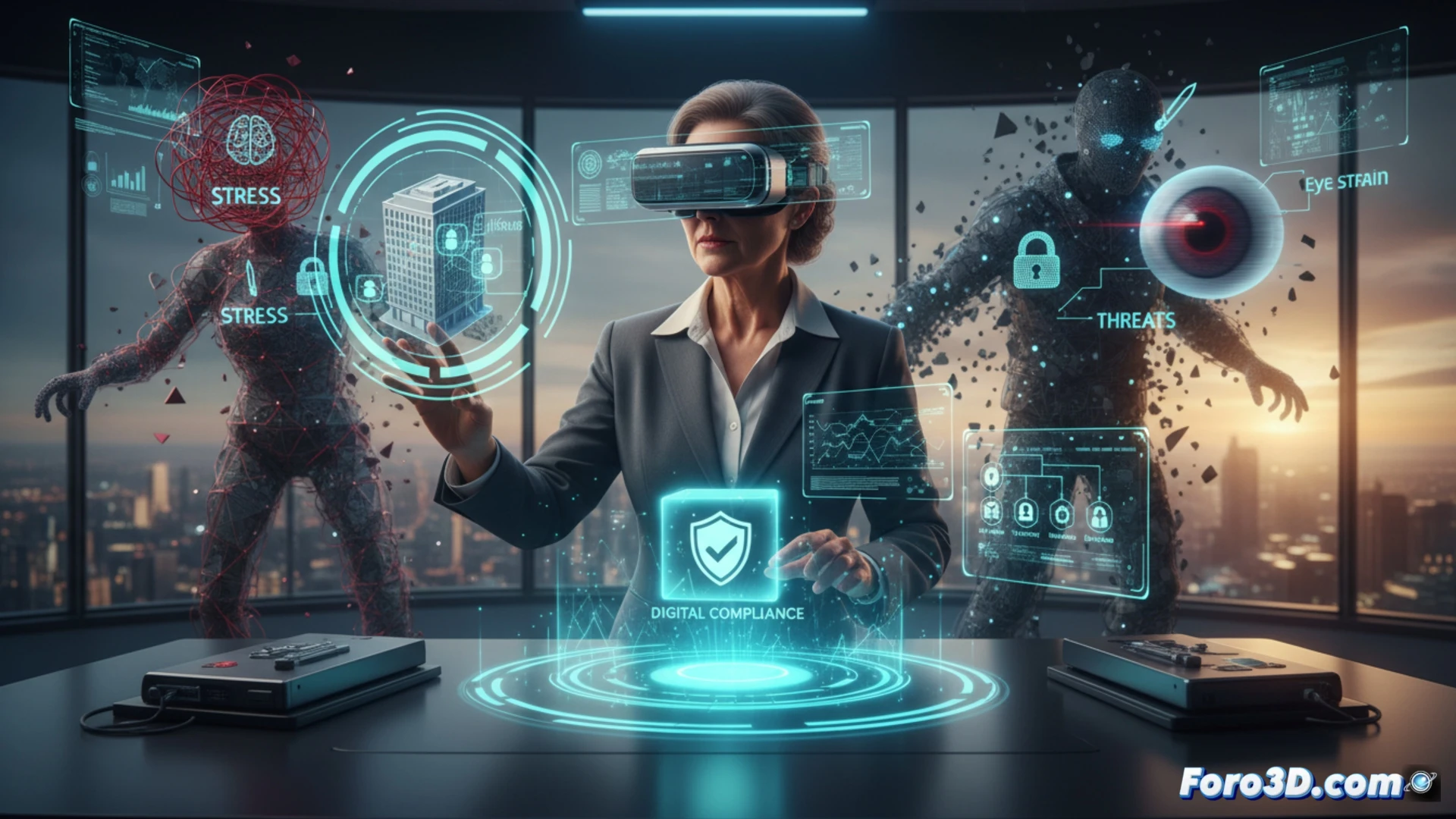
3D mapping of risk scenarios: travel, interactions, and mental load 🚗
Three-dimensional modeling technology allows for the creation of digital twins of inspection routes. By simulating travel to companies and homes in 3D, it is possible to identify blind spots in road safety, calculate traffic exposure times, and predict high-risk accident zones. Similarly, virtual environments can be designed to reproduce conflictive interactions with taxpayers, training the inspector in verbal de-escalation techniques and activation of security protocols. Finally, volumetric visualization of the workload (files, legal deadlines, tax data) allows for detecting peaks of mental stress and redistributing tasks through predictive compliance algorithms, reducing cognitive overexertion.
Legal simulation and alerts: the future of inspector protection ⚖️
Integrating a 3D legal process simulation system offers a double advantage. On one hand, it allows the inspector to virtually rehearse the phases of a conflictive inspection, from notification to potential litigation, identifying regulatory loopholes. On the other hand, a digital compliance panel can issue real-time alerts when a taxpayer's behavior patterns (history of threats, prior appeals) exceed a risk threshold. Thus, technology not only protects the physical and mental integrity of the official but also strengthens the tax compliance system itself.
How can digital compliance transform the relationship between the tax inspector and social pressure to mitigate legal risks in 3D environments
(PS: at Foro3D we know that the only compliance that works is the one tested beforehand, not afterwards)