The role of DevOps has become a cornerstone of digital transformation, but its operational model, based on continuous integration and permanent deployments, generates critical exposure to psychosocial risks. From the perspective of digital compliance, stress from on-call duties, eye strain, and burnout are not just health issues but potential violations of occupational risk prevention regulations (LPRL) and digital disconnection laws. We analyze corporate obligations to mitigate these risks in technological environments. ⚖️
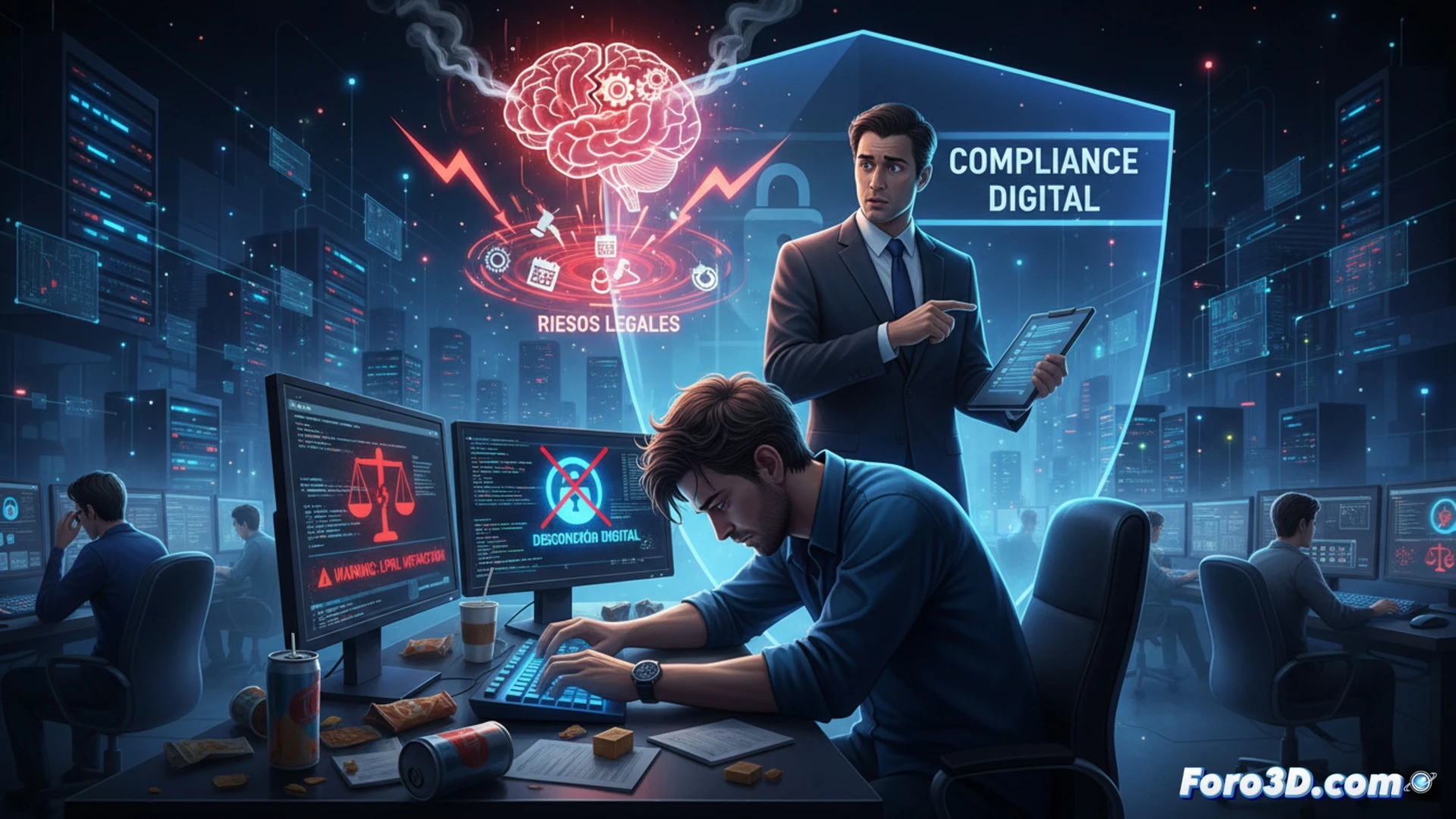
Psychosocial Risk Assessment and Mental Load in CI/CD Environments 🧠
The DevOps methodology subjects workers to constant pressure due to the immediacy of deployments. Regulations require a specific assessment of psychosocial risks, a blind spot in many tech companies. Failure to comply with the obligation to guarantee digital disconnection after nighttime on-call duties or during weekends can lead to sanctions for violating the right to privacy and health. From a technical perspective, visualizing workflows through 3D diagrams of work hours allows identifying activity peaks that exceed legal fatigue thresholds, constituting key expert evidence in litigation for workplace accidents or occupational diseases derived from burnout.
Managing Eye Strain as an Unavoidable Preventive Obligation 👁️
Office work with screens, intensified by long hours of debugging and monitoring, is not a mere ergonomic detail. It is a primary legal obligation. The company must enforce mandatory active breaks and periodic ophthalmological check-ups, as well as adapt lighting and furniture under the framework of Royal Decree 488/1997. Ignoring eye strain and a sedentary lifestyle in a DevOps team is exposing oneself to claims for damages. Prevention is not just a good practice; it is a compliance requirement that protects both the employee and the company from legal contingencies.
Can the burnout of a DevOps team be considered a breach of a company's digital compliance obligations, especially when continuous on-call duties generate errors in critical deployments?
(PS: verification systems are like print supports: if they fail, everything collapses)