The rise of blockchain technology has created a critical yet vulnerable job profile: the specialist in smart contract development and decentralized networks. This highly demanded profession exposes the worker to specific psychosocial and physical risks that, from the perspective of digital compliance, require rigorous auditing. Stress over the security of digital assets, market volatility, and tight deadlines combine with long hours in front of screens, generating eye strain, a sedentary lifestyle, and a high risk of burnout.
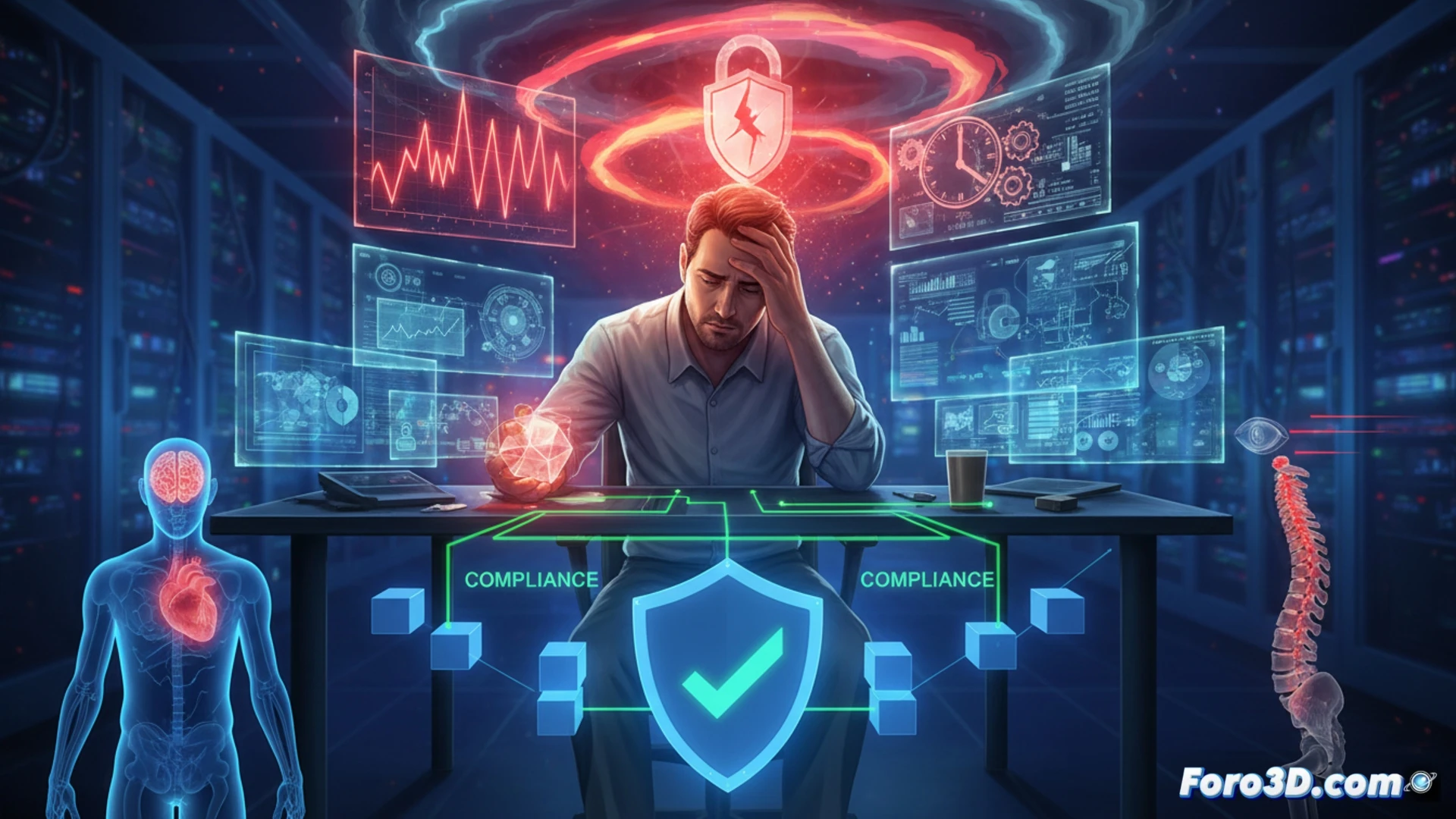
LPRL verification framework for blockchain environments 🛡️
The Occupational Risk Prevention Law (LPRL) requires job evaluation even in remote settings. For a blockchain specialist, digital compliance must verify three axes. First, mental load: managing private keys and code auditing require extreme concentration. Second, ergonomics: regular teleworking dilutes furniture supervision. Third, time management: the immediacy of transactions and network updates force extended hours. We propose using 3D simulations of the workstation to model equipment layout, lighting, and interruption flows, allowing for precise assessment of eye strain and musculoskeletal disorders before they become chronic.
The hidden cost of decentralization 💻
The paradox of the blockchain specialist is that they work for decentralized systems but suffer from a centralization of responsibility. Anxiety over a security breach or an error in a smart contract is a burden that compliance must mitigate through task rotation protocols and mandatory breaks. It is not just about complying with the law, but understanding that the developer's mental health is the most valuable asset in a sector where a single human error can compromise millions. 3D simulation does not only evaluate chairs and monitors; it also measures cognitive tension in crisis scenarios, a step forward in real prevention.
How can a digital compliance program mitigate the legal and ethical risks arising from the blockchain specialist's responsibility in auditing self-executing smart contracts?
(PS: fines of €79,380 are like failed renders: they hurt more the longer you've been at it)