The return of real-time strategy (RTS) is a reality, and Tempest Rising positions itself as the spiritual successor to Command & Conquer, but with modern technology. Developed in Unreal Engine 4, this title demonstrates that Epic Games' engine is not just for shooters, but can render entire armies with realistic physical explosions and multi-layered lighting that defines the battlefield. For indie developers, the project is a case study on how to combine open-source tools and middleware to achieve a AAA finish without a massive budget.
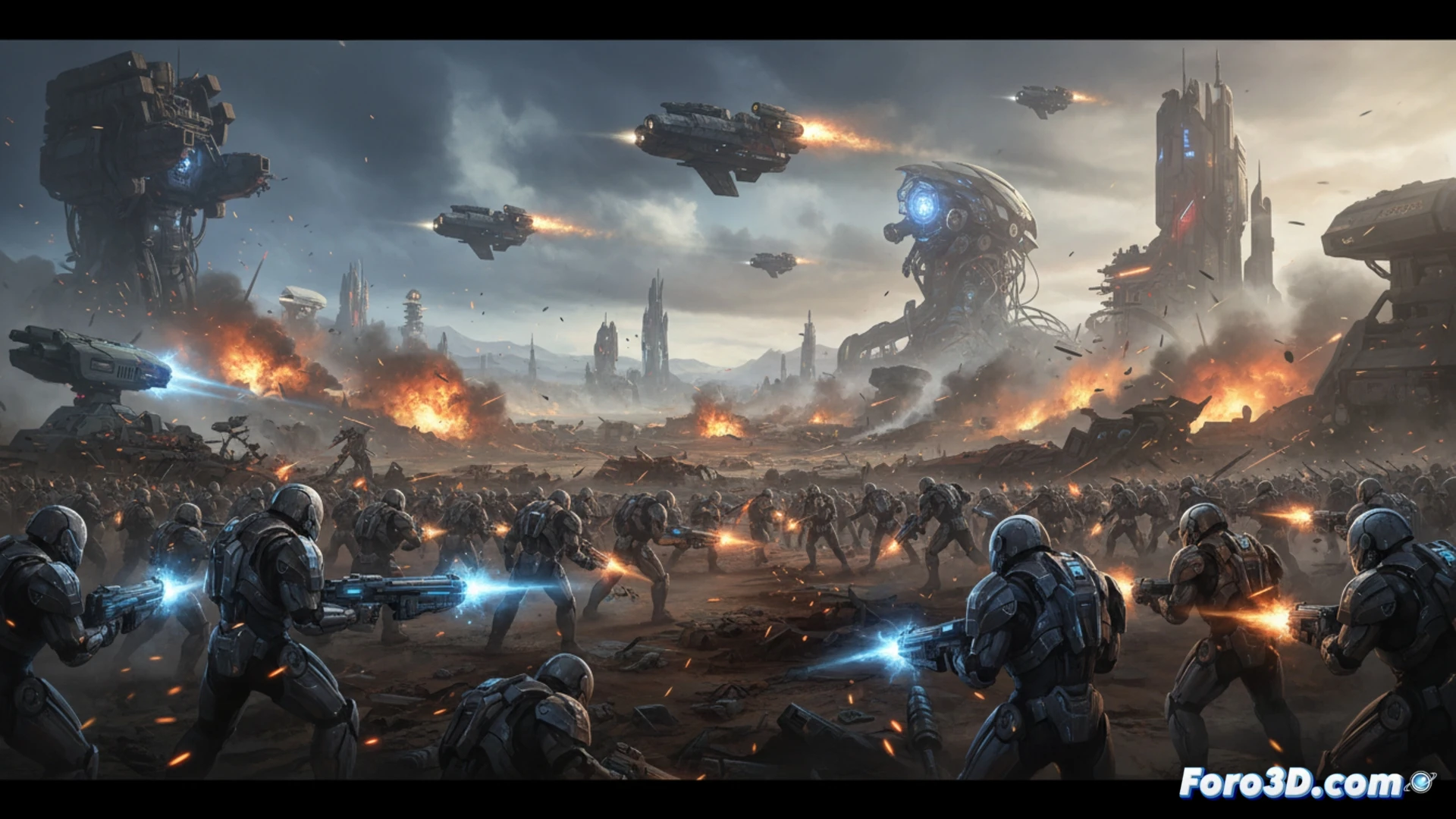
Technical Pipeline: From Blender to Multi-Layered Lighting 🛠️
Tempest Rising's workflow is a manual for any small studio. Military units are modeled in Blender, prioritizing a legible silhouette from the typical isometric RTS camera. Subsequently, Substance Painter applies textures with tactical wear and camouflage, exporting normal and roughness maps directly into the engine. The technical trick lies in Unreal Engine 4's multi-layered lighting: dynamic lights for projectiles are combined with a static lightmap system for buildings, achieving soft shadows without sacrificing performance. For explosions, particles with mesh destruction physics are used, simulating debris that interacts with the terrain in real-time. Key tip: use UE4's Level Streaming system to load only the visible map tiles, avoiding frame drops in extensive scenarios.
Lessons for the Indie RTS Developer 💡
Tempest Rising shows that the visual style of Command & Conquer is not nostalgia, but a functional design choice. For indies, the priority must be visual clarity: models with contrasting silhouettes and textures that read well at low screen resolution. Avoid excessive polygon detail; instead, invest in post-processing shaders that simulate desert heat or battle haze. Finally, do not underestimate Substance Painter: good procedural texturing can make a 500-polygon model look like a 5000-polygon one, optimizing performance for the massive unit waves that define the genre.
How does Tempest Rising manage to capture the essence of the classic Command & Conquer RTS using Unreal Engine 4 without sacrificing traditional game mechanics for modern graphics?
(PS: optimizing for mobile is like trying to fit an elephant into a Mini Cooper)