3D technology is changing the craft of the editorial publisher, allowing the creation of physical prototypes of covers, pop-up book mockups, or tactile reliefs for special editions. A clear example: a publisher can print a cover with textures and raised letters to evaluate its visual and tactile impact before mass production. Necessary programs include Blender for modeling, Fusion 360 for parametric design, and Cura or PrusaSlicer for preparing the print.
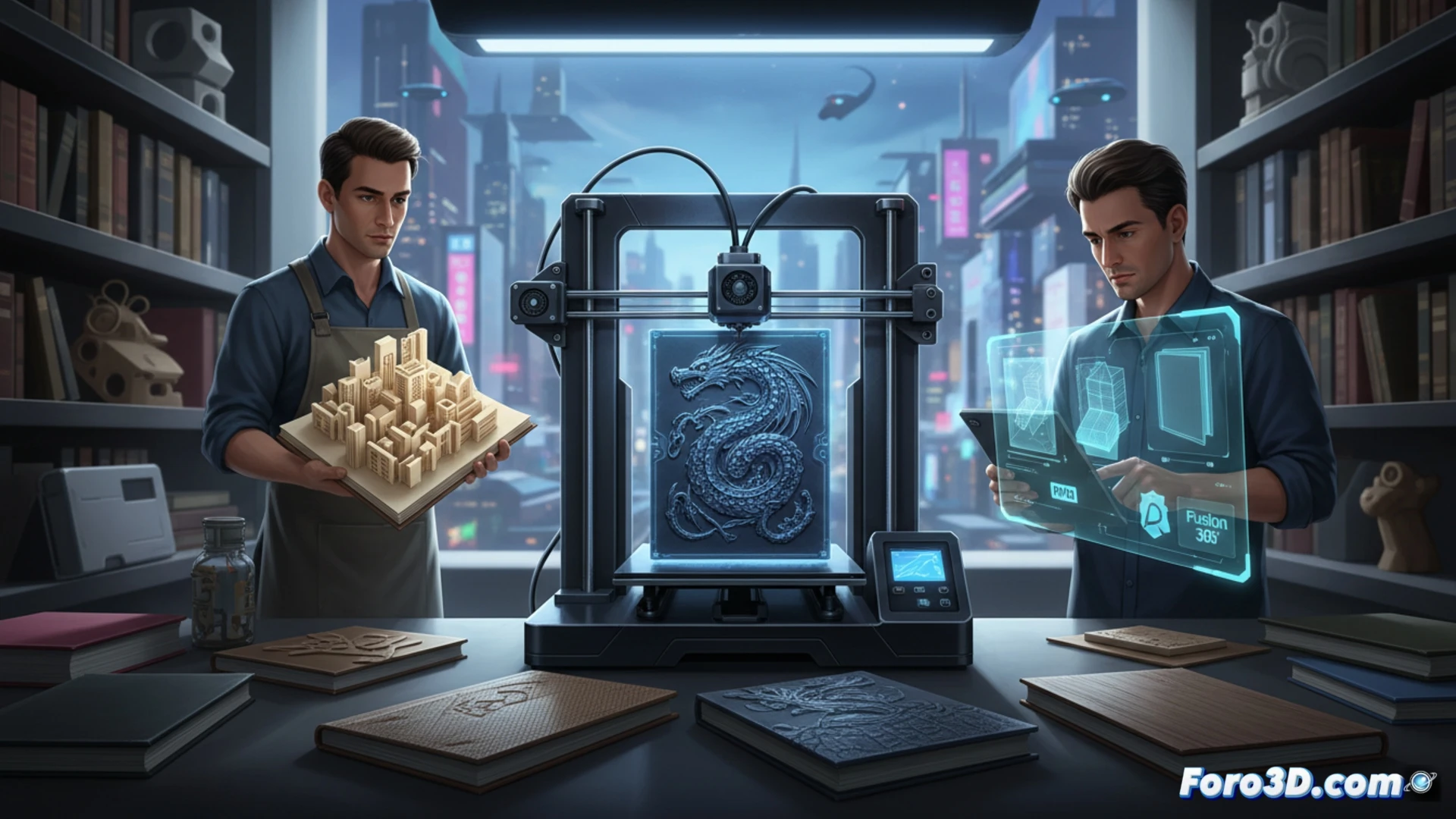
Tactile editing: from digital file to real prototype 🖨️
The workflow is straightforward. The cover or graphic element is modeled in 3D software, exported as an STL or OBJ file, and processed in a slicer. Materials like PLA, flexible resin, or wood-finish filament allow simulating final textures. The publisher can adjust thicknesses, relief angles, and bindings for bookbinding. A printer like the Prusa MK4 or an Anycubic Photon M3 offers enough precision for details of 0.1 mm, ideal for small letters or complex patterns.
The publisher who is now also a filament plumber 🔧
Because yes, now in addition to correcting typos and arguing with authors about commas, the editorial publisher must learn to unclog a blocked nozzle and complain that the print came off the bed. The dark side of 3D technology is that you will spend more time leveling the bed than deciding on the spine thickness. But hey, at least you can justify buying a printer by saying it's for work, even if you later print a GTA squid to decorate the meeting table.