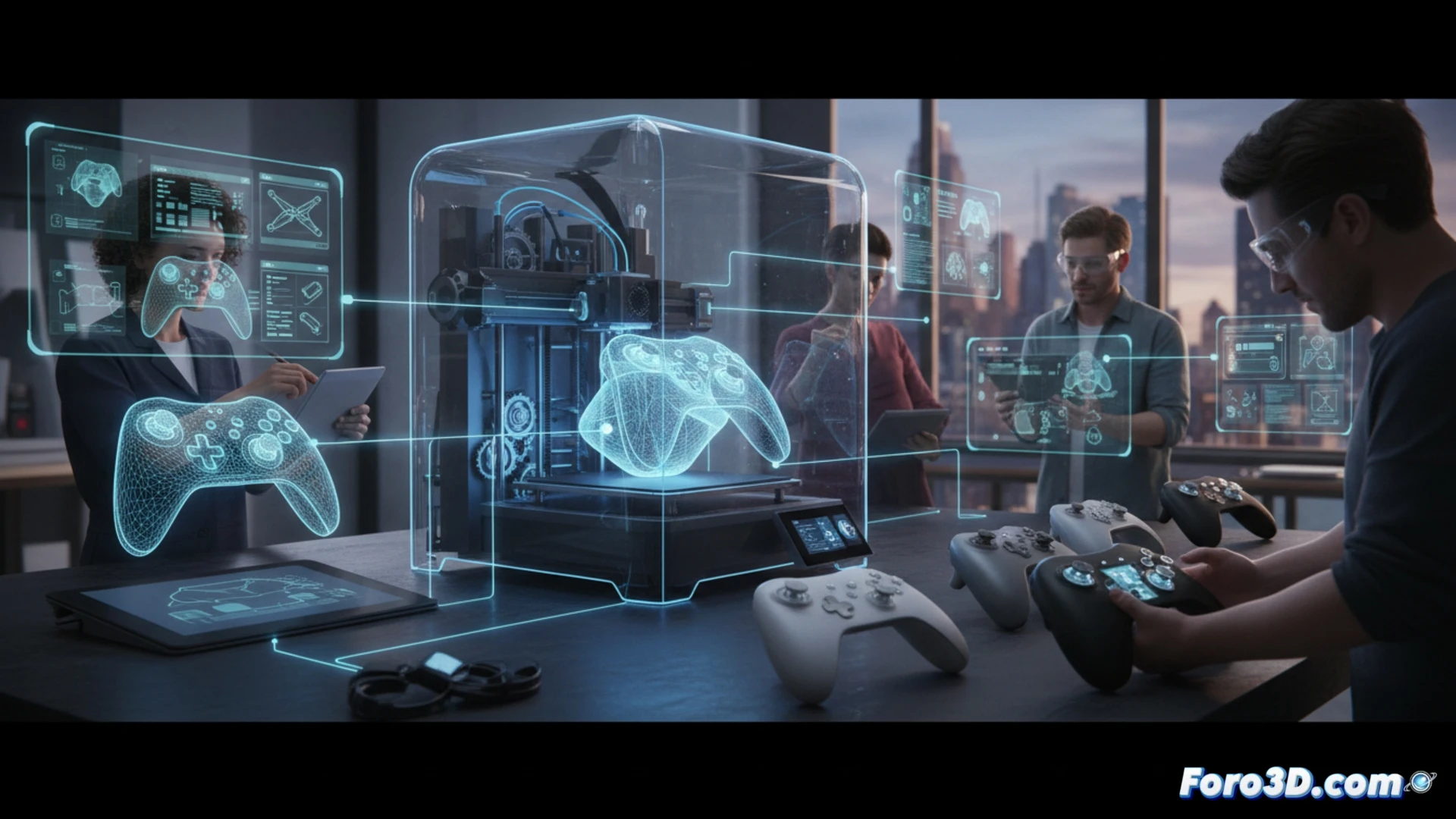
UX design is associated with screens, but the physical world also matters. 3D technology allows for creating tactile mockups of interfaces, such as controls or panels, that can be tested before manufacturing. It's not fiction; it's a real tool for validating ergonomics and user experience with tangible objects.
Haptic prototyping with 3D modeling for UX 🖐️
A clear example: designing a drone controller. With Blender or Fusion 360, you model the volume, buttons, and curvature. You export it to STL and print it with an FDM printer like the Prusa MK4. In hours, you have a physical prototype to test grip, weight, and accessibility. Programs like Tinkercad are suitable for beginners, while Rhino 3D offers precision for complex curves. User feedback is obtained with the object in hand, not on a screen.
The day my 3D prototype asked for a coffee ☕
Sure, it all sounds very serious until you print a controller with the buttons reversed and the user drops it as if it were burning. The magic of 3D is that you can fail cheaply and quickly. My first prototype looked like a brick with bumps. The good thing is that, unlike a screen, you can bang it against the table without breaking your digital pride. The user tells you clearly: not even my grandma could grip this. And you have a physical piece to cry over while you redesign.