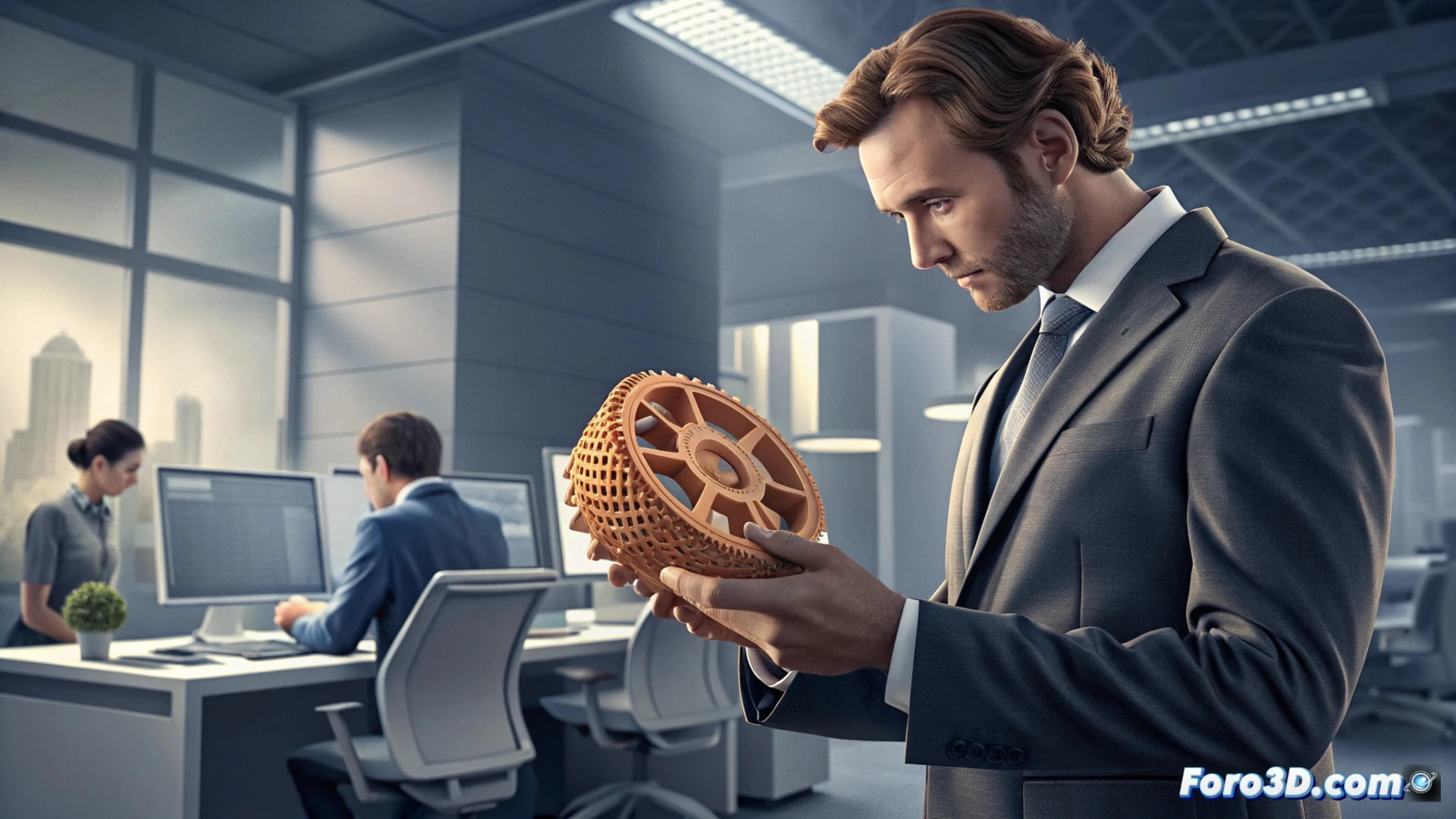
Salespeople no longer rely solely on flat catalogs or expensive physical samples. 3D technology enables the creation of realistic prototypes, interactive models, and virtual presentations that shorten sales cycles. A clear example: an industrial machinery salesperson can show a 3D-printed spare part in the client's office, avoiding factory wait times and reducing technical objections.
Key software for rapid commercial prototyping 🚀
To operate in this new scenario, the salesperson needs accessible software. Fusion 360 allows modeling functional parts and exporting them directly to 3D printers. Blender is useful for product visualizations with realistic textures. For interactive presentations, SketchUp or Tinkercad offer short learning curves. The basic workflow: design in CAD, slice with Cura or PrusaSlicer, and present the physical object or a rendered animation using Keyshot.
When the client asks for a 3D sample and you have to print it 😅
The modern salesperson discovers that their biggest enemy is no longer the competition, but the printer's clogged nozzle right before the visit. Sure, you can promise a part in 24 hours, but you forget the filament ran out and the bed isn't level. In the end, you show up with a calibration cube instead of the promised gear. Sure, at least the client is amazed by the smell of burnt plastic.