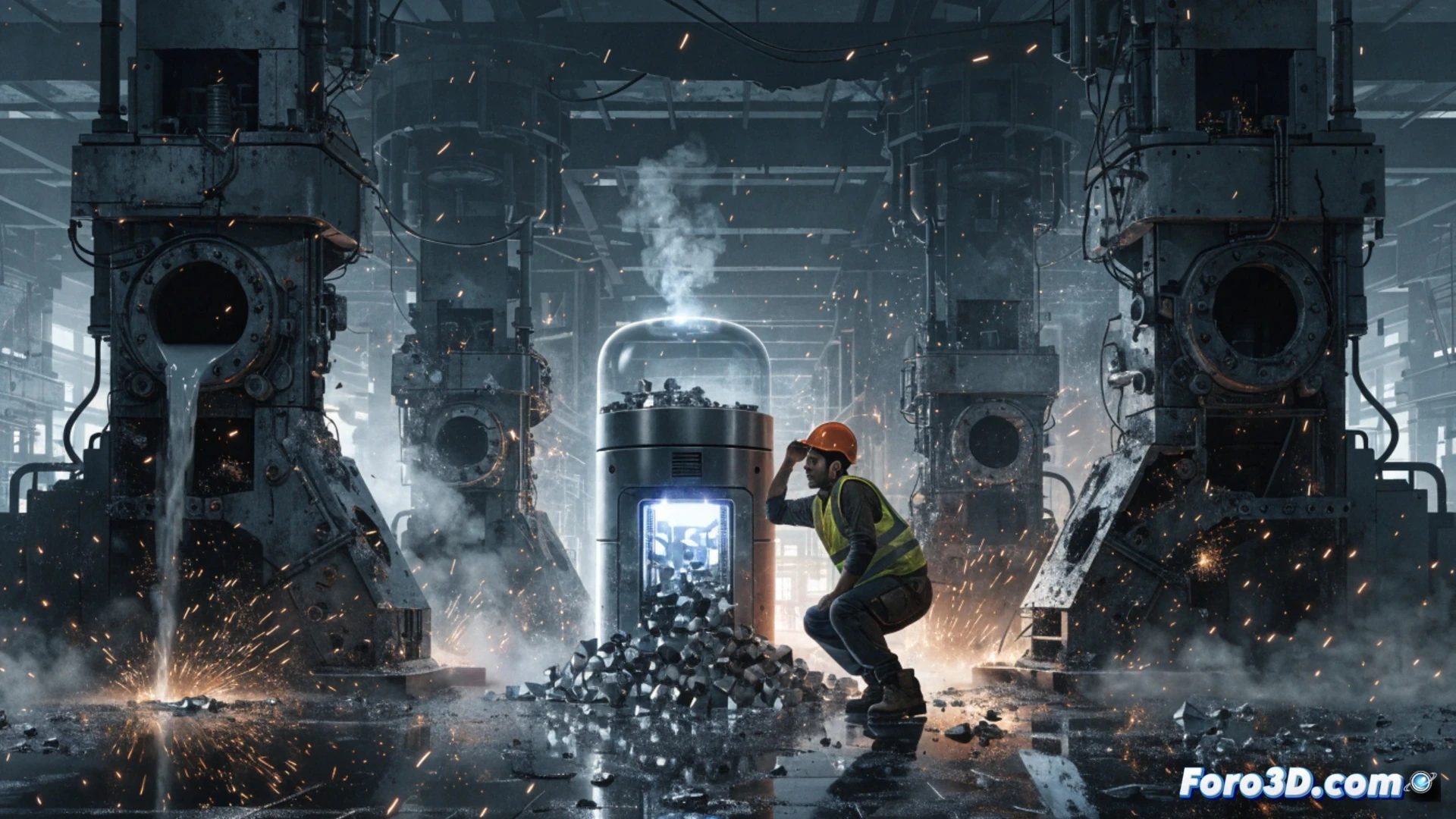
The job of a factory operator often encounters broken parts, worn-out templates, or tooling that is no longer manufactured. Waiting weeks for a spare part halts production. 3D technology allows these parts to be manufactured on-site in hours, reducing downtime and costs. An operator can, for example, print a broken sensor bracket without relying on external suppliers.
Concrete application and necessary programs 🛠️
Imagine the arm of an assembly robot breaks. With a 3D scanner like the Einscan SE, you capture the geometry, repair it in Blender (free), and export the STL file. The Ultimaker Cura software (also free) prepares the layers for a printer like the Creality Ender 3. In less than a day, the operator has the part installed. There are also tools like Fusion 360 (with a free license for hobbyists) to design parts from scratch.
The day the operator became a designer without meaning to 😅
At first, I thought the 3D printer would be just another gadget taking up space. Now my colleague prints rubber stops for the tables and even a lid for the coffee maker. Sure, he's also spent two hours wrestling with a bracket that peeled off mid-print. But hey, seeing an operator using Blender with a poker face while the boss asks if the part is ready yet is priceless. Technology doesn't replace the trade: it makes it more creative (and sometimes more chaotic).