UI design has been limited for years to two-dimensional screens. But 3D technology allows you to physically prototype interfaces, such as buttons or controls on a touch panel. A clear example: designing the ergonomics of a remote control for a TV app. With 3D printing, you test the grip and arrangement of elements before programming. This reduces iterations and avoids unpleasant surprises with the client.
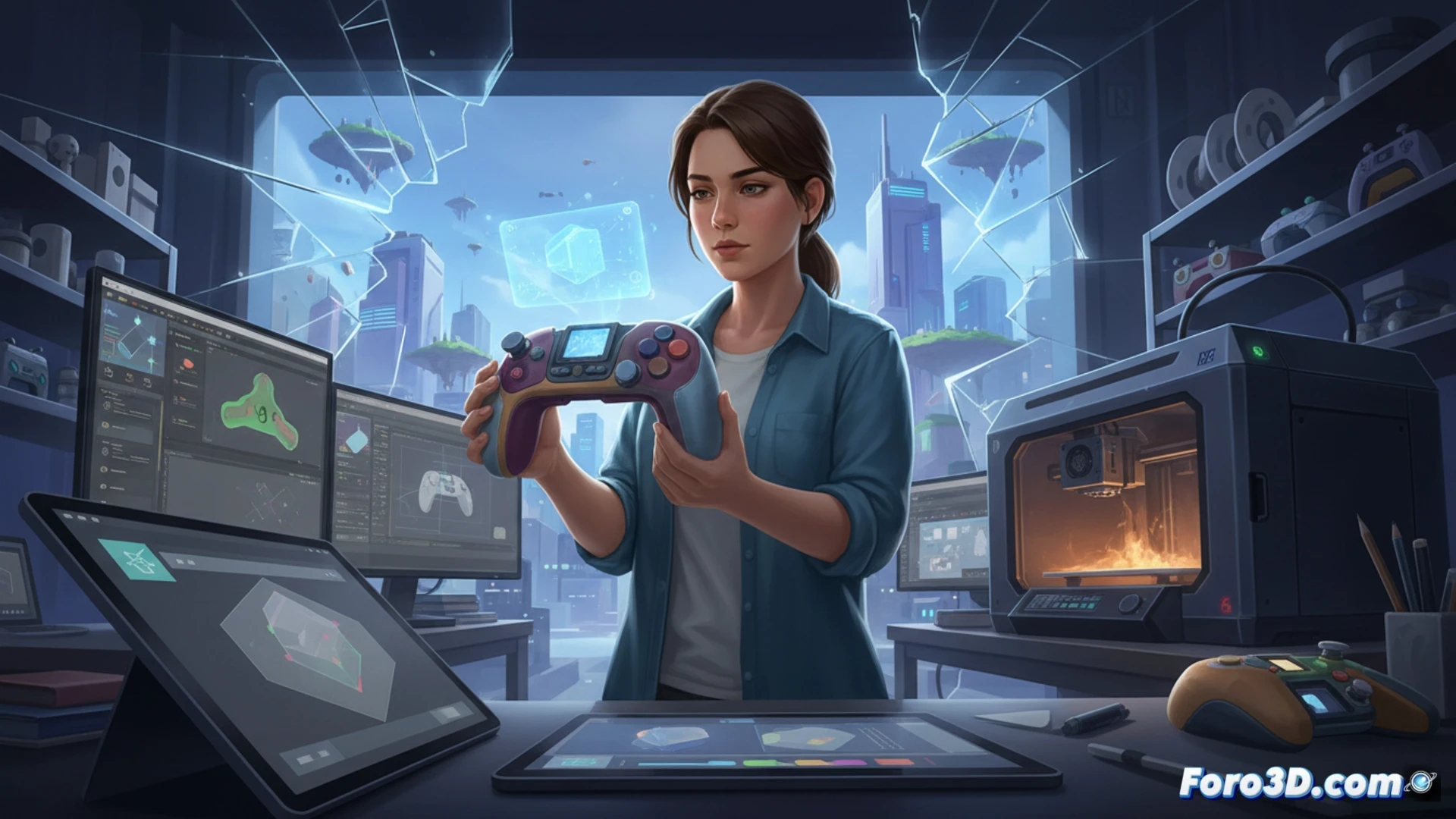
Workflow from digital to tangible object 🖐️
The process starts in 3D modeling software like Blender or Fusion 360, where you design the device's volume. Then you export the STL file to a slicer like Cura or PrusaSlicer to define layers and infill. The printer, a basic FDM like the Ender 3 or a resin one like the Anycubic Photon, materializes the prototype. The result is an object you can touch, rotate, and evaluate in a real context. You don't need a lab, just a table and patience.
The day your boss asked for a button that would fit in a microwave 😅
And then the boss arrives and says: I want this button to be bigger, but it has to fit in a 2cm space. Without 3D printing, you'd have to explain it with drawings and gestures until you're hoarse. With a printed prototype, you put it in their hand, and they discover for themselves that their idea is as viable as a brick-shaped phone charger. 3D printing not only saves time: it also avoids absurd arguments. And that, in UI design, is worth its weight in gold.