3D printing allows an AI engineer to materialize physical prototypes of sensors or housings for their models. A clear example: designing a mount for a computer vision camera. You need programs like Fusion 360 for modeling, Cura for slicing, and then your Python IDE to integrate the hardware.
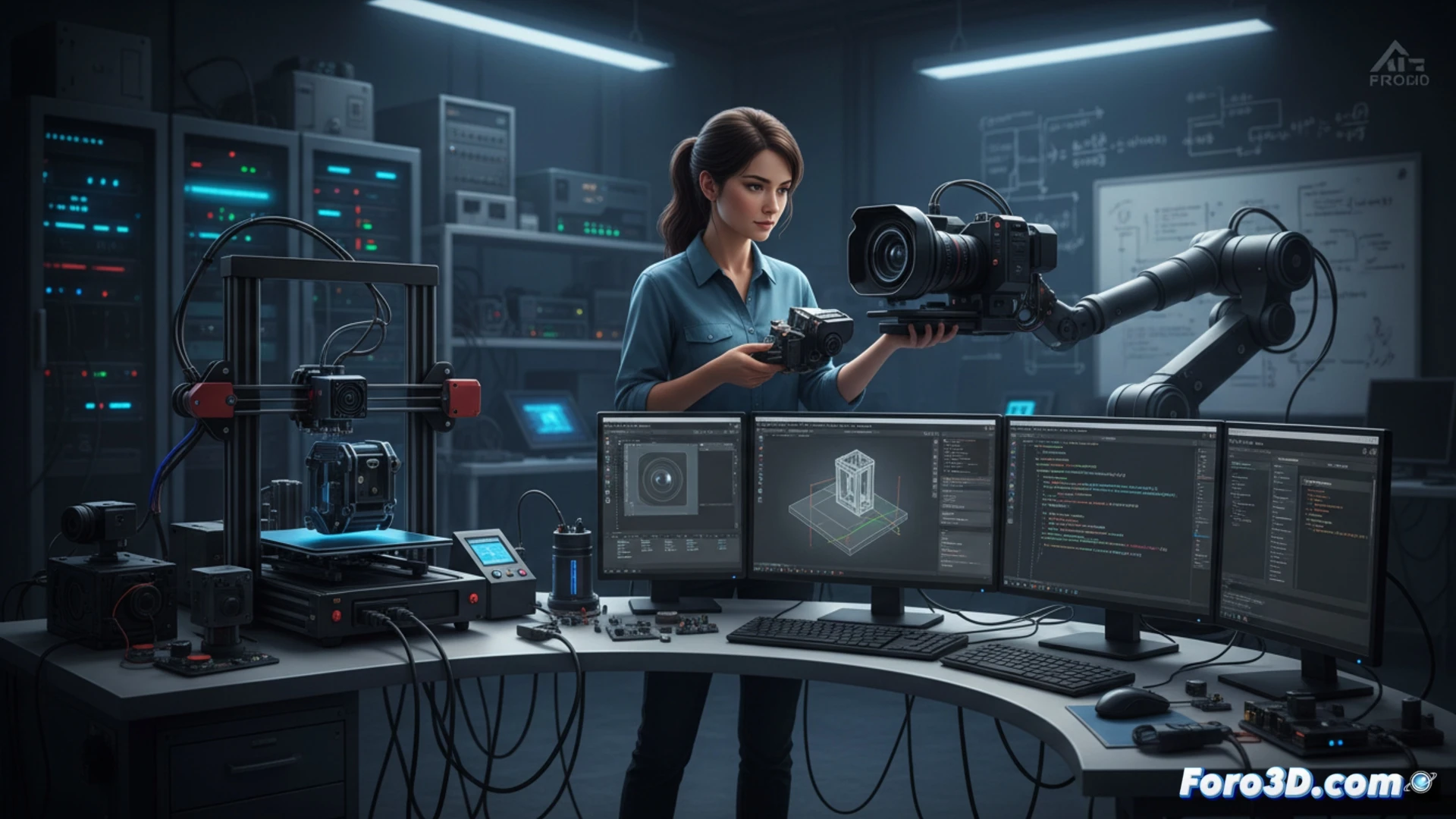
Rapid prototyping for machine learning hardware 🤖
When developing an AI system for robotics, you need to test physical components. With 3D printing, you can manufacture a chassis for your Raspberry Pi or a mount for a LiDAR in hours. Key programs: Blender for organic design, PrusaSlicer for configuring the print, and OpenCV for validating computer vision. This accelerates iterations and reduces external manufacturing costs.
The day your neural network asked for a spare part 🔥
Your AI model detects objects perfectly, but when mounting the camera on a robot, the PLA-printed bracket melts from the processor heat. Solution: reprint in PETG and add a fan. Luckily, you didn't have to wait weeks for a supplier; you only cursed your lack of thermal foresight while the filament cooled down.