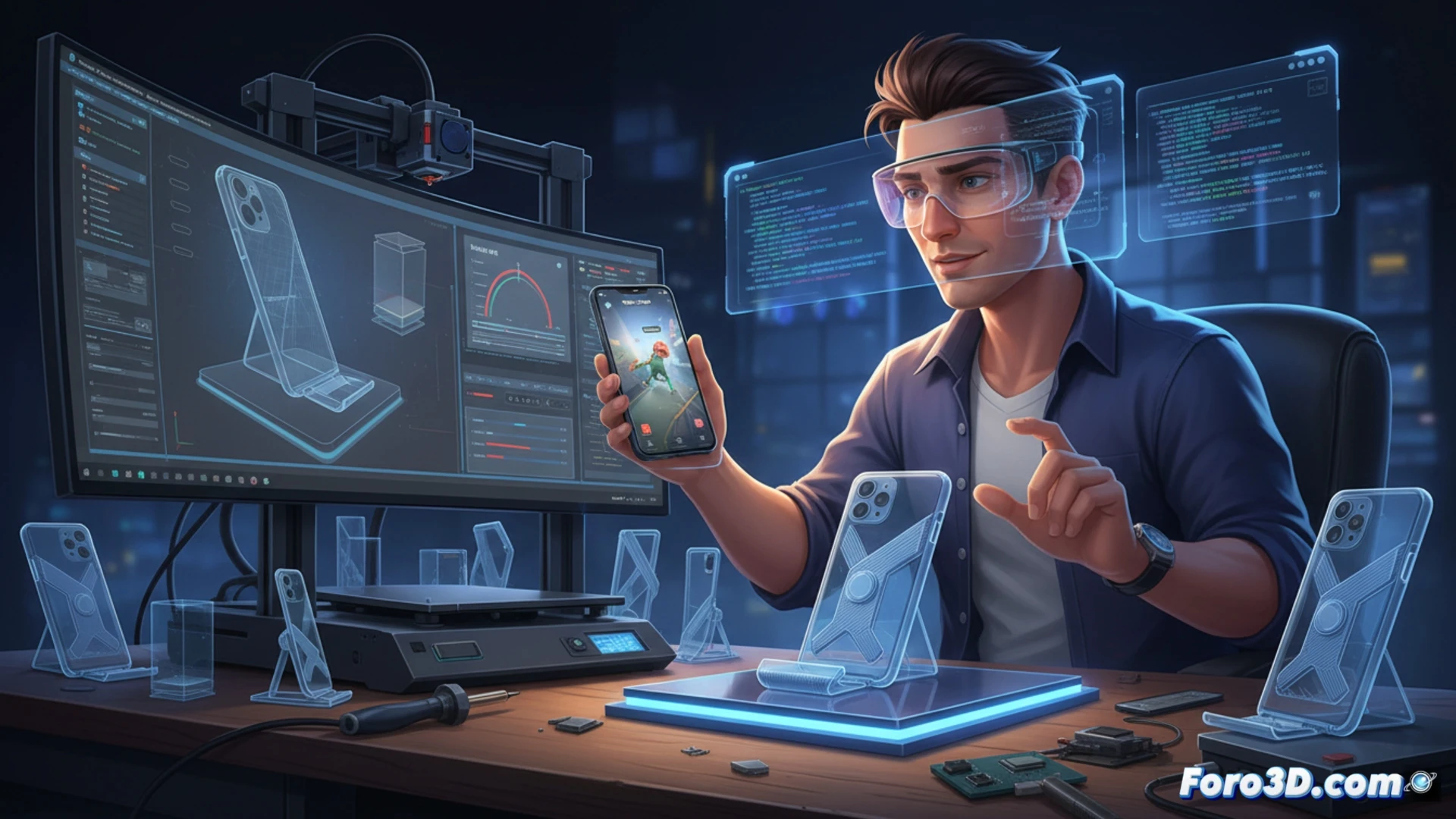
Mobile developers don't just live on code and touchscreens. 3D technology enters the scene to create physical prototypes of accessories, device stands, or custom cases that improve testing ergonomics. A clear example: designing a stand to test an augmented reality app's camera without the phone falling every two minutes.
Physical Prototyping and Tangible Interaction Validation 🛠️
When you develop an app that interacts with the real world, you need stable hardware. With a modeler like Blender or Fusion 360, you design a specific stand for your phone. Then, with an affordable 3D printer like the Ender 3, you materialize it in PLA. The result: camera, sensor, or physical button tests without shaking or improvisation. Programs like Cura or PrusaSlicer prepare the file for printing. All of this accelerates iteration and avoids spending on commercial accessories that never fit well.
The Day I Printed a Stand and Stopped Using Duct Tape 📱
Let's face it, we've all taped our phone to a lamp with cello tape to test an app. It works, but it's not professional. Printing a stand gives you that serious engineer vibe, even if you then spend three hours calibrating the printer bed. In the end, your augmented reality app detects planes better, and your desk looks like a NASA lab. All to prevent the phone from crashing to the floor while you debug a bug.