3D technology is transforming training and maintenance in aviation. A pilot must not only fly but also understand complex systems. Here, 3D printing allows for the creation of exact replicas of cockpit parts or instrument panels for risk-free practice, reducing costs and wait times in simulators.
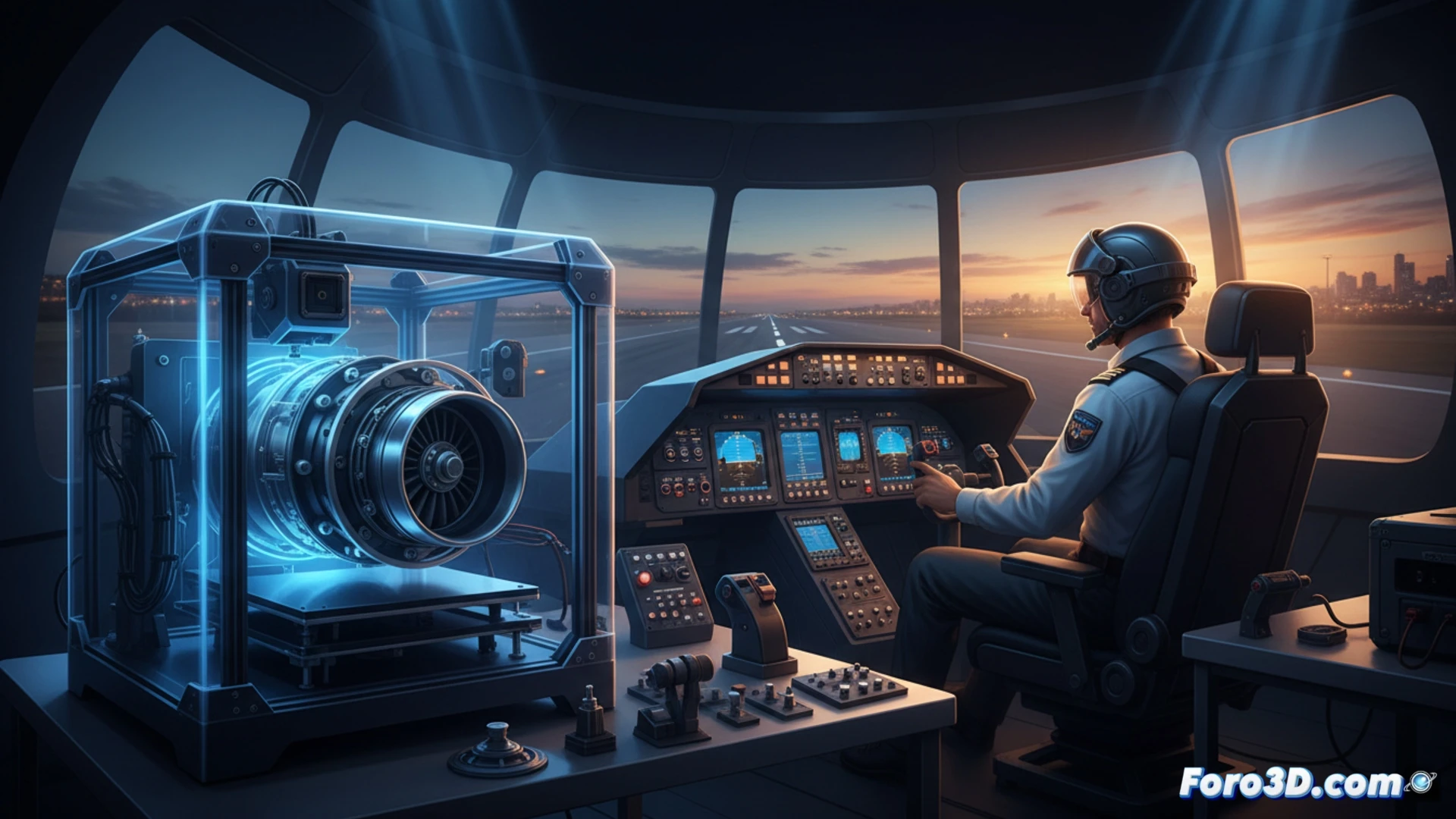
Tactile simulators and on-demand printed spare parts ✈️
Modern flight simulators integrate control panels manufactured with 3D printing, replicating the texture and response of real buttons. Programs like Blender or SolidWorks model these parts, while Cura prepares them for printing. Additionally, airlines use 3D printers to manufacture map holders or switch protectors on the ground, streamlining repairs without relying on centralized warehouses.
The pilot who prints their own breakfast at 33,000 feet 🥐
Because, of course, if the 3D printer already makes spare parts, why not ask it for a coffee or a sandwich? It's not possible yet (the FAA doesn't approve food-grade filaments in the cockpit), but some pilots joke about printing a croissant instead of waiting for the cart. In the meantime, we keep using the printer for what's useful: preventing a broken button from forcing an emergency landing.