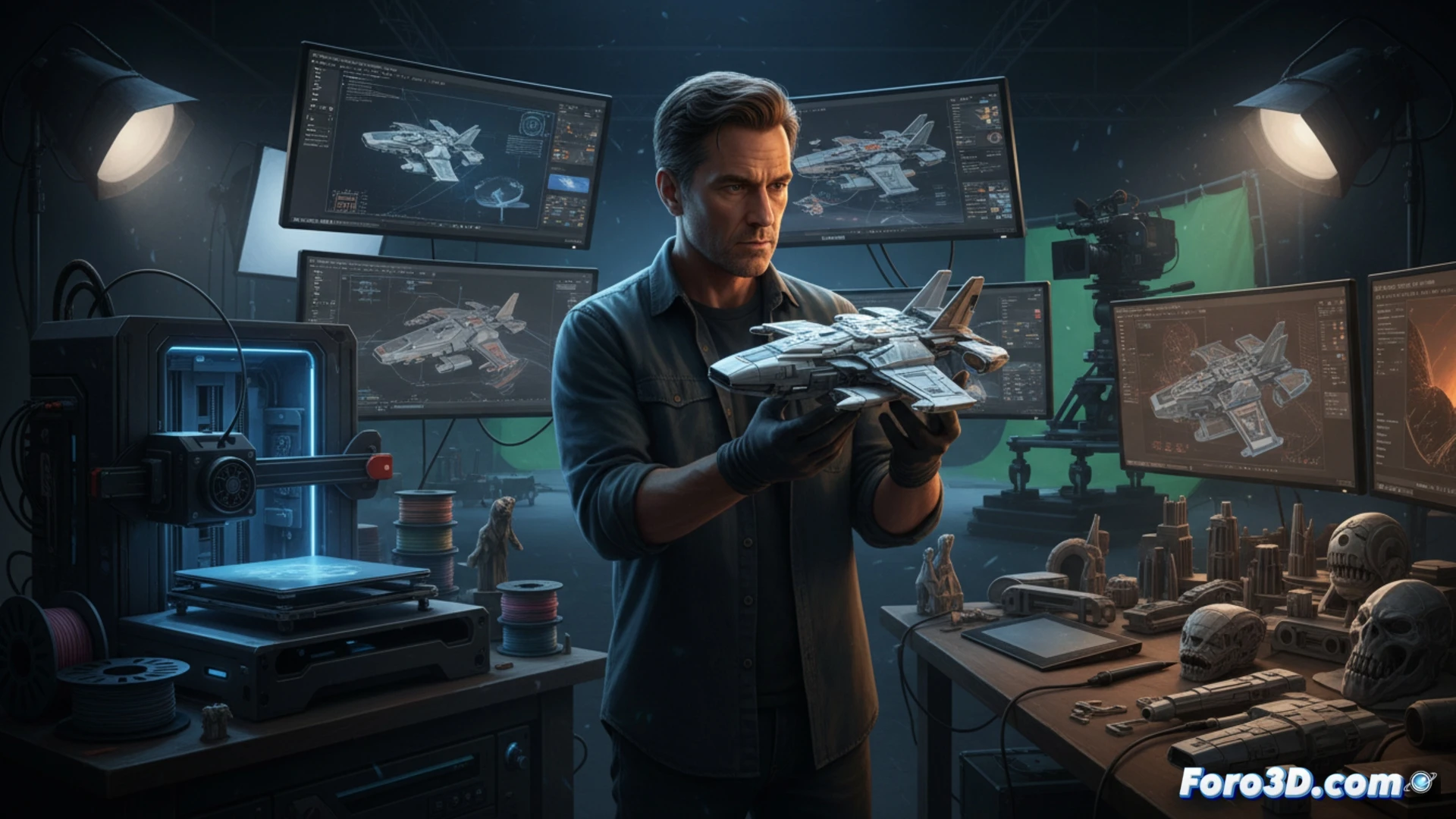
The craft of a film director relies not only on actors and scripts. 3D technology allows for the creation of props, models, and set prototypes with millimeter precision, saving days of manual labor. A clear example: designing a science fiction spaceship and printing it in parts to see its actual volume before shooting. Programs like Blender, ZBrush, or Fusion 360 are essential for modeling and preparing the files.
3D Previsualization and Planning Complex Shots 🎥
Before spending the budget on locations or real sets, the director can use software like Maya or Unreal Engine to assemble a 3D storyboard. This allows moving the virtual camera, adjusting lights, and testing impossible angles. 3D printing of scale models helps plan cranes and dollies with precision. The result: fewer errors on set and more control over production time. You don't need to be a computer technician, but understanding the 3D workflow is almost mandatory today.
When the Director Needs a Silicone Alien Yesterday 👾
The director has a clear vision: a three-headed monster with a wet cardboard texture. The special effects team laughs in his face because modeling it by hand takes three months. With a 3D printer and a little patience, they have the prototype ready in a week. Of course, then comes the fun part: the director decides the left head must be fluorescent green and the painter on duty threatens to quit. 3D technology doesn't solve egos, but at least it shortens the arguments.