In the world of competition, aerodynamics is not a luxury, it is an obsession. Every centimeter of the chassis is designed to tame the air. When we talk about flow alteration in a racing vehicle, we refer to any deviation from the ideal laminar flow, whether due to turbulence, boundary layer separation, or wakes generated by other cars. Understanding these phenomena is the key to gaining tenths of a second on every lap.
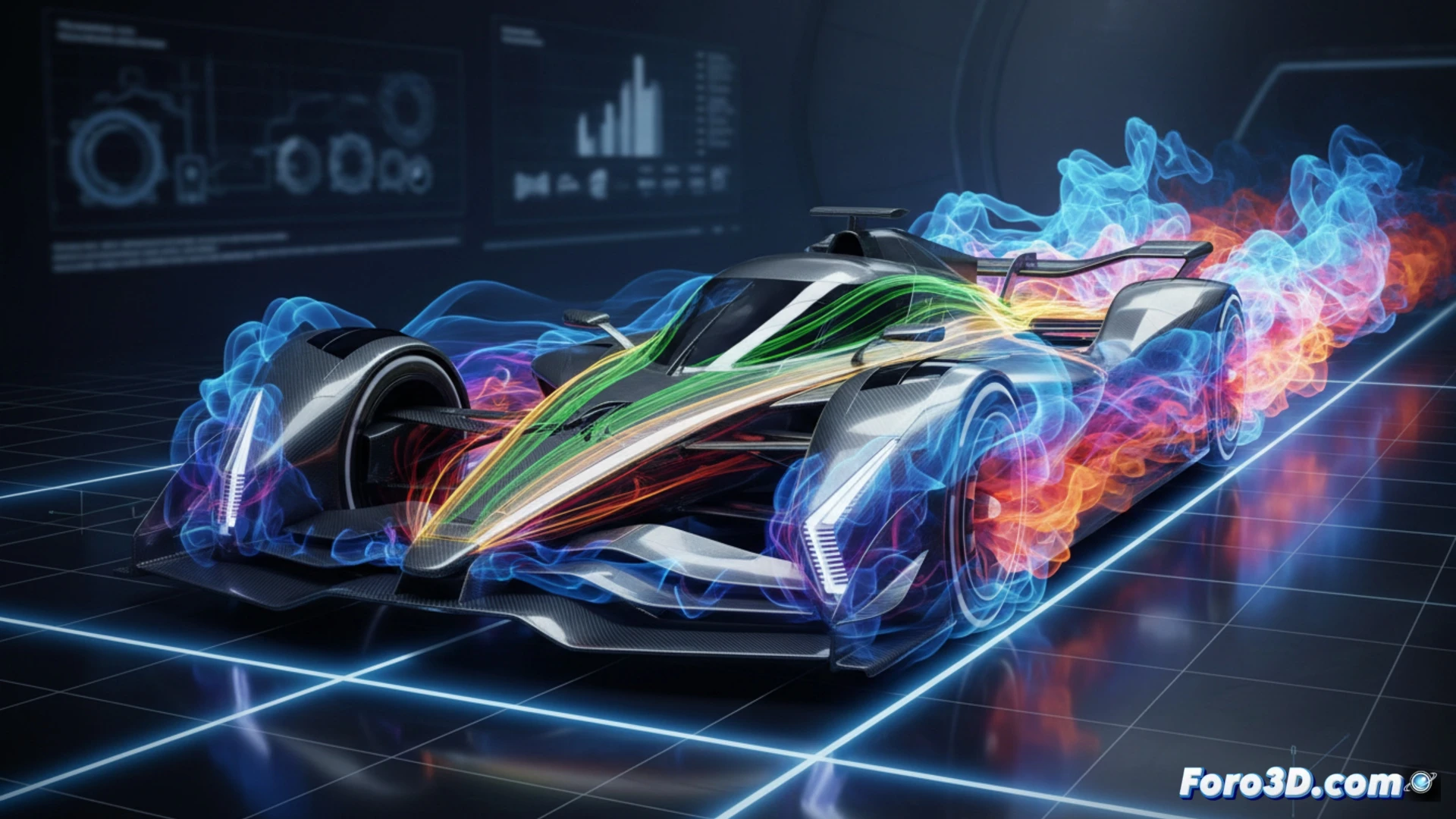
CFD simulation and 3D modeling to tame turbulence 💨
Engineers turn to computational fluid dynamics (CFD) as the primary tool to visualize these alterations. Using detailed 3D models of the single-seater, wind and speed conditions are simulated to identify critical points where the flow separates from the bodywork. The analysis reveals how turbulence in the rear area reduces downforce and compromises stability in high-speed corners. Thanks to digital twins, changes to the rear wing or diffusers can be virtually tested to reattach the flow and minimize drag. This iterative process allows the car to be optimized without the need to manufacture expensive physical prototypes.
The real impact of altered flow on the track 🏎️
Flow alteration not only affects top speed but also safety and tire wear. Premature flow separation at the nose can cause sudden understeer, while a dirty wake behind the car makes overtaking difficult. The technical reflection is clear: mastering aerodynamics through 3D simulations is not an option; it is the frontier that separates a competitive car from one that just goes around in circles. Air is the most invisible rival, but also the most relentless.
In the context of chassis and wing design restrictions in modern competitions, such as Formula 1 or endurance racing, how has controlled airflow alteration using passive elements like bargeboards or vortex generators proven to be more decisive for downforce than the simple geometry of the rear wing?
(PS: modeling a car is easy, the hard part is making sure it doesn't turn into a cube on wheels)