The independent horror genre has found in 32-bit aesthetics a perfect vehicle for nostalgia and atmosphere. Fear the Spotlight is no exception. Developed in Unity, the game adopts the PS1-core style with low-polygon models, unfiltered textures, and a characteristic vertex jitter. We analyze the technical workflow between Blender and Unity that allows recreating this era with fidelity.
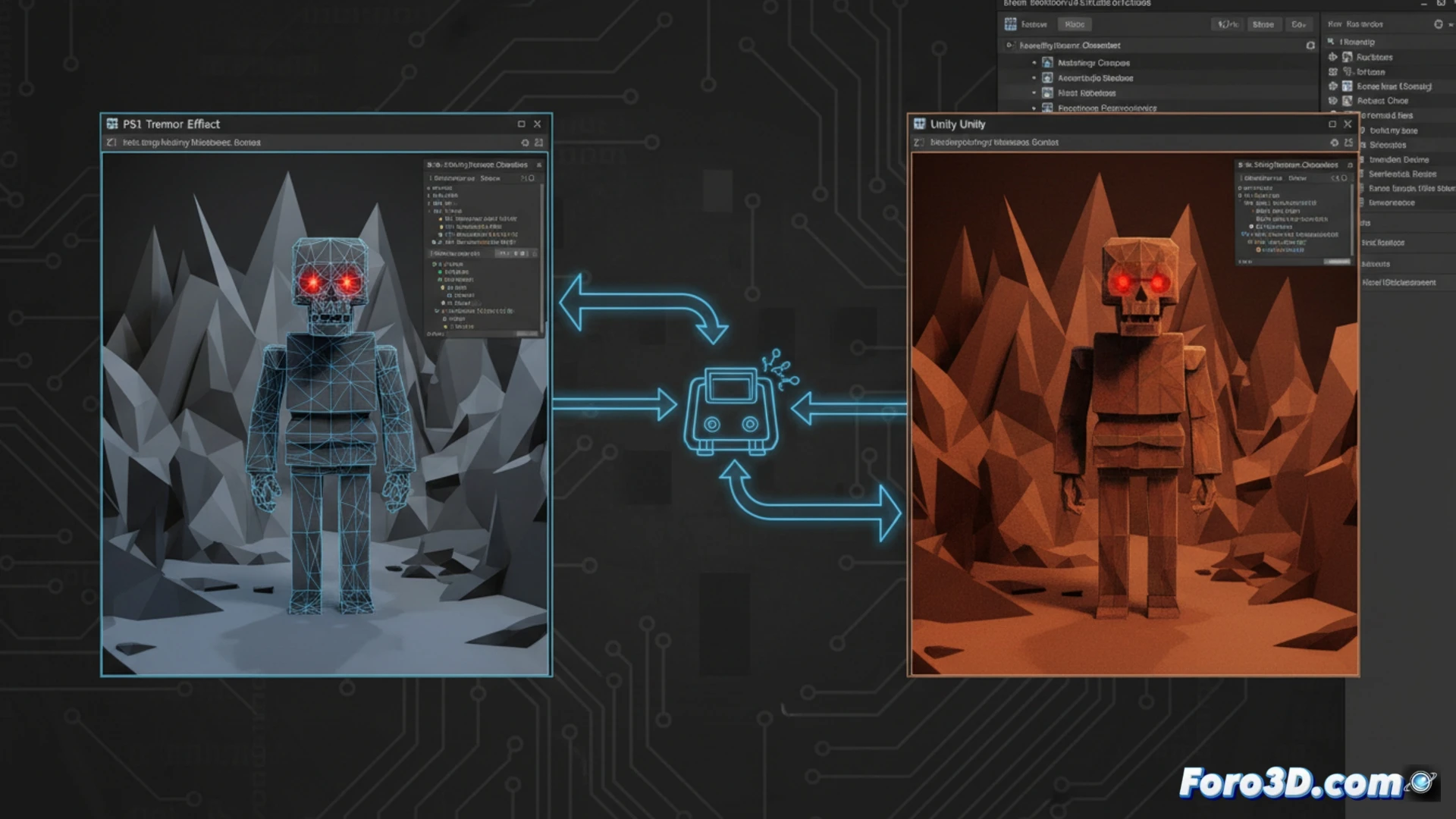
Technical workflow between Blender and Unity for the PS1-core effect 🎮
To achieve visual authenticity, the process begins in Blender by modeling with an extremely low polygon count, avoiding smoothing and subdivisions. Textures are exported at low resolutions (64x64 or 128x128) and configured in Unity with the Point (no filter) filter to avoid bilinear smoothing. The vertex jitter effect is implemented through a custom shader in Unity that slightly displaces vertex positions each frame, simulating the floating-point precision lack of original consoles. This shader, combined with flat lighting (without smoothed normals), completes the technical illusion.
The relevance of technical limitation as an artistic choice 🕹️
Fear the Spotlight demonstrates that technical limitations are not a flaw, but an expressive tool. By embracing low polygon counts and visual instability, the game evokes a collective memory of 90s horror, where the player's imagination completed what graphics could not show. For independent developers, this approach offers a viable path: reducing technical workload to focus on atmosphere and narrative design, proving that retro style remains a fertile field for innovation.
Is it possible to replicate the jitter and camera distortion of the PS1 era in Unity without relying on external assets, and what specific modeling techniques in Blender contribute to that effect of visual authenticity in Fear the Spotlight?
(PS: game jams are like weddings: everyone is happy, nobody sleeps, and you end up crying)