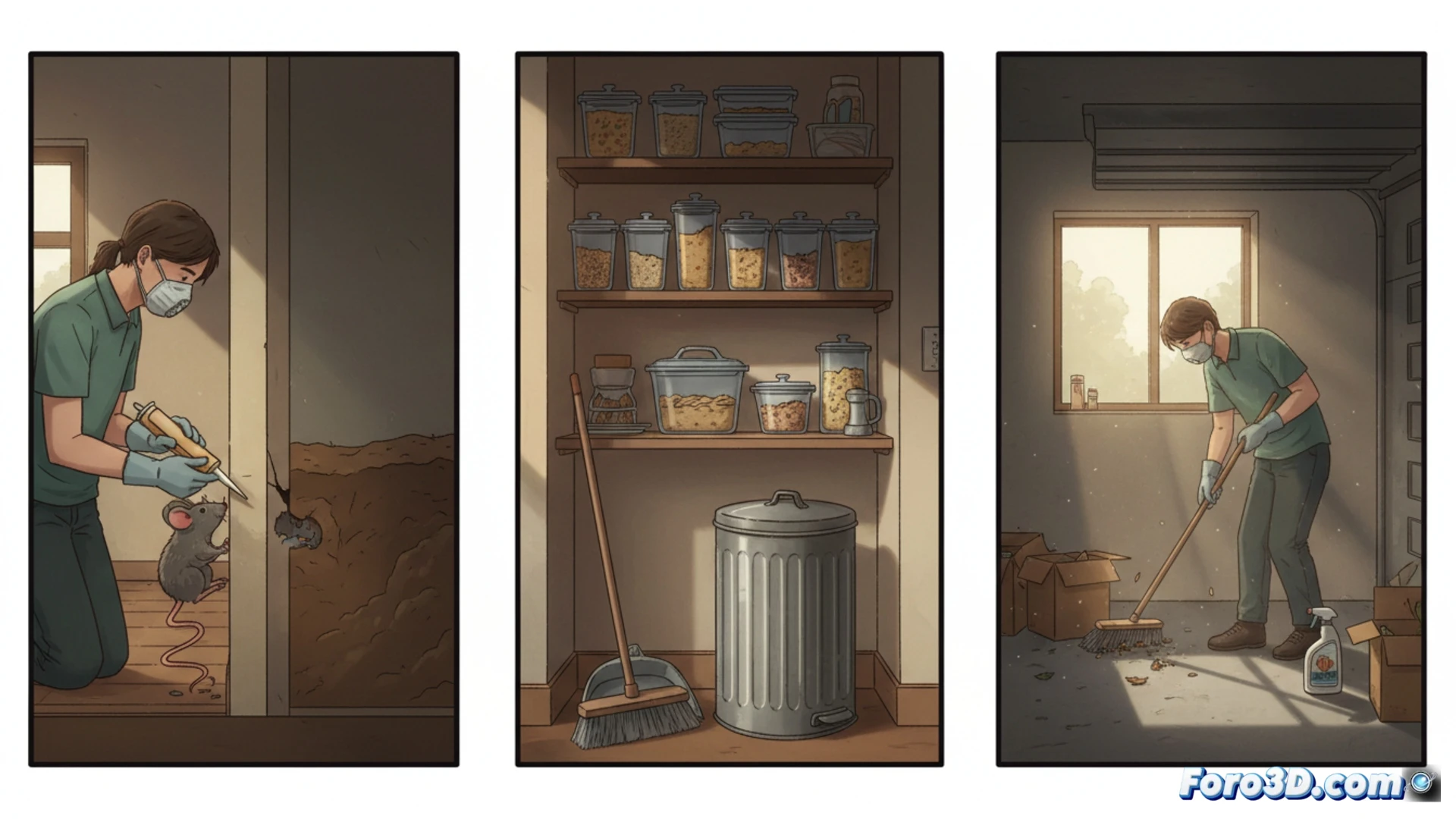
The presence of rodents in the home is not only annoying but also represents a real risk of hantavirus infection. To reduce this danger, the main strategy is to prevent their entry. Actions such as sealing cracks and holes in walls and baseboards, storing food in airtight containers, and maintaining rigorous cleaning of floors and surfaces are effective measures. Prevention begins by blocking their path and eliminating their food sources.
Physical barrier systems for urban pest control 🛡️
Technology applied to prevention focuses on physical barriers. The use of stainless steel wire mesh with openings smaller than 6 mm is recommended to cover vents and drains. To seal gaps around pipes, professional-grade polyurethane expanding foams offer a durable solution, as rodents do not easily gnaw through them. On garage doors, rubber thresholds and metal brush barriers prevent passage under the door. Periodic inspection of these points is key to maintaining perimeter integrity.
The mouse that slipped through a hole the size of a charger 🐭
You think your house is a fortress, but for a mouse, it's more like Swiss cheese. It turns out these rodents can pass through an opening the diameter of a pencil. So, while you're proud of your armored door, a mouse is entering through the gap left by the router cable. Next time you see a hole in the wall, don't think about calling the bricklayer; think of it as a highway for your new unwanted tenant. The irony: your house is safe for you, but for them, it's an amusement park with a free buffet.