Buckshot Roulette has captured the attention of the indie world not only for its lethal gameplay but for its oppressive atmosphere. The developer used Godot Engine to emulate late-90s rendering, combining low-resolution textures with a post-processing filter that injects dirt and grain into every frame. This technical analysis breaks down the artistic pipeline that transforms voxelized models into a claustrophobic experience.
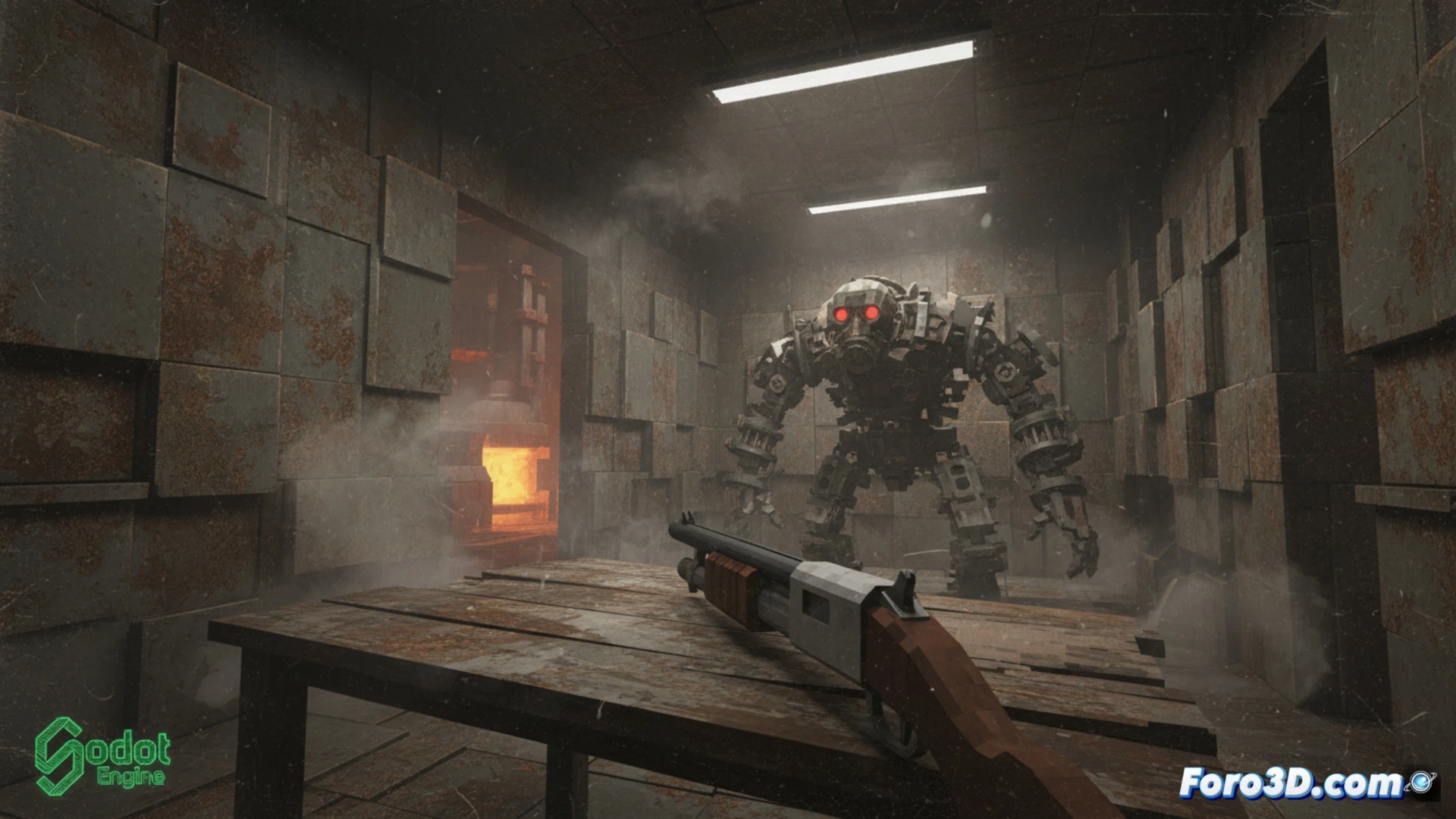
Asset pipeline: from MagicaVoxel to Godot with a gritty aesthetic 🎮
The creative process begins in MagicaVoxel, where scenes and objects are sculpted with limited resolution, forcing a readable silhouette even in low-light conditions. These models are exported to Blender for basic retopology and to apply flat shading that removes smooth gradients, mimicking the limitations of 90s vertex lighting. When imported into Godot, the material is configured with a point filter (nearest neighbor) instead of bilinear, avoiding the smoothing that would break the retro aesthetic. The finishing touch is a post-processing shader that adds chromatic aberration, severe vignetting, and static noise that flickers at the edges, creating the feel of an old, dangerous CRT monitor.
Aesthetic consistency as a performance advantage 🛠️
Far from being a limitation, the low-fidelity aesthetic is a smart design decision. By using 64x64 pixel textures and simple geometry, the Godot engine barely demands GPU resources, allowing the game to run on modest hardware without sacrificing visual identity. The dirt and grain not only hide the imperfections of low-poly modeling but reinforce the narrative of a hostile industrial world. This coherence between technique and theme demonstrates that, in indie development, constraint can be the greatest creative tool.
What specific lighting and post-processing techniques in Godot Engine allow emulating the VHS aesthetic and industrial noise characteristic of 90s horror in Buckshot Roulette?
(PS: shaders are like mayonnaise: if they break, you start all over again)