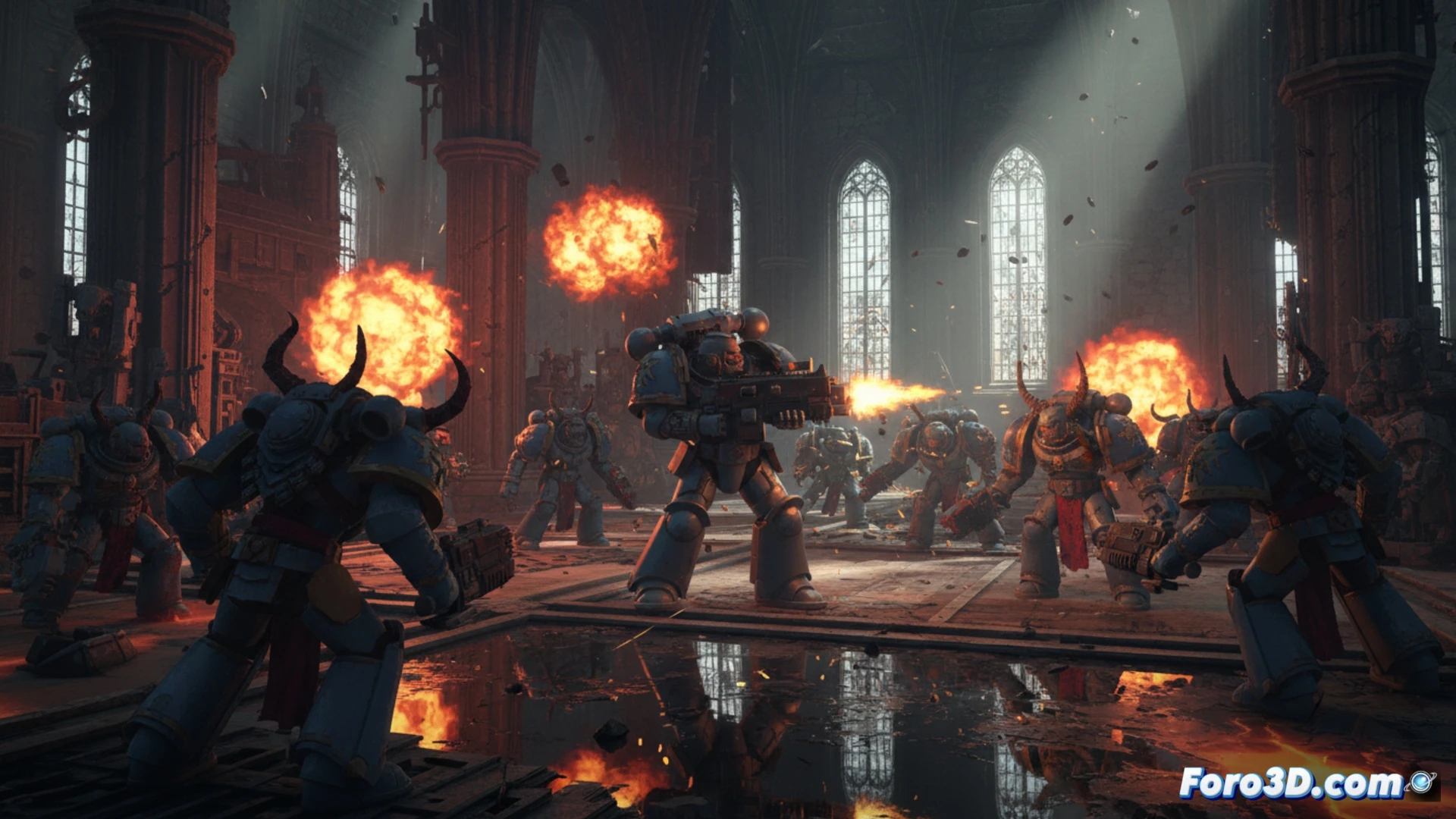
Warhammer 40,000: Boltgun is not just a tribute to the boomer shooters of the 90s, but a case study on how to combine modern technologies with retro aesthetics. The game uses Unreal Engine 4 as its foundation, but instead of relying on full 3D models, it employs 2D sprite billboarding for enemies and weapons. This technique, which always rotates sprites toward the camera, achieves the characteristic 32-bit look while benefiting from the lighting and physics of a modern engine.
Technical workflow: Aseprite and Blender in symbiosis 🛠️
The production process is divided into two key tools. On one hand, Aseprite handles sprite design and blood effects, allowing pixel-by-pixel control that captures the rawness of the Warhammer universe. On the other, Blender models the industrial gothic environments with full 3D geometry, textured with a finish reminiscent of low-poly. The key lies in optimization: sprites are rendered as planes with transparency in UE4, eliminating the need for complex skeletal animations, while scenes use aggressive LODs to maintain 60 fps without sacrificing aesthetics.
The art of limitation as a creative engine 🎨
The decision to use billboarding is not just technical, but narrative. By forcing the player to face 2D sprites that clash with 3D models, Boltgun generates a strange familiarity that harkens back to titles like Doom or Duke Nukem 3D. This stylistic fusion demonstrates that realism is not the only path; sometimes, visual abstraction combined with a powerful engine like UE4 allows for creating unique experiences. For developers, it's a lesson in how modern tools can reinterpret the past without losing the genre's identity.
Do you think this asset needs optimization or can it be left as is for mobile?