When an armored giant protects a girl in a hostile fantasy world, the absence of words is not a limitation, but a tool of narrative precision. Step by Bloody Step, by Simon Spurrier and Matías Bergara, demonstrates that pure visual narrative can sustain a complex story. For those of us working in film pre-production and 3D previsualization, this comic is a living manual on how color, landscape design, and composition replace dialogue as an emotional vehicle.
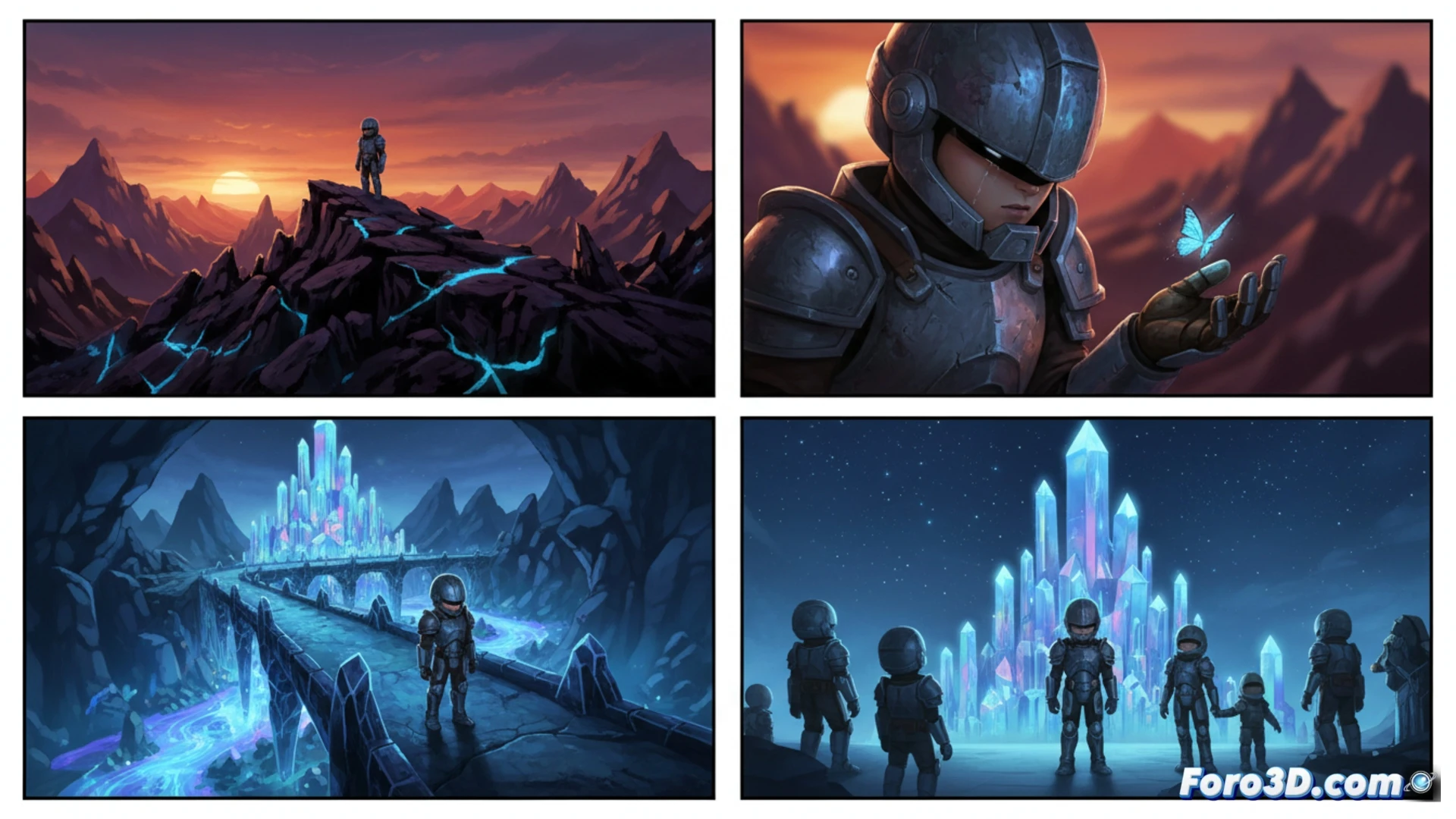
Translating silent language into 3D previsualization 🎨
In Step by Bloody Step, each panel functions like a fixed shot that must communicate intention, danger, or tenderness without text. This is identical to the challenge of an animatic or a 3D storyboard in Unreal Engine or Blender. Analyzing the work, we find that Bergara uses extreme chromatic contrasts to mark emotions: cold blues for loneliness, warm oranges for the giant's protection. In a 3D engine, we can replicate this with dynamic lighting adjustments and post-processing palettes. The composition also prioritizes leading lines that direct the gaze toward the relationship between the characters, a technique that in previsualization translates into camera rules like the rule of thirds or the use of depth of field to isolate the protagonist.
Rhythm without words: montage as emotion 🎬
The absence of dialogue forces the story's rhythm to be built exclusively through the cut between panels and the implied duration of each scene. In a 3D animatic, this is essential: the duration of a shot, camera movement, and transitions are the only elements that mark the emotional tempo. Step by Bloody Step uses large panels for moments of calm and sequences of small panels for frenetic action. When translating this into Blender, we can create animatics that test the rhythm before shooting, adjusting the speed of the shots and the intensity of color to generate tension or relief without a single line of text.
As a translator of the visual language from silent comics to 3D storyboards, which non-verbal narrative techniques from Step by Bloody Step do you consider most effective for guiding the viewer's gaze in a scene without the support of dialogue or text?
(PS: Previs in film is like the storyboard, but with more possibilities for the director to change their mind.)