A research underwater glider collided with a cetacean in a protected area. To determine whether the incident violated sighting regulations, researchers used photogrammetry of the drone's hull and 3D anatomical models of the whale. The combined analysis of trajectory and speed, simulated in MATLAB, allowed verification of whether the autonomous vehicle complied with the mandatory safety distances during its oceanographic mission.
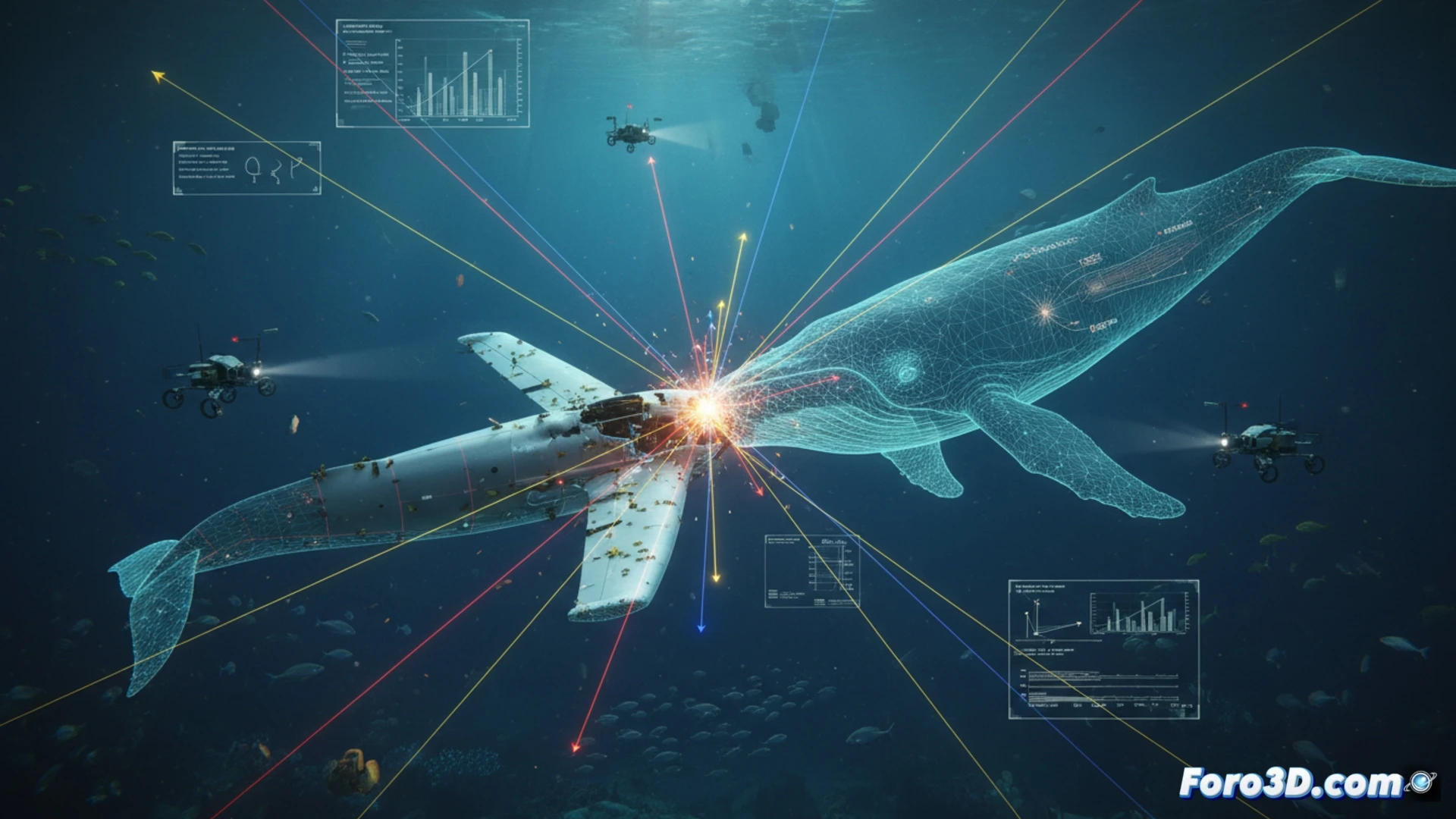
Forensic reconstruction with Agisoft Metashape and Blender 🐋
The process began with capturing images of the damaged Glider hull, processed in Agisoft Metashape to generate a point cloud and a high-resolution 3D model. In parallel, an anatomical model of the cetacean was developed in Blender, using tomography data segmented with Materialise Mimics. These two models were integrated into a virtual environment where the impact dynamics were simulated. The speed and approach angle parameters were exported to MATLAB to calculate whether the drone's trajectory respected the legal limits for approaching marine fauna. The final metric showed that the Glider's speed exceeded the permitted threshold for exclusion zones, implying a regulatory infraction.
Implications for the regulation of marine autonomous vehicles ⚖️
This case demonstrates how 3D scientific visualization becomes an auditing tool for marine conservation. The combination of photogrammetry, anatomical modeling, and physical simulation not only clarifies incidents but also establishes a technical precedent for designing more precise regulations for autonomous vehicles in protected habitats. The ability to digitally replicate collisions allows environmental managers to assess risks and adjust navigation protocols, protecting sensitive species without hindering oceanographic research.
Can high-resolution underwater photogrammetry of the glider's fuselage and the impact zone discriminate between collision marks from a cetacean and damage from other mechanical or biological agents in a protected environment?
(PS: at Foro3D we know that even manta rays have better social bonds than our polygons) 🐠