A bipedal rescue robot collapsed during a dynamic load test due to a critical mass compensation error. The failure, captured in simulation, revealed progressive overload in the hip and knee joints. This incident underscores the need to validate kinematic models before implementing real hardware, especially in high-demand systems such as rescue robots.
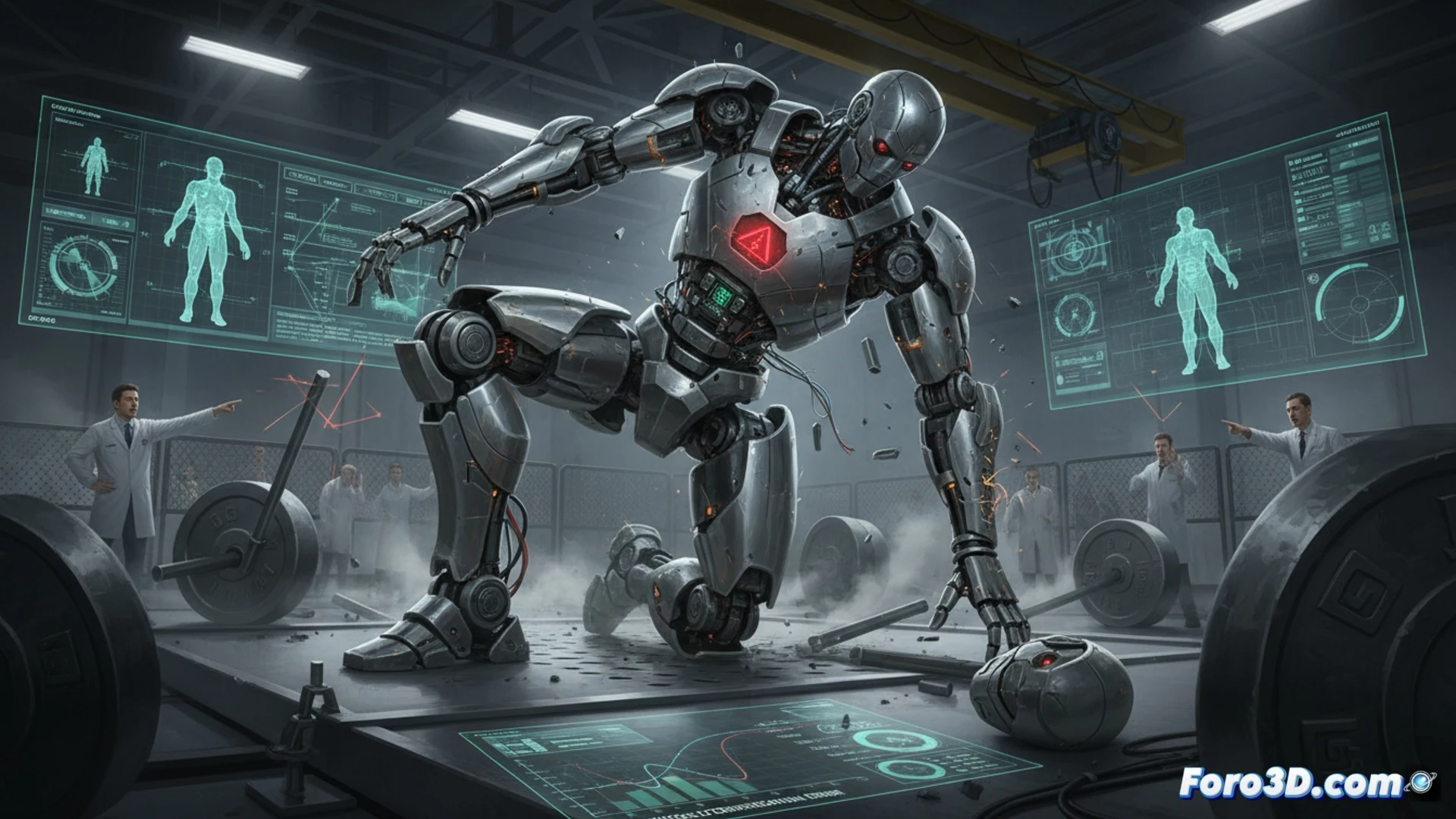
Technical analysis of the mass compensation failure 🤖
The collapse originated from a mismatch in the torso's center of mass during gait transition. In Siemens NX, the robot's geometry was modeled with variable densities, detecting excessive torque in the left hip joint. When exporting the model to CoppeliaSim for dynamic simulation, the overload manifested as a divergent oscillation in the knee angle, exceeding the actuator's torque limit. Integrating 3D scan data from VXelements identified that the error stemmed from an incorrect internal battery distribution, shifting the center of gravity 12 millimeters outside the support axis.
Lessons for rescue robot design ⚙️
This case demonstrates that rigorous simulation with tools like Siemens NX and CoppeliaSim can prevent catastrophic failures in humanoid robots. Early detection of kinematic instabilities allows adjusting link inertia and recalibrating PID controllers before manufacturing. For rescue robots, where every gram counts, mass compensation must be validated across all degrees of freedom, not just in static posture.
What predictive control or real-time mass adaptation strategies could prevent collapse due to kinematic instability in a bipedal humanoid robot during dynamic load tests?
(PS: Simulating robots is fun, until they decide not to follow your orders.)