The work of Simon Spurrier and Matías Bergara, Coda, immerses us in a world where magic has been extinguished after a cataclysm. Through the eyes of a grumpy bard, we explore a desolate yet visually lush landscape. The narrative, centered on redemption and survival, rests on an artistic foundation that challenges the canons of traditional comics, using watercolor as a vehicle to express the fragility of hope.
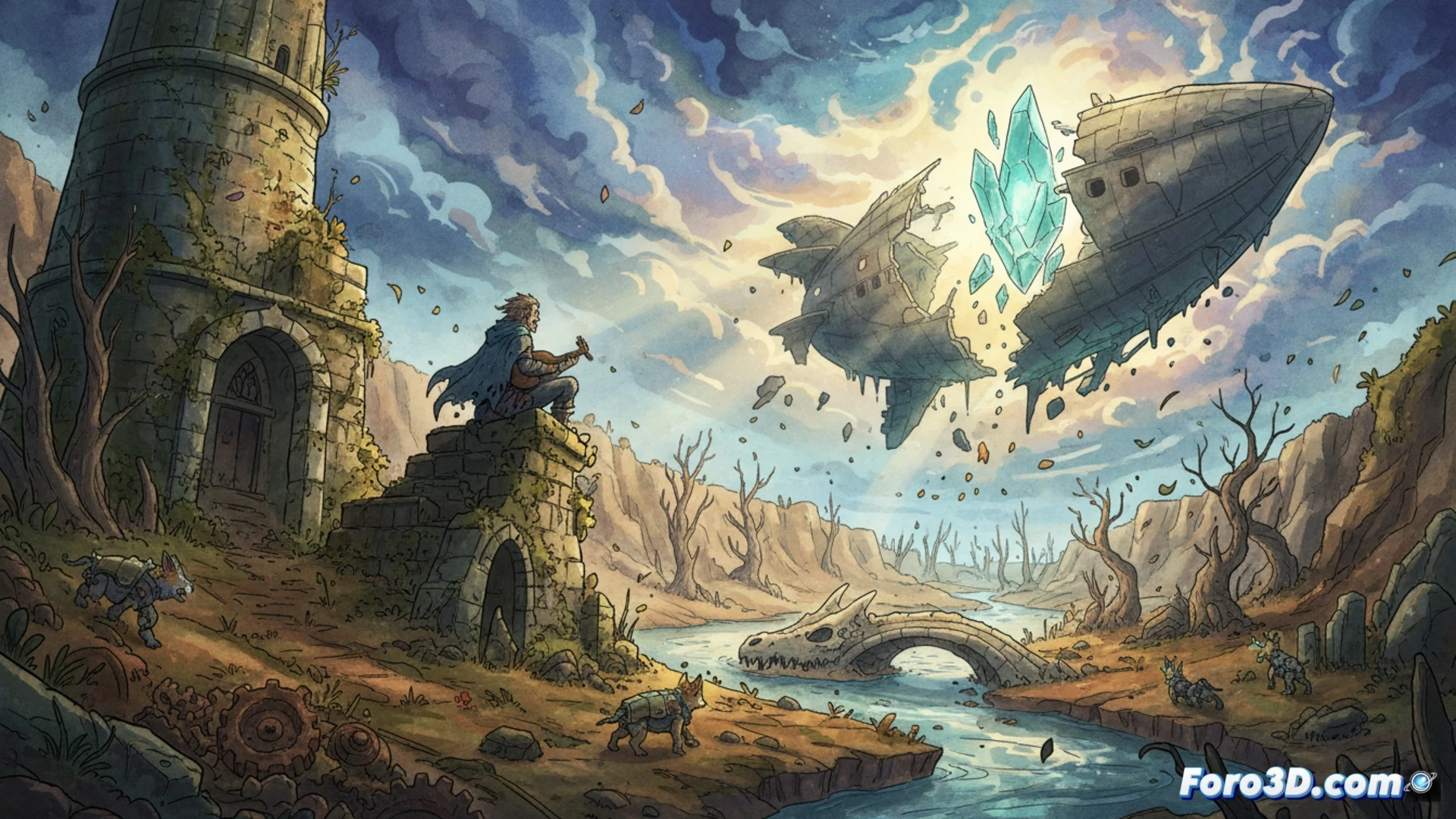
Technical Breakdown: Organic Brushes and Procedural Textures 🎨
Bergara's style is a manual of organic texturing. The watercolor stains, which simulate the world's degradation, can be digitally replicated using custom brushes with variable dispersion and humidity. In 3D software, these ethereal transitions are achieved with surface shaders that mimic watercolor on rough paper, combining procedural noise maps with layers of translucency. The key lies in using alpha maps with irregular edges to avoid the harshness of perfect vectors, creating a sense of impermanence that reflects the loss of magic.
The Comic as a Tool for Visual Activism 🌍
Coda is not just a visual feast; it is a critique of systemic hopelessness. The organic, watercolor aesthetic acts as a symbol of resistance against a mechanized and corrupt world. By showing beauty in ruin, the work invites reflection on ecological and social resilience. In digital activism, this technique demonstrates how visual narrative can humanize abstract crises, using the fragility of the stroke to denounce the fragility of our own environment.
How can the watercolor aesthetic and the depiction of ruin in Coda be used as a tool for digital activism to reflect on the fragility of cultural and natural ecosystems in the post-apocalyptic era?
(PS: at Foro3D we believe all art is political, especially when the computer freezes)