Professional kitchens are one of the work environments with the highest accident rates. The cook faces a lethal combination of thermal, cutting, and environmental agents. This article analyzes the main risks from an occupational health perspective and proposes an innovative interactive 3D infographic to identify critical points on the worker's body, such as hands, legs, and back, as well as environmental factors like slippery floors and heat sources.
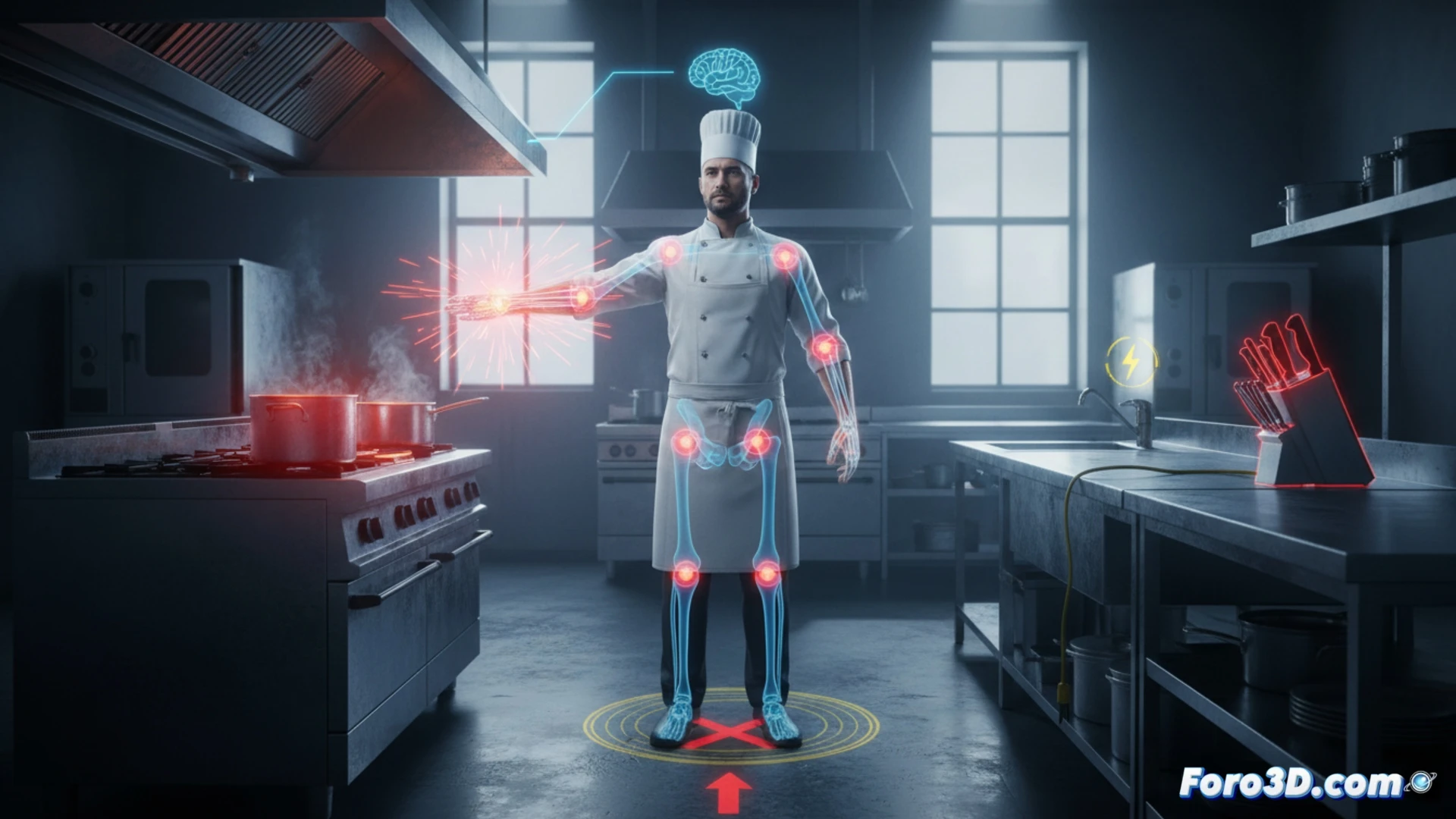
3D Risk Modeling: Critical Zones and Environmental Factors 🔥
Three-dimensional visualization allows us to dissect the cook's workspace to identify hidden dangers. The interactive model highlights the hands as ground zero for risk, exposed to cuts from knives and mandolins, and burns from contact with boiling oil and oven surfaces. The legs are marked by the risk of falls due to greasy or wet floors, one of the most common causes of sick leave. The back and lumbar area light up to represent the strain from handling heavy pots and the forced postures of prolonged standing. The environment is completed with a simulation of heat waves indicating exposure to high temperatures, along with a fire alarm system triggered by grease buildup.
Visual Prevention: A Tool for the Cook's Health 🧑🍳
The 3D infographic not only identifies the hazard but turns it into a visual prevention lesson. By animating an accidental cut or a splash burn, the worker understands the mechanics of the accident without experiencing it. This educational tool is key in public health training, as it transforms abstract statistical data into concrete experiences. The ultimate goal is to reduce accident rates in professional kitchens by promoting the use of non-slip footwear, mesh gloves, and lifting techniques that protect the spine.
How can 3D visualization of occupational hazards in the professional kitchen improve the identification of blind spots for accidents and contribute to reducing musculoskeletal injuries and burns in cooks?
(PS: at Foro3D we know that the only epidemic affecting us is the lack of polygons)