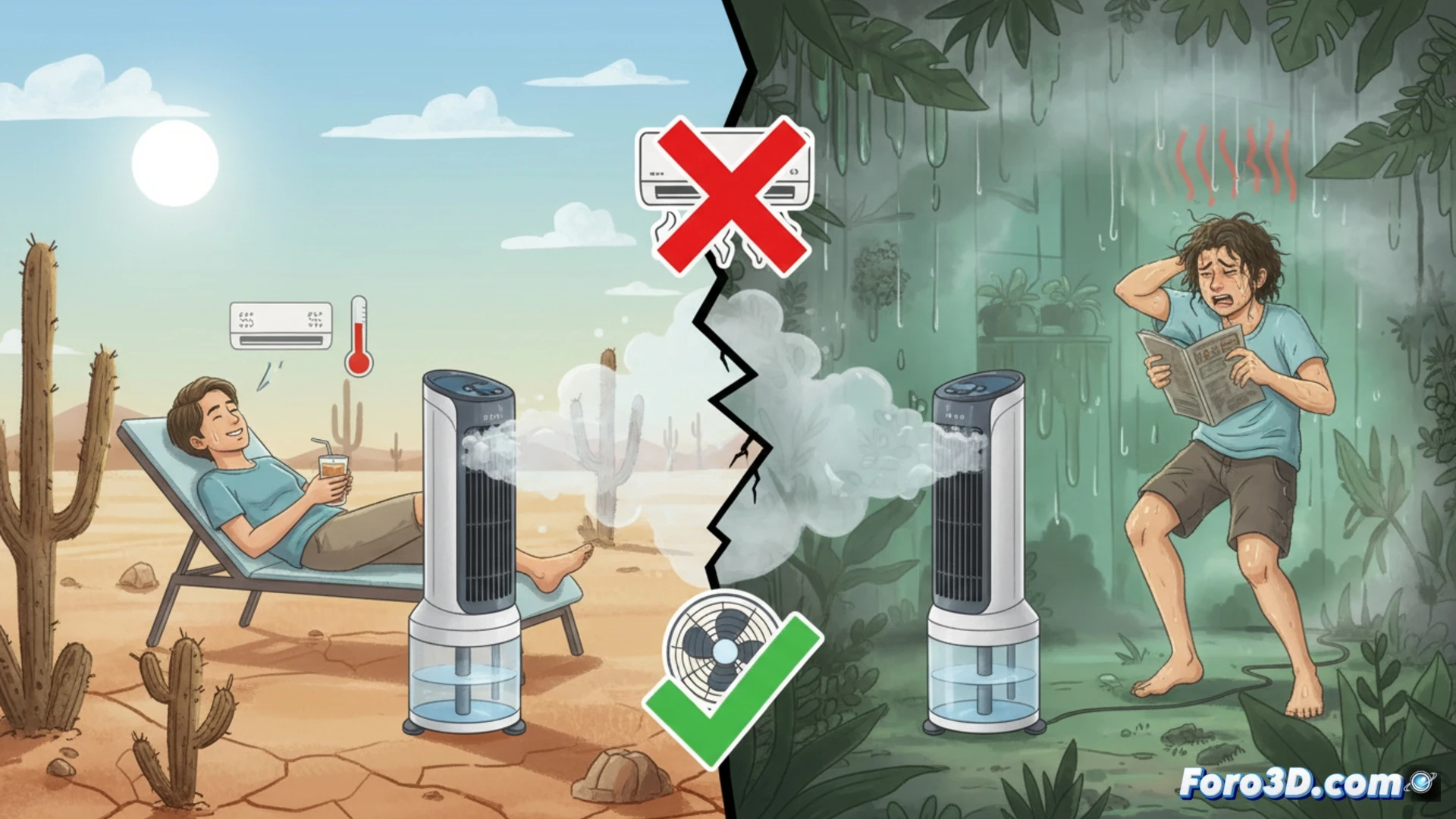
In the midst of a heatwave, social media is flooded with ads for evaporative coolers promising air conditioning without installation for a fraction of the real price. However, the technical reality is quite different: these devices are, in essence, fans that humidify the environment. Their effectiveness is limited to extremely dry climates, while in most coastal or humid homes, they barely achieve a temperature drop of one or two degrees, increasing discomfort due to humidity.
The regulatory void and the psychology of impulse buying 🧠
The success of this commercial misinformation is based on a recurring pattern in digital society. Viral marketing exploits consumer urgency and the lack of technical data verification. Platforms like TikTok and Instagram allow unboxing videos and sponsored reviews to amplify unsupported claims, while algorithms reward emotional content over rigorous content. There is no effective regulation forcing sellers to specify the product's operating humidity range, leaving the buyer exposed to a broken promise. Paradoxically, Artificial Intelligence could be the solution: language processing models can already analyze thousands of reviews to detect patterns of exaggeration or lack of technical evidence, alerting the user before purchase.
Lessons for the consumer in the age of information overload 🔍
This case demonstrates that technology is not inherently good or bad, but its value depends on context and informational transparency. An evaporative cooler works in a desert but is useless in a coastal city. The solution is not to demonize the product, but to educate the consumer: demand technical sheets with performance data at real humidity levels, distrust miracles without installation, and use data verification tools. In a digital society where marketing surpasses physics, the best defense remains basic technical knowledge.
As an editor of Foro3D, how can tech journalism combat viral misinformation about evaporative coolers to help users discern between a real solution and a digital marketing scam?
(PS: tech nicknames are like children: you name them, but the community decides what to call them)