Iron Lung demonstrates that photorealistic textures are not necessary to generate terror. This indie title, developed in Unity, uses a low-fidelity aesthetic to immerse the player in a rusty submarine. The key to its atmosphere lies not in complex models, but in the manipulation of visual perception. By simulating an old video camera and dense film grain, the game turns a lack of definition into a narrative tool. Horror is suggested in the blurry edges and details the eye can barely make out, forcing the player to fill the gaps with their own imagination.
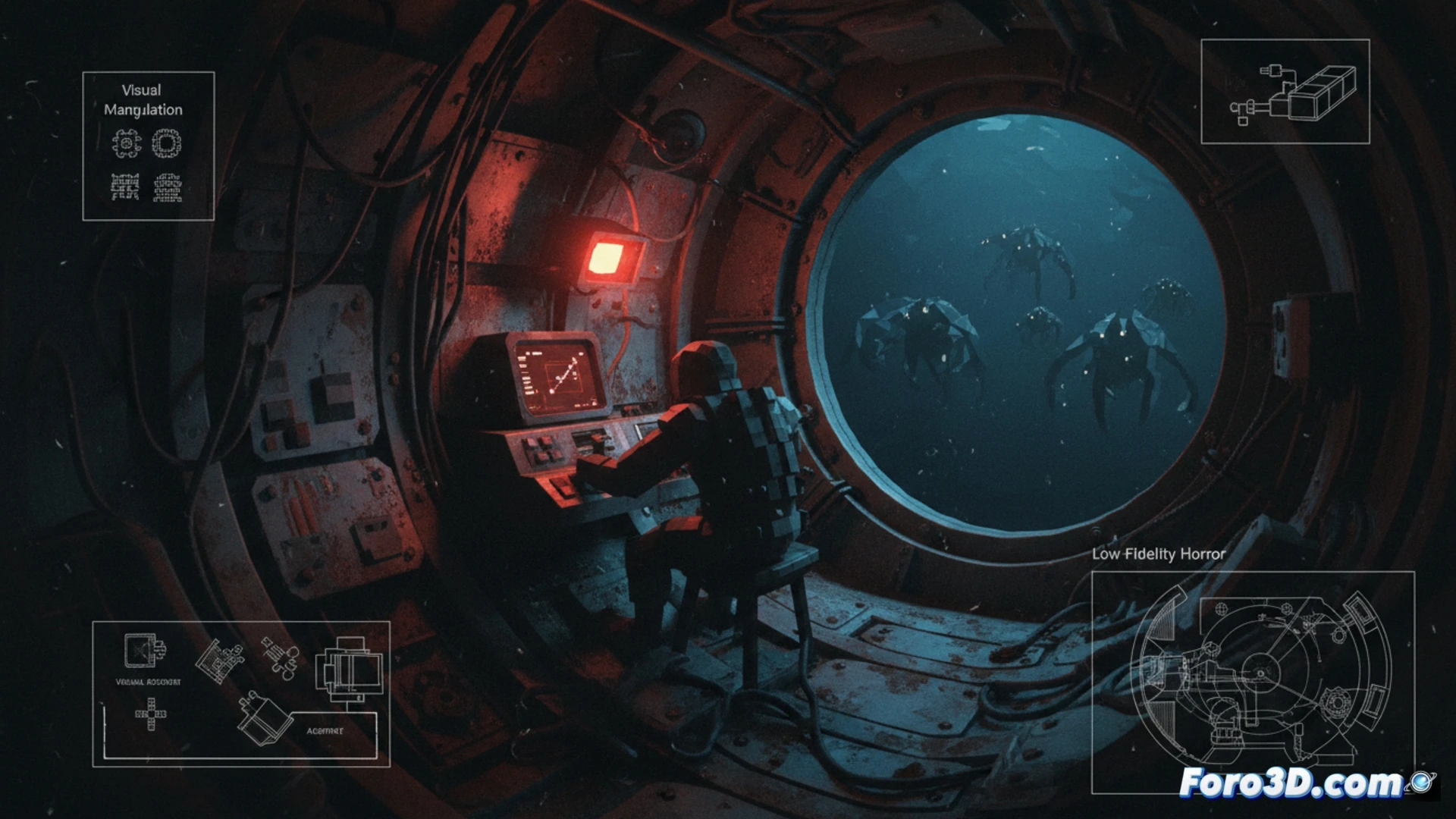
Asset optimization and visual distortion in Blender and Unity 🛠️
From a technical standpoint, Iron Lung is a case study in optimization. The submarine and corridor models, created in Blender, are intentionally low-poly. This not only reduces render time but reinforces the feeling of a mechanical, rudimentary environment. To achieve the security camera effect, shaders are applied in Unity that distort the image in real-time, adding chromatic aberration and vignetting. The film grain is implemented via a script-generated overlay, avoiding static textures. Practical tips include using single materials in Blender to group geometry and creating a lightweight post-processing stack in Unity that prioritizes atmosphere over detail, maintaining stable performance on modest hardware.
Aseprite pixel art and the suggestion of underwater horror 🎨
The use of Aseprite in Iron Lung is not decorative; it is functional. The sprites for control panels and interfaces are created with a limited palette and dirty colors, avoiding any clean or modern elements. This aesthetic decision reinforces the idea of a worn-out, abandoned vehicle. By not showing monsters directly, the game uses these pixelated details to hint at movement on the periphery of the screen. The key tip for developers is to work with very low resolutions (64x64 pixels) and then scale up, allowing the human eye to interpret color blobs as ambiguous shapes. In an underwater environment, ambiguity is fear's best ally.
As a developer, what specific Unity techniques did you use to create the feeling of claustrophobia and tension in Iron Lung without relying on high-fidelity textures?
(PS: shaders are like mayonnaise: if they break, you start all over again)