The development of Victoria 3 presents a unique technical challenge: representing the Industrial Revolution on a global scale without sacrificing performance. To achieve this, Paradox Interactive has turned to its veteran Clausewitz Engine, but enhanced by the new Jomini renderer. This system allows the map not to be a simple static background, but a living organism that reflects in real-time the construction of railways, urban expansion, and industrial pollution, all without the need to load heavy 3D models. 🗺️
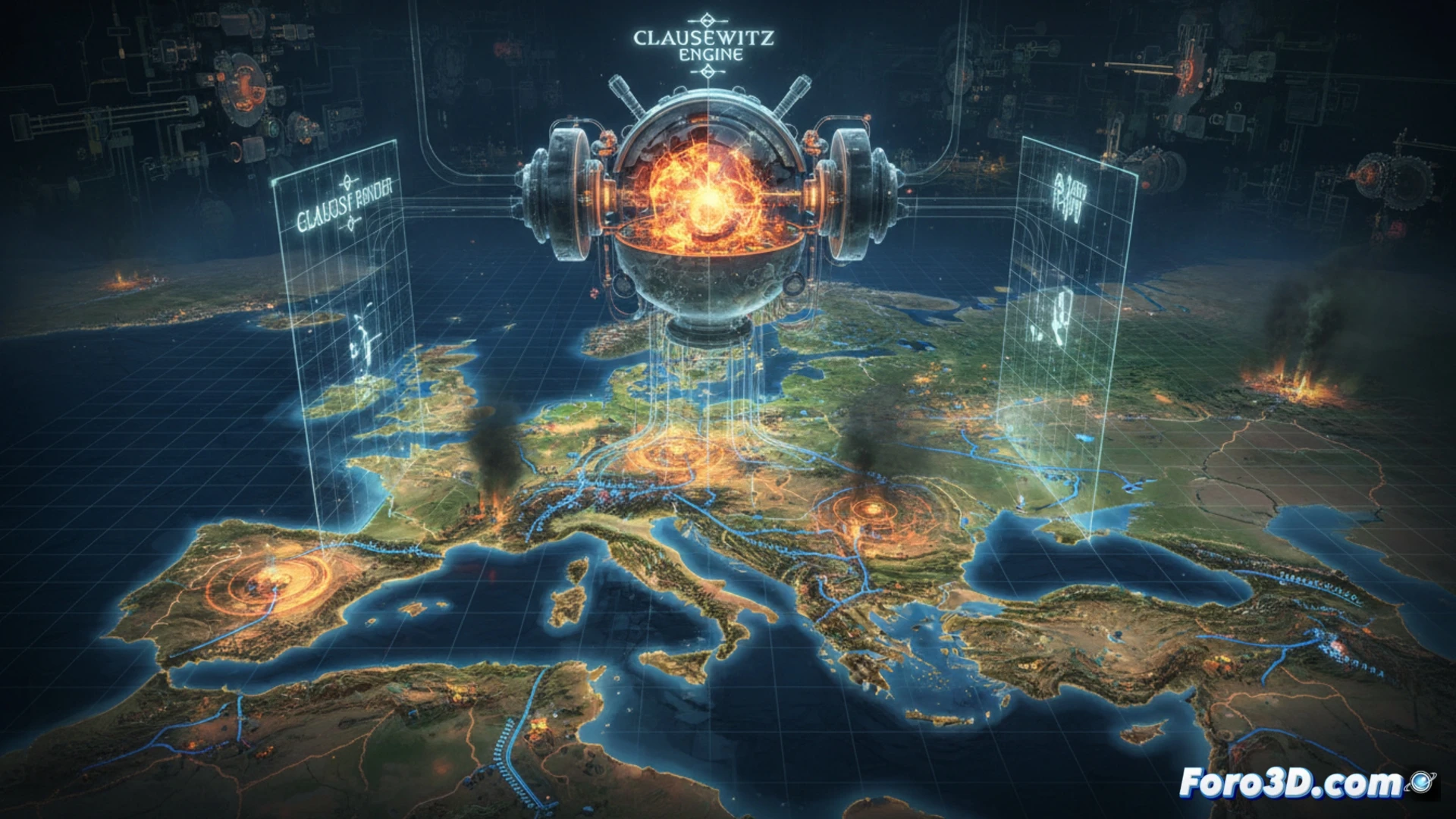
Jomini Renderer and Real-Time Geospatial Simulation 🎨
The true technical achievement lies in how Jomini translates economic simulation data into graphics. The engine does not render individual cities; instead, it uses a system of layers and shaders that paint directly onto the map texture. When a province reaches a population or industrialization threshold, the Jomini renderer applies a mask for urban growth or a layer of industrial soot. To create these assets, the art team combines Adobe Photoshop in procedural texture generation with GIS (Geographic Information Systems) tools. GIS tools allow importing real data on relief, hydrography, and historical urban density, which are then reinterpreted by the engine to ensure a city grows only where it is geographically plausible, avoiding clipping errors or impossible locations.
The Challenge of Scale and Visual Abstraction ⚙️
The main technical obstacle is not graphical fidelity, but memory management and CPU performance. Simulating the growth of every farm, factory, and railway on a map covering the entire planet requires intelligent abstraction. The Clausewitz Engine solves this by delegating visual representation to Jomini, which works with dynamic texture atlases instead of individual objects. This means the player sees factory smoke or city lights as a global post-processing effect, not as independent particles. The lesson here is that for complex simulations, aesthetics must be subordinated to computational efficiency, achieving a balance only possible when the game engine and asset creation tools (Photoshop and GIS) speak the same data language.
In an engine like Clausewitz, originally designed to simulate military conflicts, how its pathfinding and resource management system was adapted to manage the living map of Victoria 3, where millions of pops and trade routes change dynamically without collapsing real-time performance
(PS: shaders are like mayonnaise: if they break, you have to start all over again)