The Spanish studio has presented The Stone of Madness, a title that uses Unity as its technical backbone to render a unique pictorial aesthetic. Far from seeking photorealism, the team has opted to emulate Francisco de Goya's engravings, using an extreme chiaroscuro palette. This article analyzes the artistic pipeline and optimization techniques that allow digital illustrations, created in Photoshop and Corel Painter, to come to life in a real-time 3D environment without losing their two-dimensional essence.
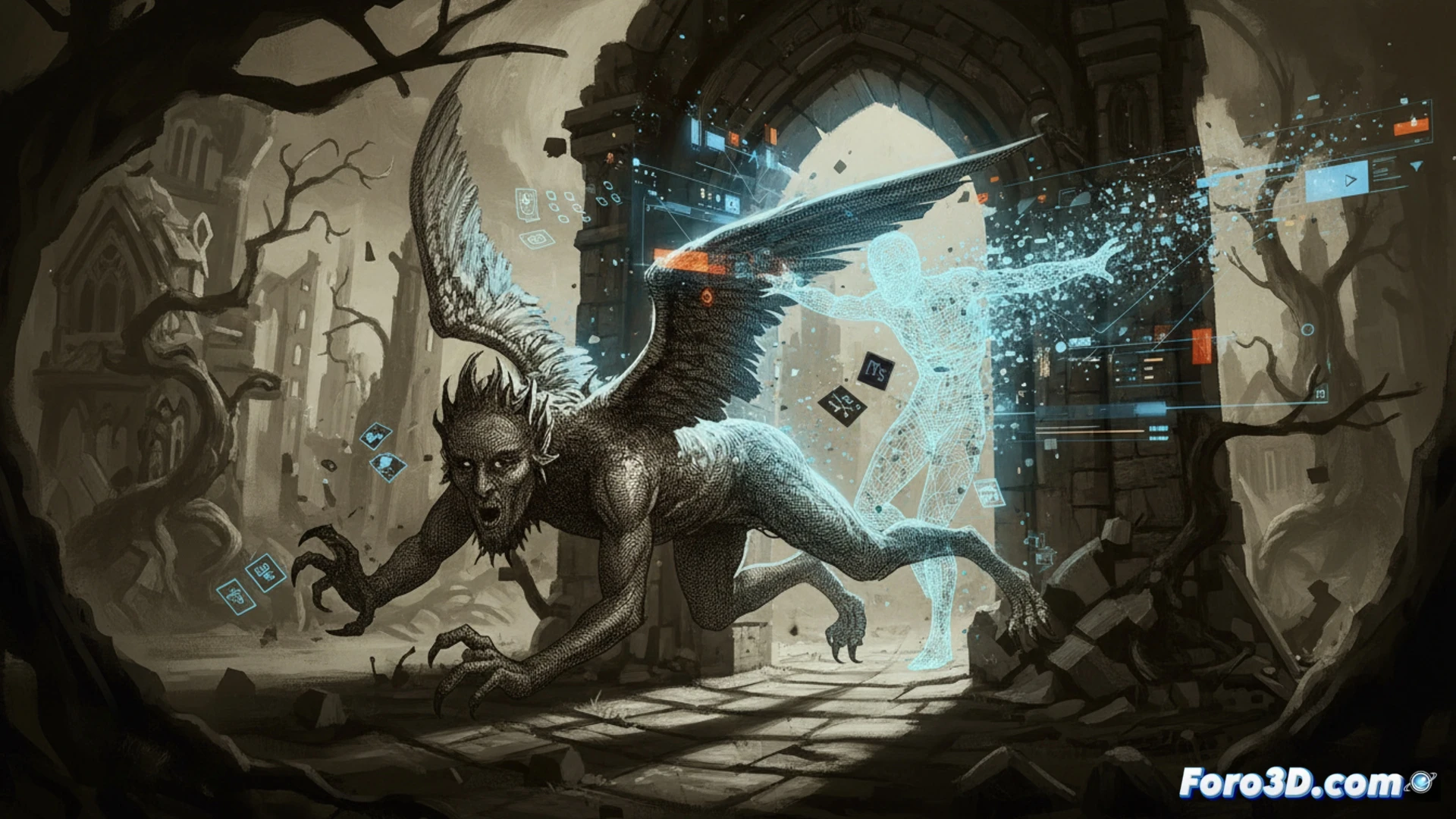
Artistic pipeline: from 2D canvas to real-time 3D engine 🎨
Integrating 2D art into an engine like Unity requires a hybrid workflow. The scenarios and characters start from sketches in Corel Painter, where brushes simulating the textures of etching and aged paper are applied. Subsequently, in Adobe Photoshop, the shading is refined and the characteristic Goyaesque chiaroscuro is applied. The biggest technical challenge is adaptation: assets are exported as flat textures or sprites, but are implemented in Unity using planes with custom shaders. These shaders avoid dynamic lighting to preserve the fixed shadows of the drawing, simulating a relief effect that provides depth without breaking the pictorial illusion. Optimization is key; texture atlases and minimal levels of detail (LOD) are used to maintain a stable frame rate without sacrificing the oppressive atmosphere.
Technique at the service of narrative: madness and visual confinement 🖤
The choice of chiaroscuro is not merely aesthetic; it is a narrative tool. In The Stone of Madness, dense shadows and extreme contrasts generate a feeling of claustrophobia and paranoia that reinforces the theme of mental confinement. By eliminating Unity's standard dynamic lighting, the team sacrifices technical realism to gain artistic expressiveness. This approach demonstrates that, in independent development, a coherent and well-executed artistic direction can overcome hardware limitations, turning a generic development engine into a brush for madness.
How the team behind The Stone of Madness manages to translate Goya's engraving technique and chiaroscuro into an engine like Unity without losing the original artistic expressiveness in real time
(PS: game jams are like weddings: everyone is happy, no one sleeps, and you end up crying)