Overpopulation on land is driving architects and engineers to seek solutions in the ocean. Self-sufficient underwater cities, anchored to the seabed, promise to harness oceanic resources while offering a new model of living. Although they may seem like science fiction, there are already prototypes and studies exploring their technical and ecological viability.
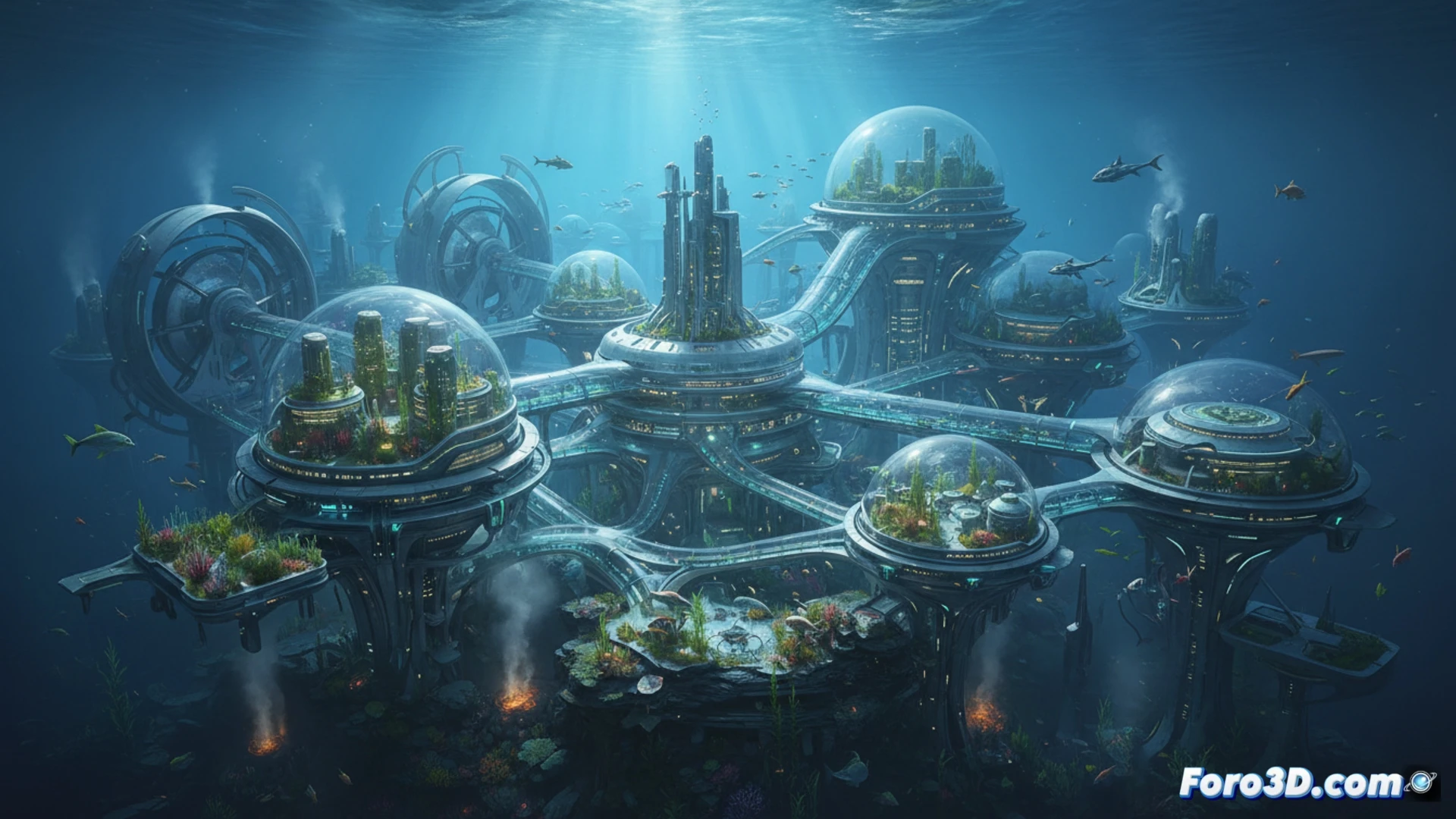
Pressure domes and algae farms: the engineering behind the myth 🌊
Development relies on reinforced concrete and steel structures capable of withstanding abyssal pressure. Reverse osmosis systems generate drinking water, while algae and fish farms provide food. Energy is obtained from tidal turbines and floating solar panels. Acrylic glass windows allow natural light to enter, and ventilation is regulated with ocean heat exchangers. Everything is designed for closed-loop waste cycles.
Silent neighbors: when your window overlooks a jellyfish shoal 🐙
Living underwater has its charm, until you discover that your sea view includes a giant squid staring intently into your living room. Not to mention that the pizza delivery person will take longer than usual, since the entrance is a pressurized airlock. And if you forget to close the hatch properly, your house becomes a pufferfish aquarium. At least the neighbors don't complain about the noise.