Modern architecture and smart urbanism sell us efficient cities, but they often eliminate the spaces that build community. Without neighborhoods, squares, or corners with memory, human beings stop encountering their neighbors. The elderly lose their shaded benches, and children grow up without knowing what it means to play on a shared street. We regress to a concrete individualism where community is just a word in a municipal brochure.
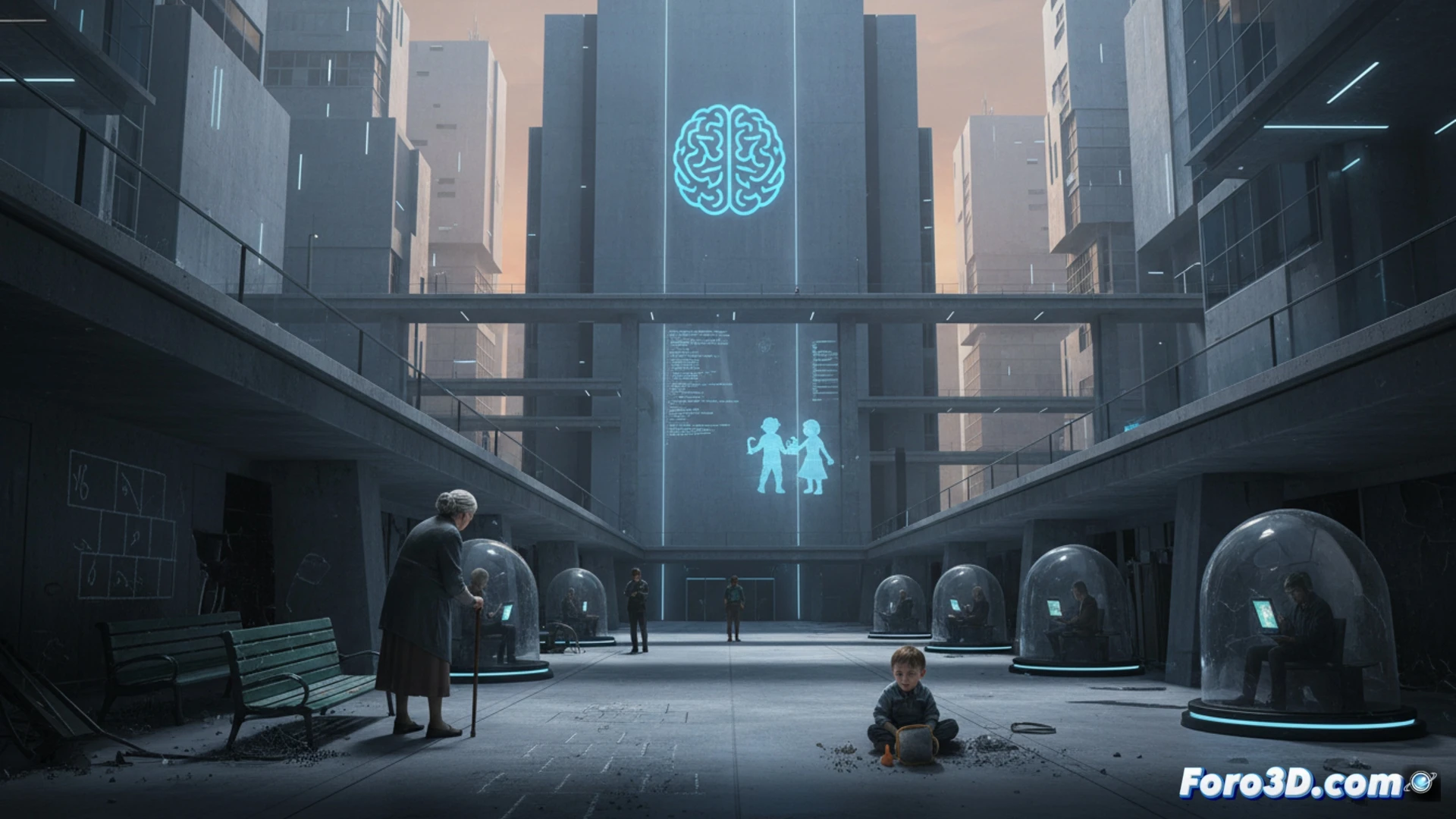
The algorithm that erased the town square 🏙️
Data-driven urban planning systems optimize the flow of people but ignore the pause. Sensors and apps regulate pedestrian traffic, designing streets for passing through, not for staying. Smart urban furniture, with slanted benches to prevent anyone from lying down, drives away the passerby. The result is a city efficient for consumer traffic, hostile for coexistence. Technology, instead of connecting, serves to segment and control public space.
Your square is now a touchscreen (and it has ads) 📱
Now, instead of a fountain to sit by and watch life go by, you find a giant screen selling you life insurance while you wait for the traffic light. The shaded bench has been replaced by an ergonomic seat with USB charging, but it's right under a flashing billboard. The icing on the cake is that the municipal app congratulates you for using the bike lane while the only real bench is occupied by a homeless person. Progress, they call it.