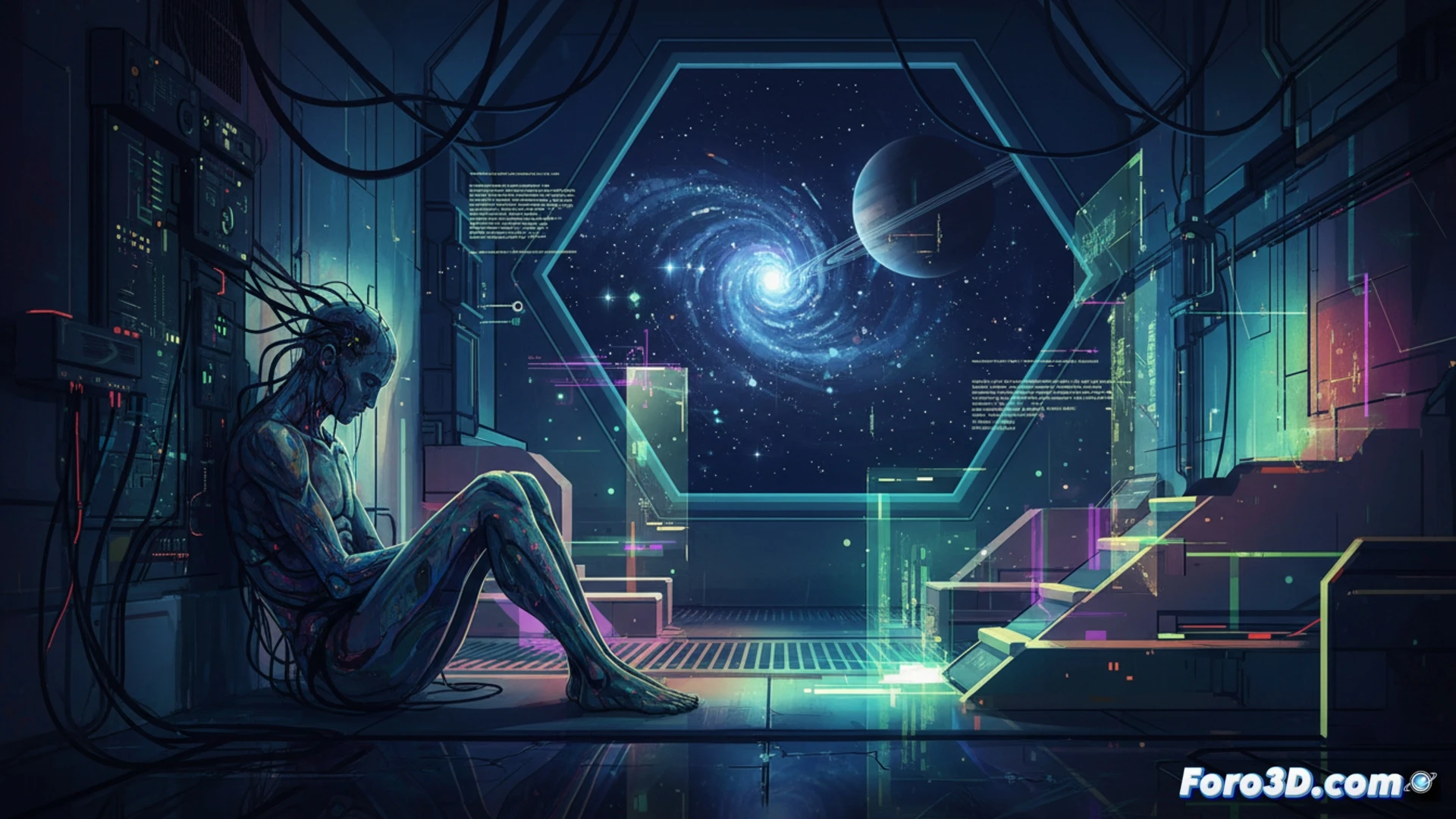
Citizen Sleeper is not only a narrative triumph but also a case study in optimizing artistic resources for independent games. Developed in Unity, the title achieves a powerful visual identity by combining a cyberpunk sci-fi aesthetic with the unmistakable style of Guillaume Singelin. The key to its success lies in a hybrid workflow that separates the organic soul of the characters from the geometric coldness of its space setting.
Technical Workflow: Photoshop, Illustrator, and Unity 🛠️
The artistic pipeline of Citizen Sleeper is an example of tool specialization. Photoshop was used for concept art and, crucially, for character portraits. This is where the game's emotional expressiveness resides, leveraging Singelin's textured brushstrokes and cartoon-but-grunge style to humanize the station's inhabitants. On the other hand, Illustrator was the chosen tool to digitally model the space station The Eye. All scene elements, from pipes to control panels, were created as perfect vectors. This decision is not aesthetic but technical: vectors allow scaling and reusing assets without loss of quality, maintaining stable performance in Unity even in the most complex sequences.
The Paradox of Detailed Minimalism 🎨
The minimalist user interface (UI) acts as the visual glue between these two worlds. While Illustrator's vector backgrounds provide the rigid, cold structure of cyberspace, Photoshop's portraits inject warmth and organic chaos. Citizen Sleeper demonstrates that minimalism is not an absence of detail but an intelligent curation of information. By delegating visual complexity to the characters and simplifying the environment and UI, the game guides the player's attention exactly where it matters: human stories in an inhuman setting.
How did Citizen Sleeper manage to combine the cyberpunk aesthetic with the vector system in Unity to maximize performance and visual expressiveness without sacrificing narrative immersion?
(PS: optimizing for mobile is like trying to fit an elephant into a Mini Cooper)