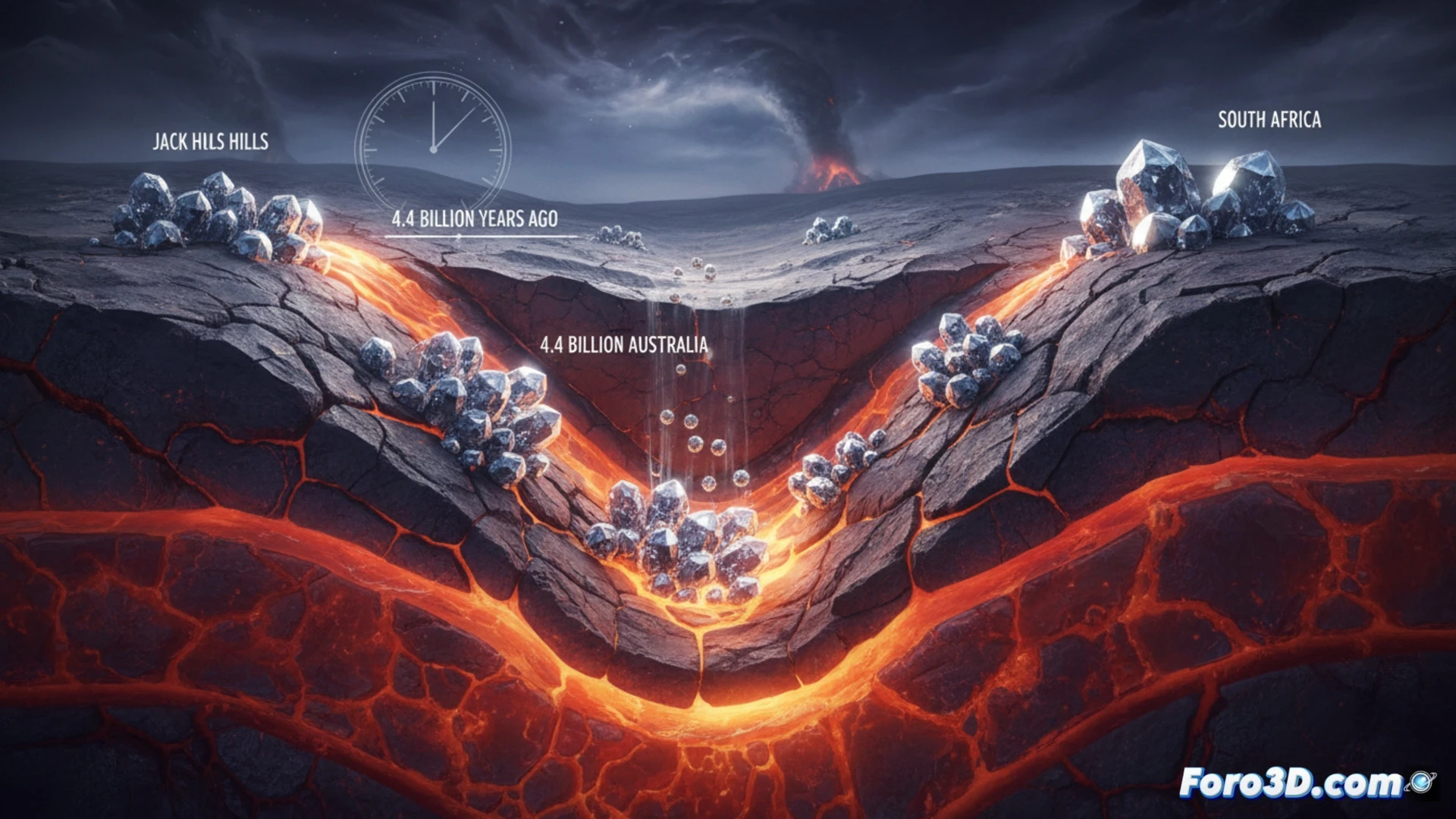
An analysis of zircons in Jack Hills, Australia, indicates that subduction already existed in the area 4.4 billion years ago, 600 million years earlier than estimated. However, zircons from South Africa of the same age show stable crust, suggesting that plate tectonics was not a global or synchronous phenomenon.
Implications for continental formation and early life 🌍
The finding rethinks models of continent formation. Localized subduction could have created varied geothermal and chemical environments. If tectonic activity existed so early, conditions for life, such as hydrothermal vents, could have occurred before the oldest fossil record (3.7-4.1 billion years ago). This forces a revision of the windows of habitability on early Earth.
When Earth couldn't decide between being tectonic or a quiet rock 🤔
It seems the early Earth suffered from geological indecision: in Australia it was already in full subduction mode, while in South Africa the crust was taking an eternal break. As in any construction site, some work while others watch. At least now we know the planet didn't start with global haste, but with regional rhythms. Almost like a plate choreography with slow steps.