3D technology has become a key tool for scientists. It allows them to materialize complex theoretical models, from protein molecules to reconstructed fossils. Instead of relying on flat diagrams, researchers can hold, measure, and manipulate exact replicas of their study objects. This accelerates understanding and facilitates communication among multidisciplinary teams.
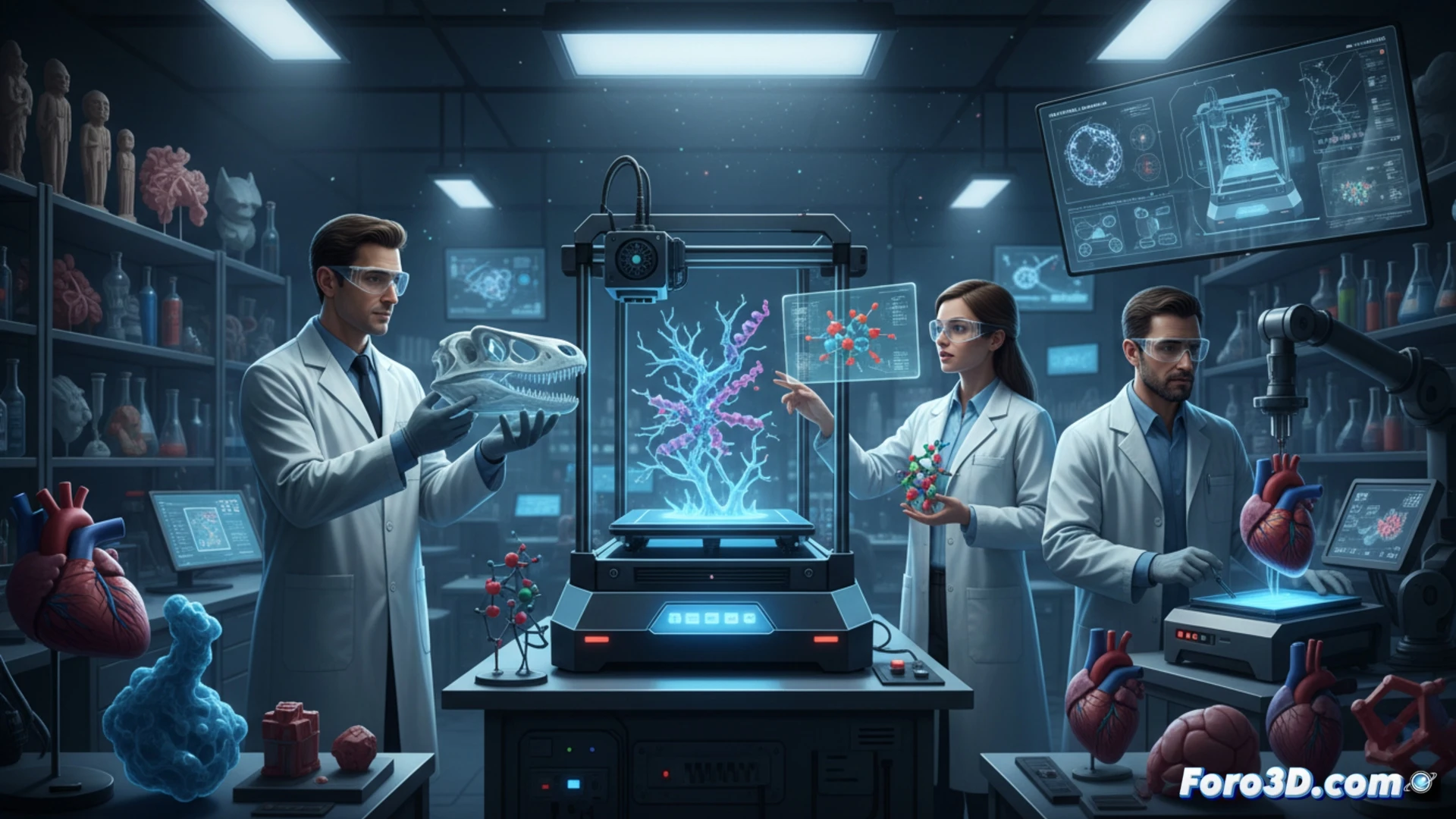
Real-scale molecular modeling: the case of protein folding 🧬
A clear example is the study of protein folding. Using software like PyMOL or ChimeraX, scientists generate 3D files of the protein structure. Then, through Blender or MeshLab, they prepare the model for printing. Once printed with an SLA or FDM printer, they can physically examine the folds and cavities, something impossible on a screen. This helps design drugs or understand diseases at the atomic level without spending on expensive atomic force microscopes.
When your DNA model falls off the table and breaks 🧪
Of course, not everything is serious science. The first attempt to print a DNA helix can end up with a tangle of plastic filaments that looks like mutant spaghetti. And if you print a hominid skull for class, make sure no one mistakes it for a Halloween decoration. But hey, at least when it breaks, you can say you're studying the fragility of biological materials. Science was never so... hands-on.