3D technology offers cybersecurity specialists a new way to visualize attacks and vulnerabilities. Instead of analyzing flat data, virtual environments can be recreated where each network node is a three-dimensional object. This allows for more intuitive and faster detection of intrusion patterns, improving incident response.
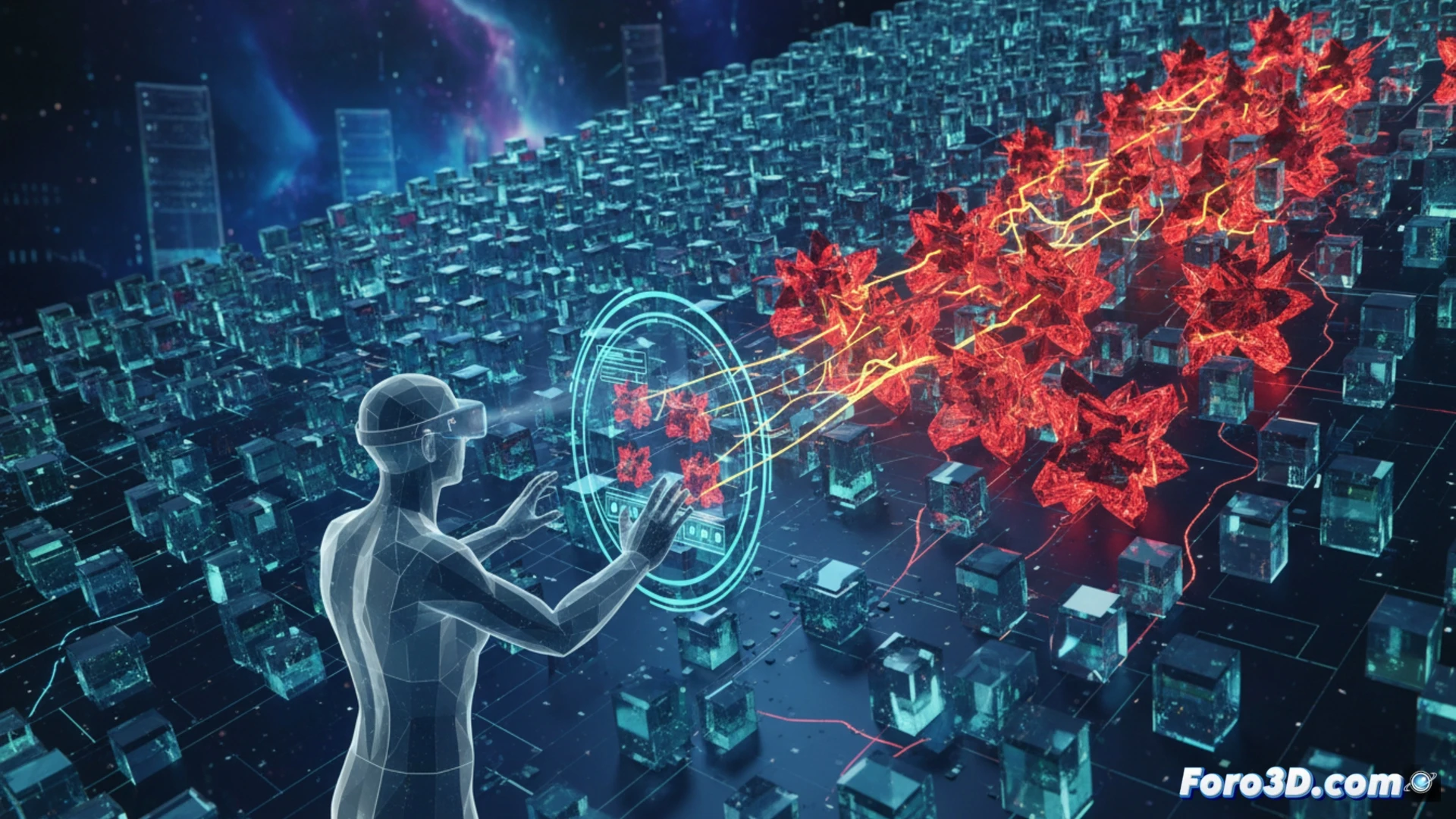
3D Simulation of Attacks with Blender and Wireshark 🛡️
A practical example is using Blender to model a corporate network topology. By importing data from Wireshark or Nmap, suspicious packets can be visualized as red spheres moving between servers. Tools like Unity or Unreal Engine allow for creating interactive simulations where the analyst walks inside the network to identify breaches. Required programs: Blender, Wireshark, Nmap, and a graphics engine like Unity.
Hacking with VR Glasses: The Clumsy Finger Syndrome 😵
Sure, nothing is more fun than trying to stop a DDoS attack while getting dizzy in virtual reality and crashing into a virtual server. The specialist looks like they're breakdancing in the real server room, but they're just dodging imaginary nodes. In the end, the biggest risk isn't the hacker, but hitting the keyboard with the glasses on and accidentally deleting the firewall.