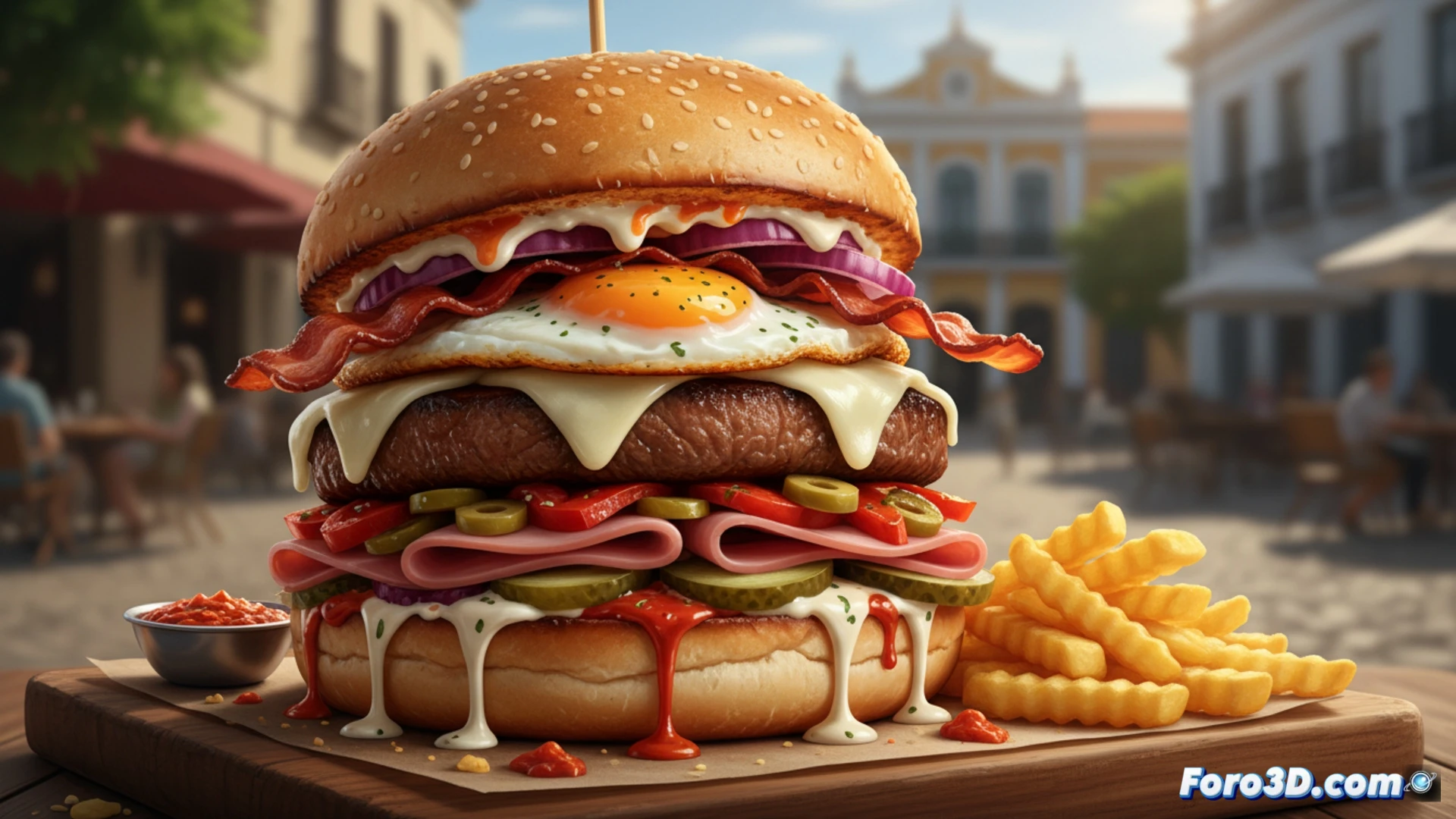
The Uruguayan chivito is not just a simple sandwich; it is a declaration of gastronomic principles. Born in Punta del Este, this dish combines beef tenderloin, ham, bacon, hard-boiled egg, mozzarella cheese, lettuce, tomato, and sauces like mayonnaise or golf sauce. Its essence lies in controlled excess: each ingredient competes for prominence without overpowering the other. For meat lovers, it is a monument to abundance and straightforward flavor.
The engineering behind the disorder: how to build a stable chivito
From a technical perspective, assembling a chivito is a challenge in food architecture. The base is a firm bread roll that can withstand the moisture from the meat and sauces. The tenderloin must be cooked just right, neither dry nor bloody, to prevent the bread from falling apart. The layering matters: melted cheese acts as an adhesive, while the egg and bacon provide contrasting textures. The balance between fats and proteins determines whether the bite crumbles or holds together. There is no room for error if a compact and edible result is desired.
The hidden science: how to eat it without staining your shirt
Eating a chivito without ending up with your shirt looking like an abstract canvas is a skill not taught in schools. The trick is to apply lateral pressure with both hands, as if defusing a mayonnaise bomb. If the tomato slips, it is the diner's fault, not the cook's. And if the egg falls onto the plate, one can argue it is part of the aesthetics of chaos. In the end, what matters is that the flavor justifies any stain.