China has put into operation in Xinjiang the world's largest coal-to-chemical energy complex, backed by 390 billion tons in reserves. With investments exceeding 800 billion yuan, the project aims to reduce dependence on imported oil by transforming coal into gas, plastics, and liquid fuels. In 2024, local production reached 540 million tons, a 17% increase.
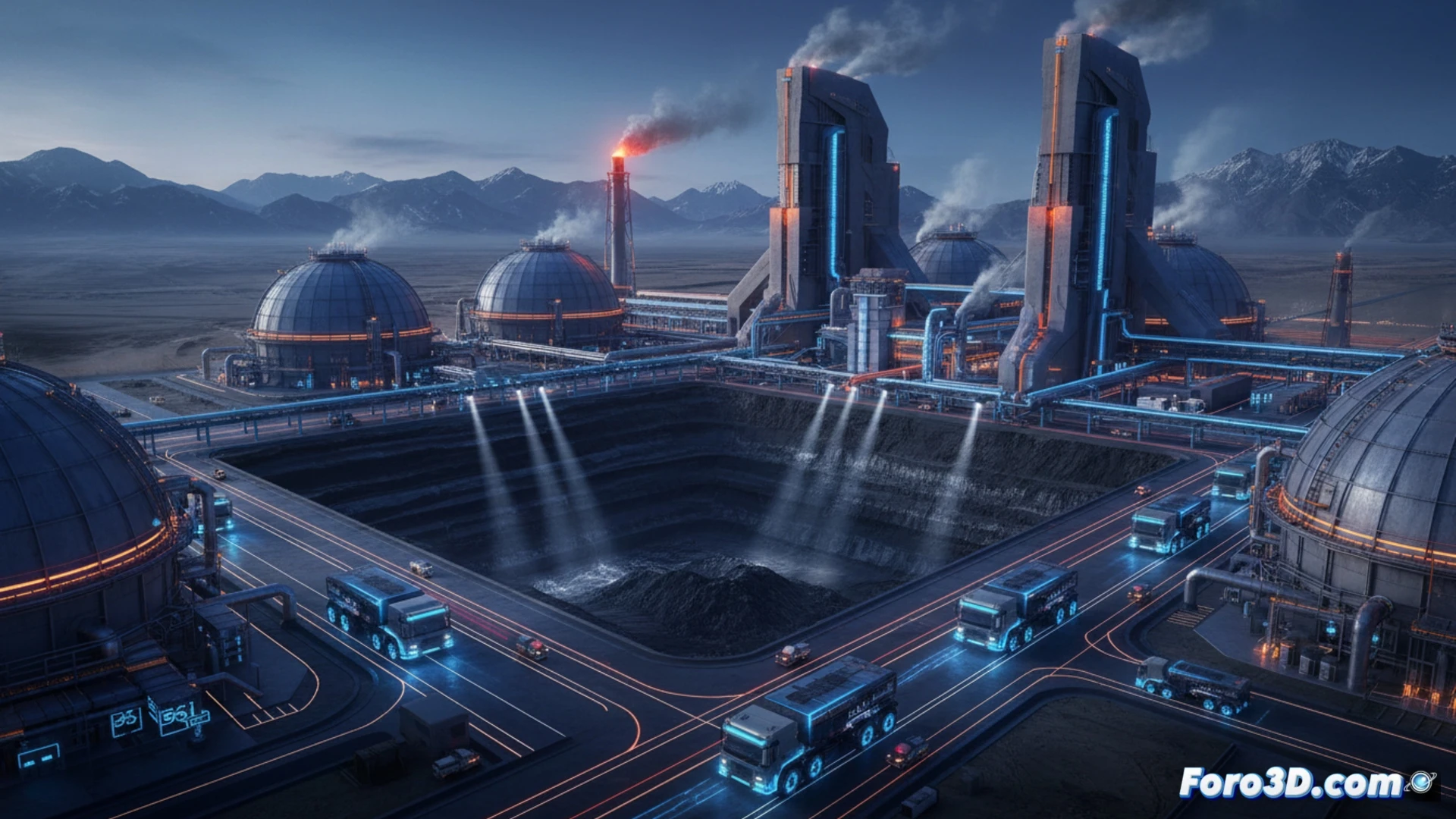
Driverless trucks and 5G: the logistics of future coal 🚛
The operation uses over 200 autonomous trucks guided by 5G and GPS, working 24 hours without rest. These vehicles avoid human risks in extreme environments and optimize routes in real time. The strategy responds to the increased energy demand from artificial intelligence, prioritizing converting coal into chemical raw materials instead of burning it directly. The complex integrates mining, gasification, and chemical synthesis into a single system.
From coal to plastic: goodbye oil, hello desktop mine ⛏️
While in the West they debate whether coal is a thing of the past, China turns it into gas and plastics with trucks that don't even need a driver. AI demands more energy and coal responds: instead of emitting smoke, it transforms into bags and fuels. If the future is green, it seems that in Xinjiang it will be green... with a very particular coal tone.