The indie scene surprises us once again with Children of the Sun, a title that proves graphical power lies not in realism, but in artistic direction. Developed in Unity and supported by Photoshop for asset creation, this game bets on a high-contrast lo-fi aesthetic. Its true technical magic, however, lies in the representation of projectile trajectories and visual distortion, key elements for conveying the violence and speed of combat.
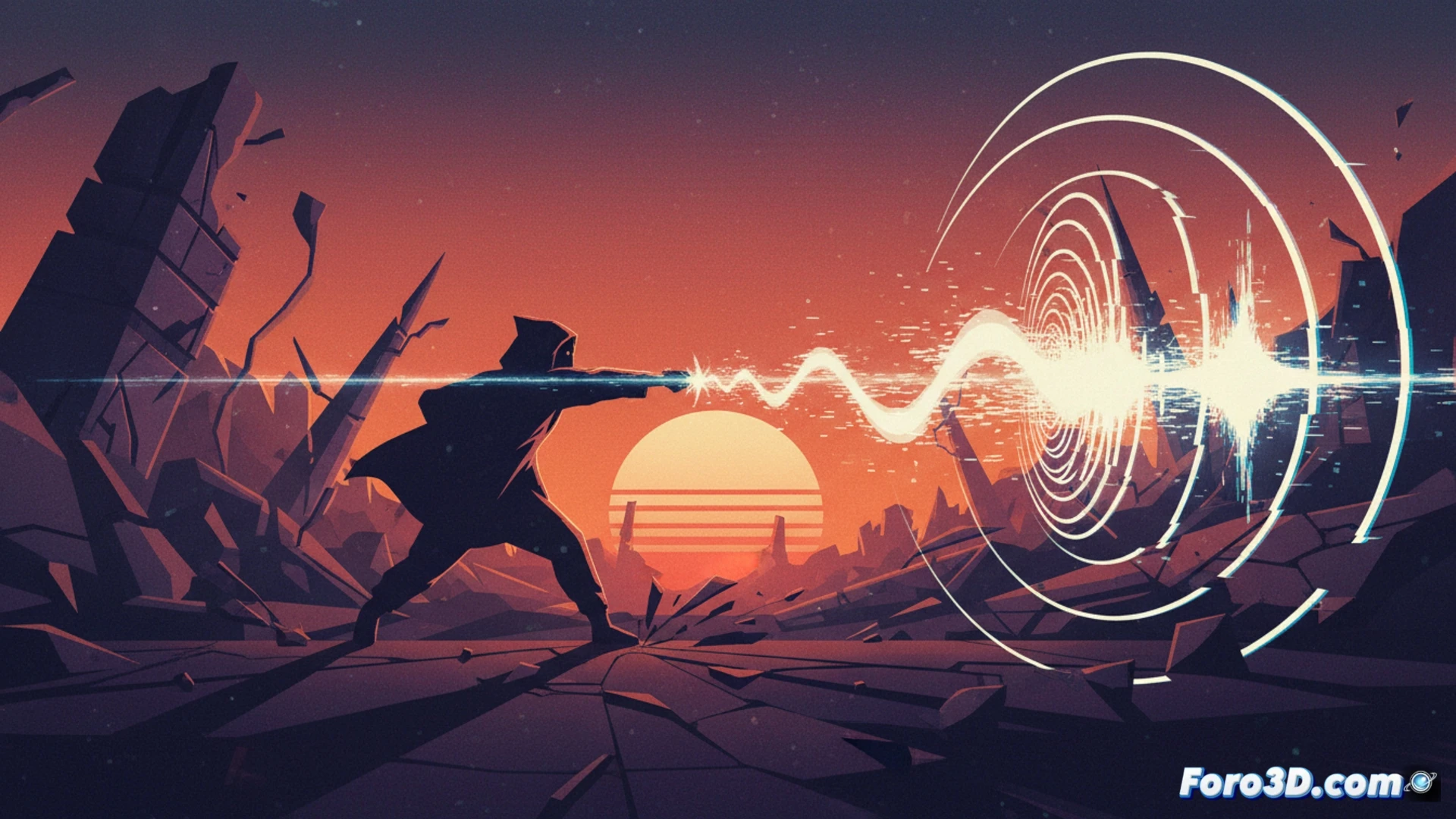
Shader and Post-Processing Techniques for Controlled Chaos 🎯
To achieve that visceral impact effect, the team has had to fully exploit Unity's rendering pipeline. The lo-fi style is likely achieved through a Color Overdrive Shader combined with a Post-Processing Stack that applies extreme chromatic aberration at the moment of firing. The key lies in camera scripting: upon detecting a projectile collision, a time scale animation (Time.timeScale) and a screen distortion effect (GrabPass with noise) are activated. For trajectories, it is recommended to use a Trail Renderer system with Unlit materials that ignore lighting, forcing that pure contrast. Indie developers can easily replicate this with a script that modifies the chromatic aberration weight in Unity's Volume Profile.
Lessons for Indie Devs: Fewer Polygons, More Personality 💡
Children of the Sun is a case study on how to optimize resources without sacrificing identity. By using Photoshop for flat, high-contrast textures, the need for complex 3D models is reduced. The trick lies in contrast: by saturating the colors of the projectiles and desaturating the background, the player's eye focuses on the action. For developers seeking this style, the advice is clear: master Unity's Particle System and Post-Processing Stack. They don't need a state-of-the-art graphics engine; they need to understand how Unity handles screen buffers to distort the player's reality, turning a technical flaw (chromatic aberration) into an aesthetic virtue.
As an indie developer, what specific resources or techniques within Unity allowed you to achieve the high-impact lo-fi visual style of Children of the Sun without relying on photorealistic textures?
(PS: shaders are like mayonnaise: if they break, you start all over again)