The development of Chernobylite 2: Exclusion Zone represents a fascinating case study on how photogrammetry and Unreal Engine 5 technologies can converge to create chilling photorealistic visuals. The team has used RealityCapture to scan the real Exclusion Zone, generating extremely high-density meshes that are then refined in ZBrush. This process allows capturing every crack in the asphalt and every texture of radioactive moss, setting a new visual standard for survival narrative. 🎮
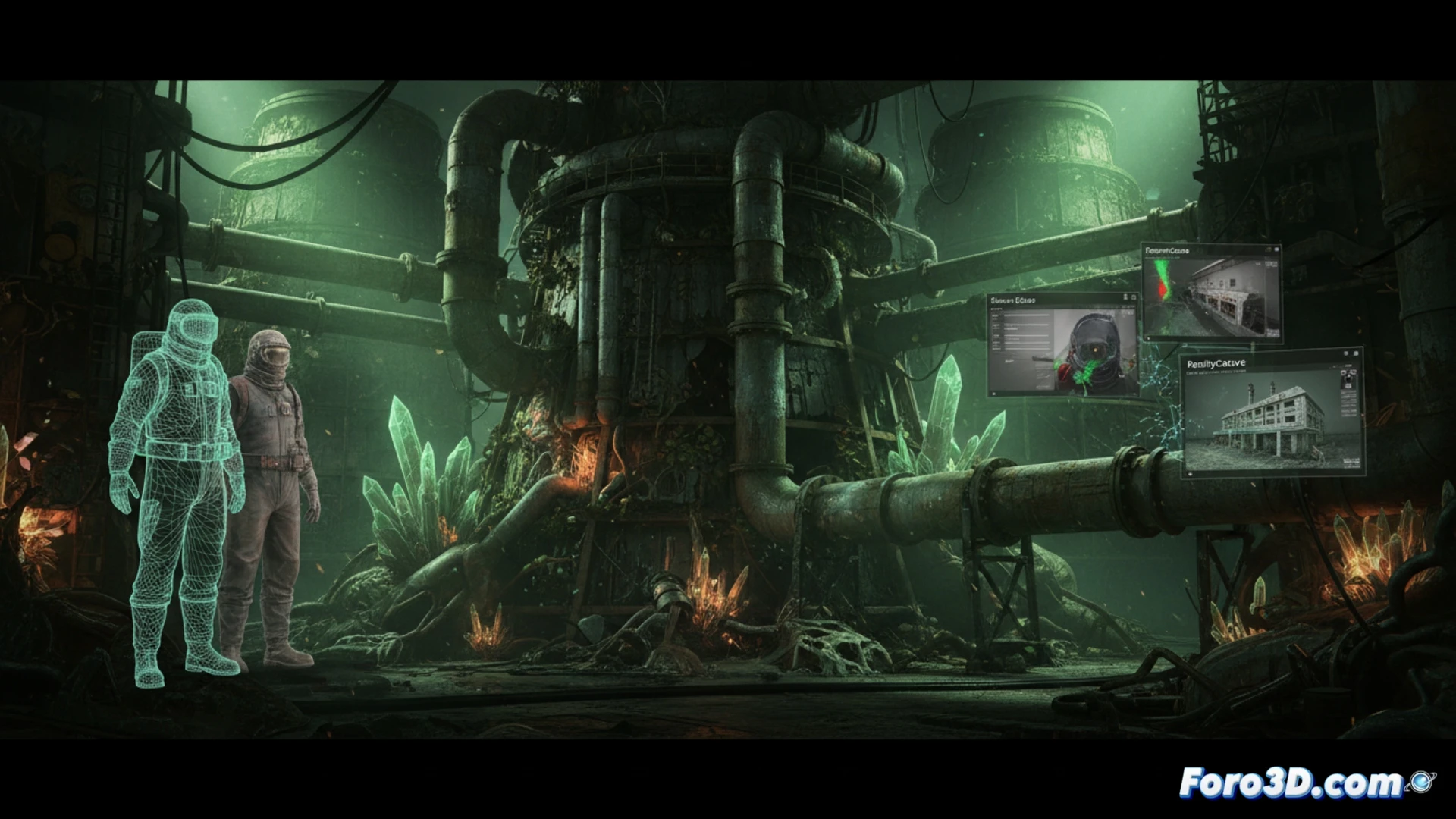
Technical Pipeline: From Capture to Real-Time Rendering 🔧
The workflow begins with on-site photographic capture. The images are processed in RealityCapture to generate point clouds and base meshes. Subsequently, these meshes are taken to ZBrush for retopology and fine detail, removing unnecessary noise to optimize performance without losing fidelity. Integration into Unreal Engine 5 leverages Quixel Megascans as a supporting library for organic materials, while Lumen manages dynamic global illumination, simulating how sunlight filters through collapsed buildings. Nanite, for its part, allows rendering photogrammetry meshes directly without the need for traditional LODs, maintaining hyper-detailed geometry in every corner of the map.
The Visual Impact on the Zone's Narrative 🌍
Beyond the technical showcase, this implementation serves a deep narrative purpose. The precision of photogrammetry is not just meant to impress, but to convey the feeling of abandonment and real danger. The use of Lumen for indirect lighting allows the atmosphere to change organically, reflecting the passage of time and the presence of anomalies. For developers, this project demonstrates that combining real data capture with modern engines can bridge the gap between cinema and video games, offering an immersive experience that depends as much on technical optimization as on the authenticity of the setting.
What photogrammetry and material optimization techniques in Unreal Engine 5 did The Farm 51 use to capture the realism of the Chernobyl exclusion zone without sacrificing real-time performance?
(PS: 90% of development time is polishing, the other 90% is fixing bugs)