3D technology offers basket weavers tools to digitize complex patterns and simulate weaves before cutting a single fiber. A practical example is the design of a basket with an elliptical base and structural reinforcements, where modeling allows for predicting stress points and optimizing material usage, saving time and resources.
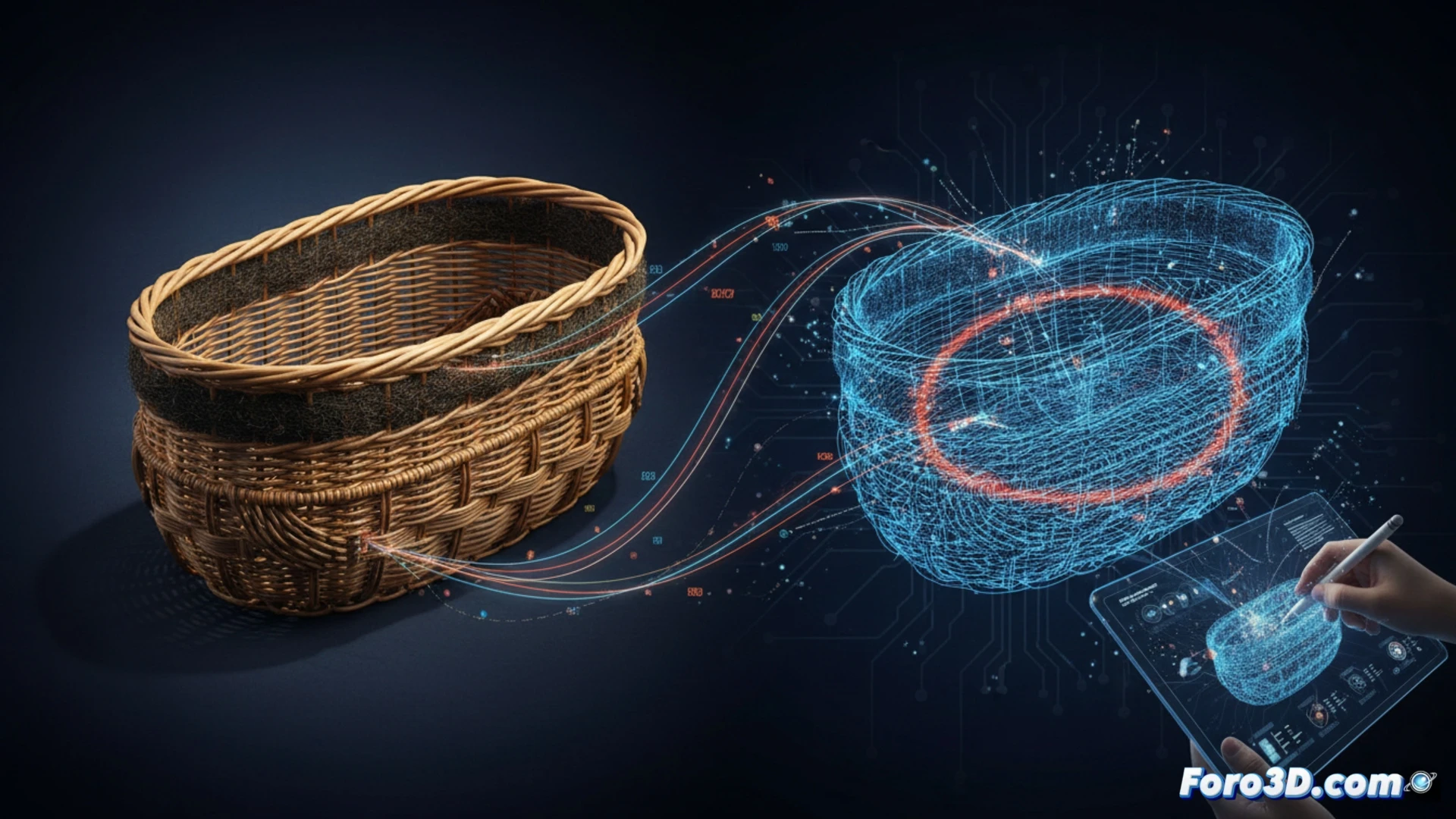
From wicker to mesh: digital workflow for basket weavers 🧺
To start, an existing basket is scanned with a handheld 3D scanner like the Einscan SE, or photographed with a mobile phone to generate a mesh using RealityCapture. Then, in Blender or Rhino 3D, the base structure is modeled by exporting weave patterns in SVG format. Those vectors are taken to a laser cutter (such as the Glowforge) to create assembly guides in cardboard or thin wood, or custom joining pieces are 3D printed with an Ender 3. Finally, the basket weaver weaves over these templates, combining tradition with digital precision.
When the basket designs itself and doesn't ask you for coffee 🤖
The best part of using 3D software is that the virtual basket never complains if you tighten the strips too much, nor does it fall apart when you turn it over. That said, don't expect the digital model to help you carry the groceries. For that, it's better to leave the algorithm on the screen and grab the real wicker, because the computer doesn't know how to tie knots or store the bread.