Basilio Rodríguez Cañada argued in Alcázar de San Juan that Cervantes is not a museum author, but a chronicler of our era. His work addresses themes such as justice, freedom, and identity, connecting with today's audience thanks to a critical perspective and intelligent humor. The event aimed to demonstrate that Don Quixote remains a mirror in which to see ourselves, free from dust and display cases.
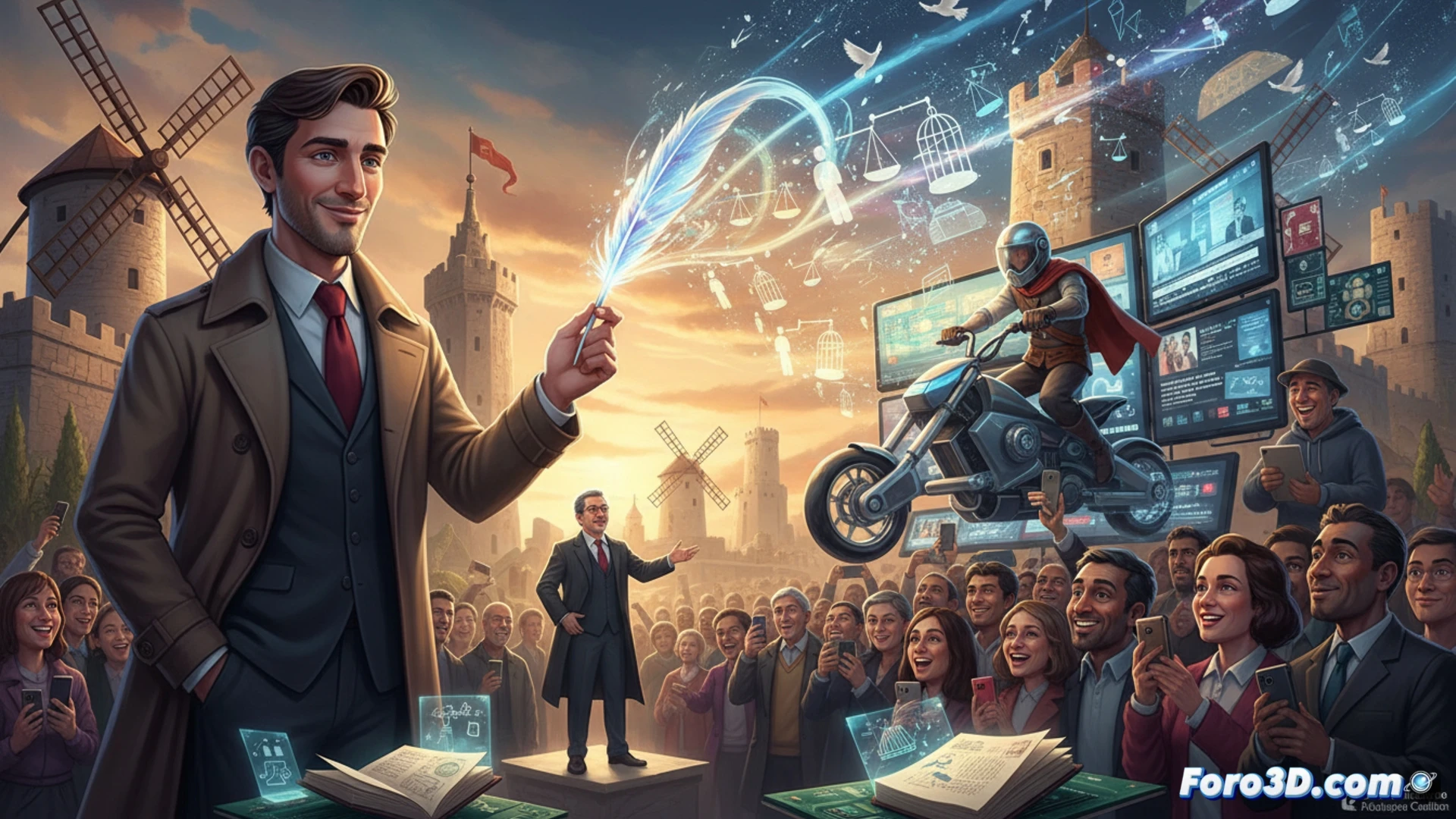
The relevance of Don Quixote in the age of algorithms 🤖
Cervantine narrative anticipated concepts such as augmented reality or digital simulation. Don Quixote did not see giants, but windmills; today, algorithms show us distorted versions of the world. The work raises questions about identity and perception that resonate in the development of artificial intelligence and metaverses. Cervantes already explored the gap between the real and the virtual without needing a single cloud server.
Cervantes, the first influencer without wifi 📱
Rodríguez Cañada recalled that Cervantes wielded humor as a weapon of mass construction, something today's content creators try to emulate with memes and cat videos. But the one-armed man of Lepanto did not need likes or stories: with a pen and two characters, he created the first literary spin-off in history. Sure, his engagement algorithm was called irony and worked better than any TikTok.