Celeste is not only a milestone in level design, but also a technical case study for indie developers looking to squeeze the most out of modest hardware. Its engine, XNA/MonoGame, demonstrates that a lightweight framework is sufficient to achieve smooth animations and perfect control response, as long as resource management and the art pipeline are optimized. We analyze how the team combined Aseprite, FMOD, and a strategic color palette to create a visually flawless and technically efficient experience.
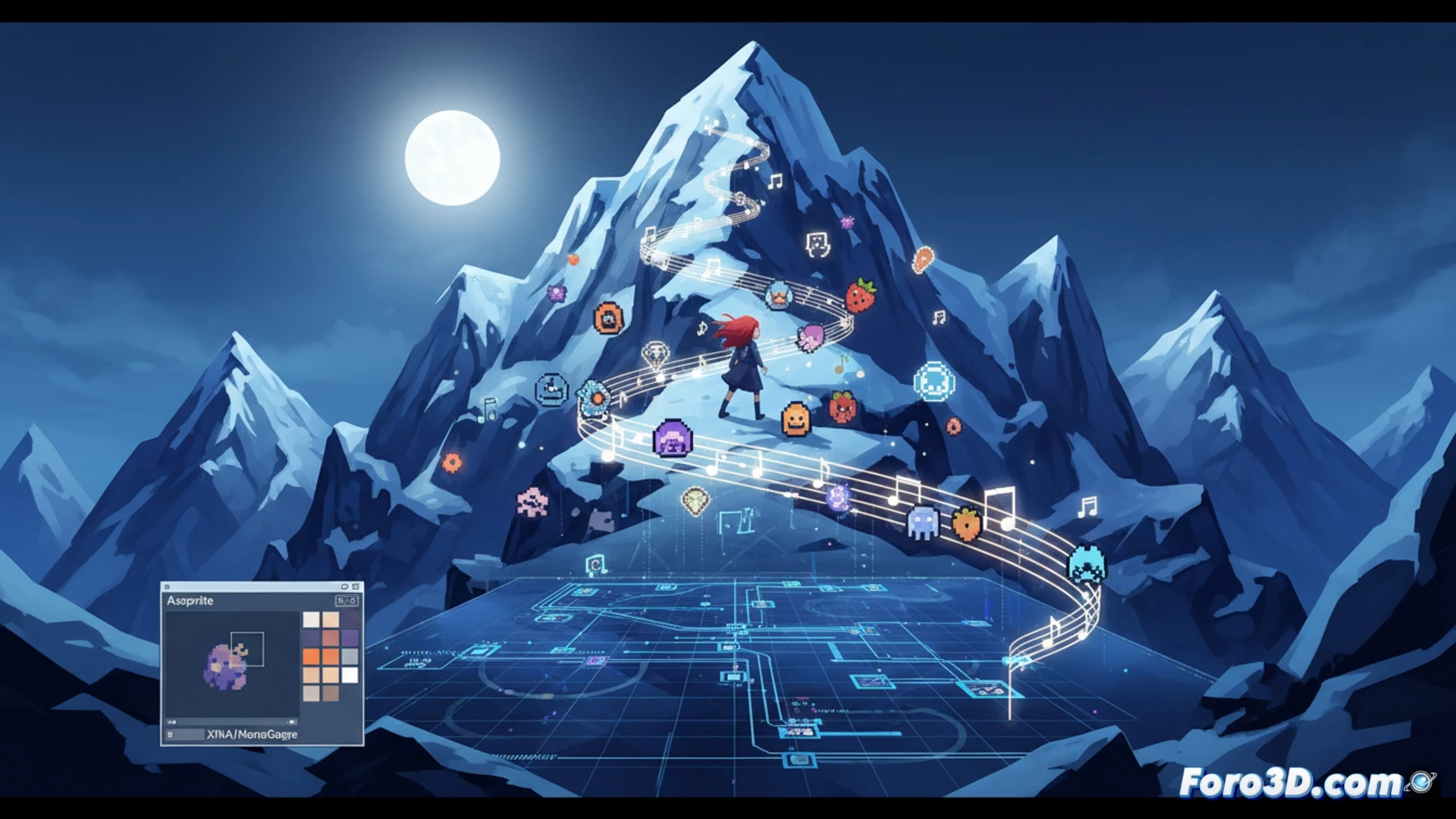
Technical Pipeline: XNA/MonoGame as a Foundation for High-Performance Pixel Art 🎮
The use of XNA/MonoGame allowed Celeste's developers to maintain granular control over the render buffer and game logic without the overhead of heavier engines like Unity or Unreal. For pixel art, each sprite and tileset was created in Aseprite, a tool that allows direct export of sprite sheets optimized for the engine. The technical key lies in preloading textures into atlases and using animation states based on fixed frames, which eliminates latency in character movements. Furthermore, the integration of FMOD was no coincidence: the middleware allowed for the implementation of adaptive music that changes intensity based on the player's speed or the tension of the moment, synchronized with game events without consuming extra CPU cycles on rendering. This architecture demonstrates that tool specialization (Aseprite for art, FMOD for audio) and a minimalist engine can outperform all-in-one solutions when the pipeline is well-planned.
The Color Palette as a Design and Accessibility Tool 🎨
Beyond technique, Celeste offers a lesson on how color theory directly impacts gameplay. The carefully selected palette avoids excessive saturation and harsh contrasts that cause eye strain during long sessions. Cool tones in climbing sections and warm tones in moments of calm not only reinforce the mountain's atmosphere but also guide the player's attention to dangers without the need for intrusive HUD elements. For an indie developer, this means that investing time in selecting limited palettes (such as 8 or 16 colors per scene) is not a limitation, but a design decision that improves readability, reduces asset weight, and, as a bonus, facilitates accessibility for people with visual sensitivity.
How does Celeste manage to maintain a dynamic and coherent audio experience with a lightweight engine, and what practical lessons can indie developers extract to optimize their own projects without sacrificing sound immersion?
(PS: game jams are like weddings: everyone is happy, nobody sleeps, and you end up crying)