Construction with 3D printing faced a problem: patented materials made projects more expensive. Cedar, developed by 14Trees and Tvasta Manufacturing Solutions, breaks this logic by using local concrete mixes. Manufactured in India, this gantry machine prints up to 10 meters in height and 240 m², reducing material costs by up to five times and requiring half the investment of its competitors.
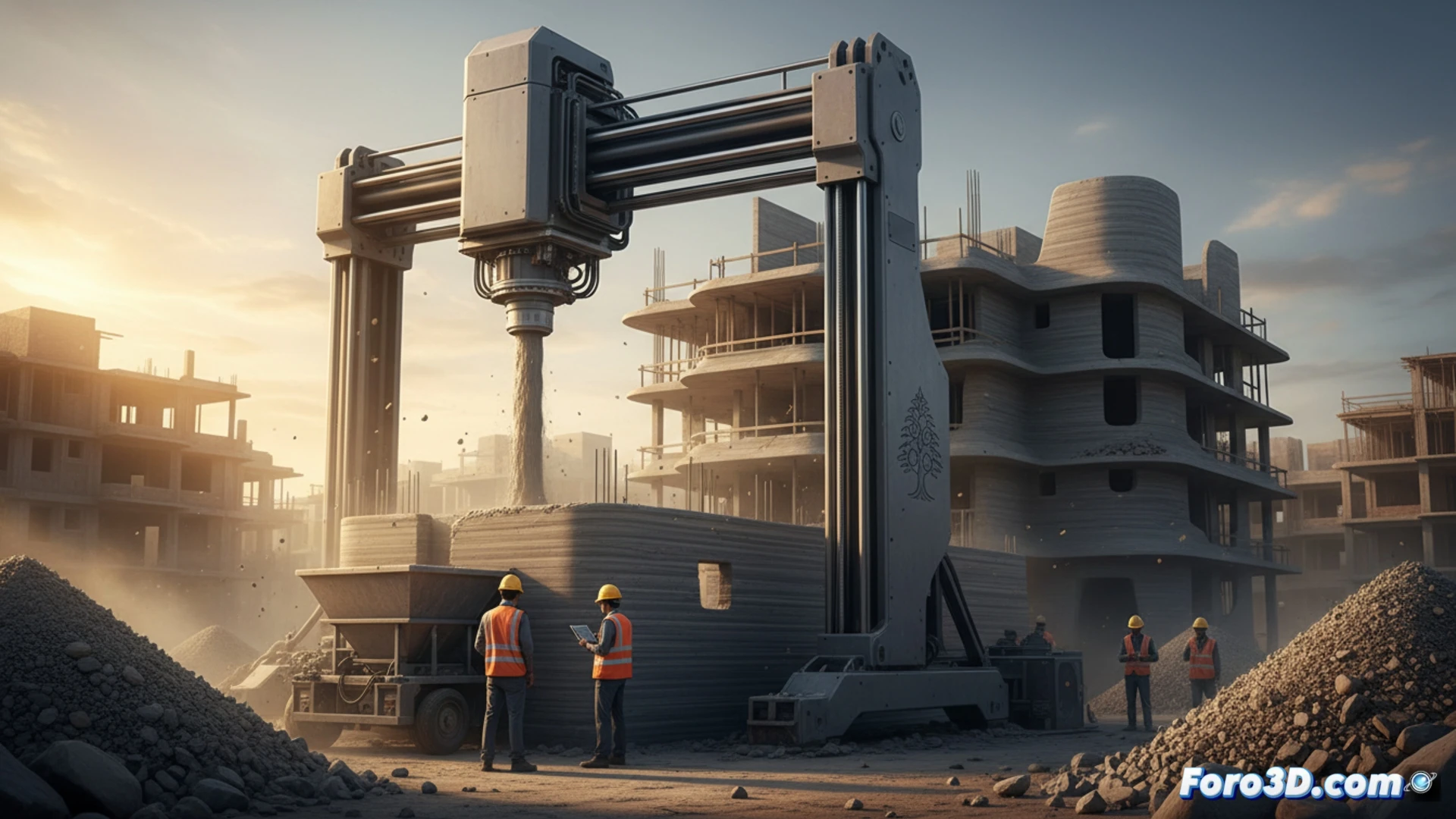
AI and local concrete: the recipe for emerging markets 🏗️
Cedar integrates the 14Trees AI Companion, a system that optimizes mixes based on costs, structural requirements, and regional availability. This eliminates the need for imported formulas and adapts the concrete to each location. Its gantry architecture facilitates assembly and reduces initial capital. 14Trees already tested the concept in Africa, where it built the world's first 3D-printed school, demonstrating that the technology can overcome logistical and economic barriers.
Goodbye to premium cement: now print with what's available on the corner 🧱
While other printers require secret mixes only sold by the manufacturer, Cedar lets you use concrete from the corner hardware store. The AI Companion acts as a digital alchemist: it calculates whether your backyard sand can support the roof or if it's better to mix it with something from the neighboring construction site. So, instead of paying five times more for patented material, you spend just enough to keep the house from collapsing with the first gust of wind.