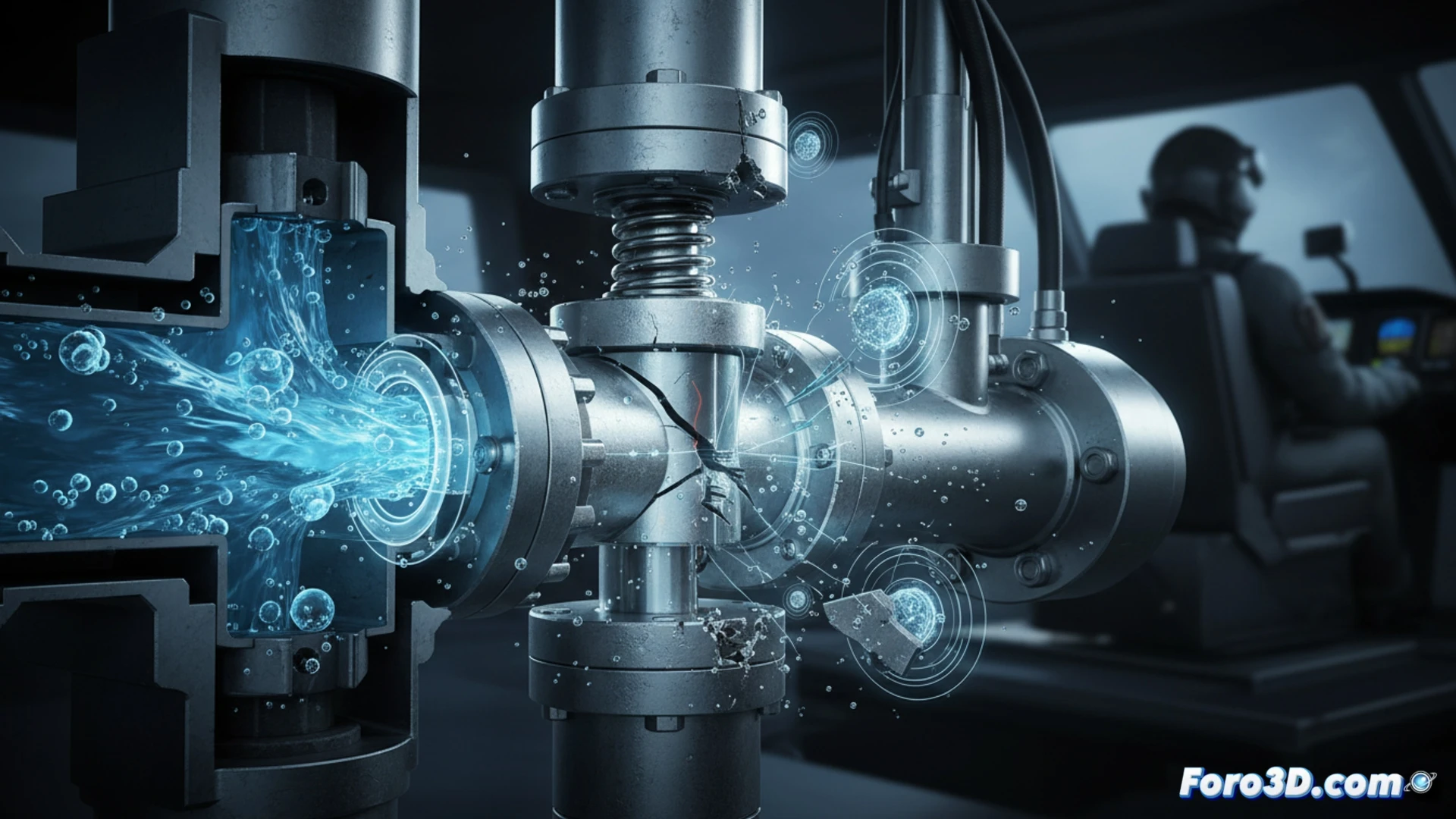
During a high-demand maneuver in a certified Grade D flight simulator, the Stewart motion system collapsed abruptly. The pilots suffered neck injuries when the platform stopped without warning. The technical expert analysis, supported by 3D simulation tools, revealed that the root cause was a process of severe cavitation in the hydraulic actuators, which led to fatigue and rupture of the relief valves.
Failure modeling: from fluid dynamics to structural analysis 🛠️
The forensic team used Autodesk CFD to recreate the flow of hydraulic oil inside the cylinders during the maneuver. The model revealed zones of negative pressure that generated vapor bubbles, which imploded against the seat of the relief valve. The pressure data obtained were exported to SolidWorks Simulation, where a high-cycle fatigue analysis was applied to the valve geometry. The results showed that the material, a 4140 alloy steel, had exceeded its endurance limit in the bubble impact zone, generating microcracks that progressed to total fracture of the component. The 3D visualization in Maya allowed the experts to create an animation of the collapse, synchronizing the pressure drop with the exact moment of mechanical rupture.
Lessons for fatigue simulation in critical systems ⚙️
This incident demonstrates that cavitation is not just a hydraulic performance problem, but a silent trigger of material fatigue. The use of Moog Simulation Software to validate the motion profile before the flight did not detect the hydraulic resonance because the material fatigue models were decoupled from the fluid analysis. The 3D expert analysis not only identified the exact point of failure but also forces the industry to integrate multiphysics simulation (CFD + structural) as a standard in the certification of high-mobility simulator components.
Which multiphysics simulation methodology would allow for more accurate prediction of the relief valve's service life under intermittent cavitation regimes during high-demand maneuvers in Grade D simulators?
(PS: Material fatigue is like yours after 10 hours of simulation.)