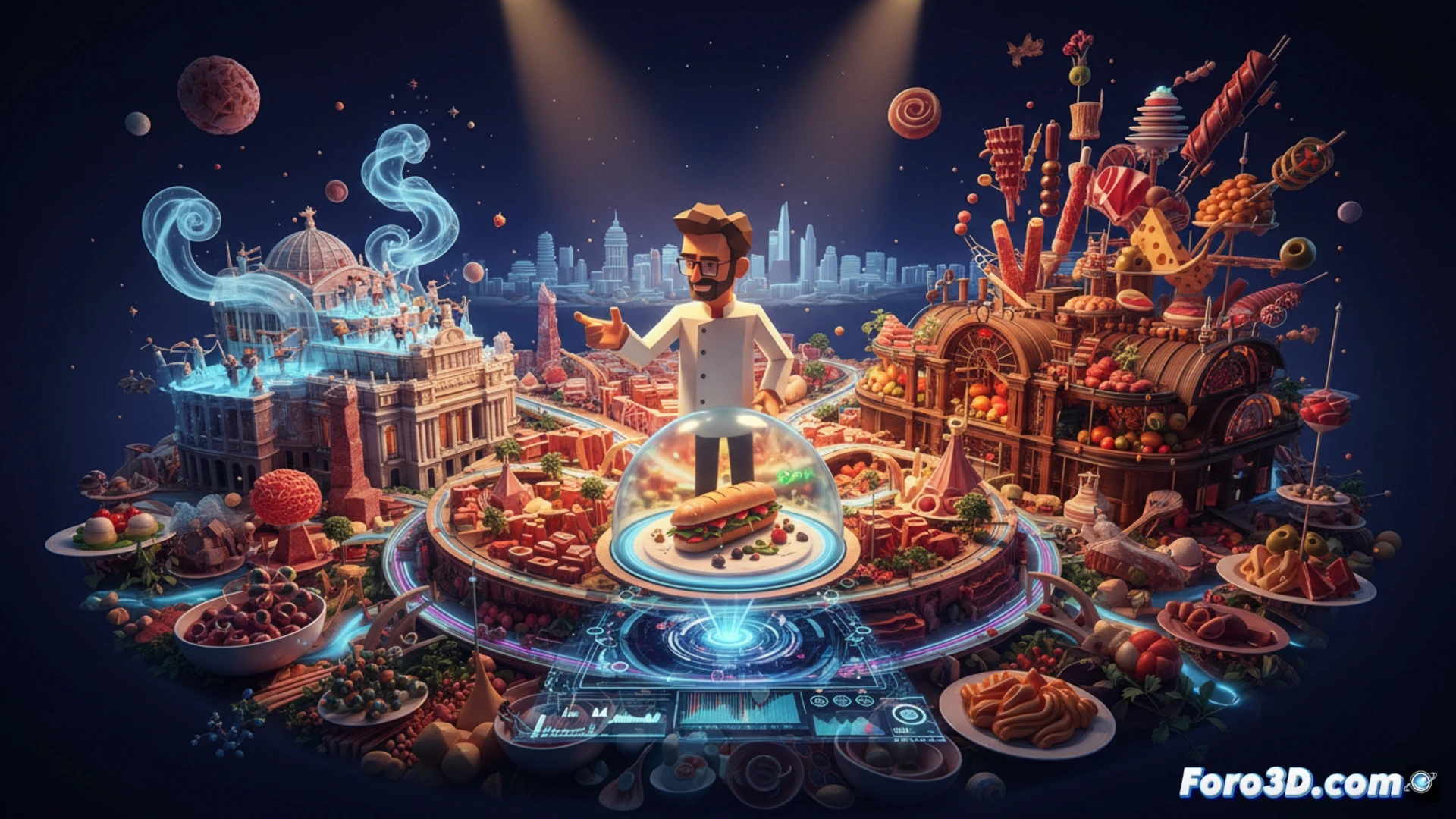
Chef Paco Roncero has created a sentimental map of Madrid that transcends urban geography to become an immersive digital scenography. This three-dimensional modeling does not seek to locate streets, but to reconstruct emotions and flavors. From the Teatro Real to the Mercado de San Miguel, each point is a set that narrates the evolution of a culinary artist. We analyze how this 3D representation technique can revolutionize the creation of theatrical gastronomic experiences and interactive tourist routes, merging memory, cuisine, and the city.
3D Modeling as Scenography of Culinary Memory 🍽️
The digital recreation of spaces such as Taberna de Antonio Sánchez or NH Príncipe de Vergara requires a level of scenographic detail befitting a film set. In Roncero's map, polygonal modeling is not limited to architecture; it captures the sunset light in Plaza de Santa Ana and the texture of the tiles in Barrio de las Letras. For show designers, this technique allows the construction of virtual stages where gastronomy acts as the main script. Each venue becomes a set that the diner-explorer can traverse, activating sensory narratives through precisely rendered points of interest. The practical application is immediate: creating immersive routes where 3D scenography synchronizes the chef's story with the aromas and flavors of each stop.
From the Digital Set to the Palate: The City as a Stage 🎭
Parque del Retiro or Teatro Real, as reconstructed by Roncero, function as scenic backdrops for a play where the menu is the protagonist. This emotional cartography demonstrates that digital scenography is not only useful for film or video games; it is a powerful tool for theatricalizing the gastronomic experience. By modeling these spaces, the chef not only preserves his memory but also offers a visual script that other creators can adapt for culinary productions or themed events. The city of Madrid, digitized and emotional, becomes a grand theater where each bite is a scene.
How the emotional cartography of an urban space is translated into 3D coordinates for an immersive gastronomic experience.
(PS: lighting simulation always looks better than reality... like Tinder photos)