3D technology does not replace the craft of carpentry, but rather expands it. It allows for the creation of impossible fitting pieces, such as assemblies with complex geometries or rapid prototypes of hardware. For example: if you are missing a curved piece from an antique piece of furniture, you scan it and print it in resin or filament. Programs like Fusion 360, SketchUp Pro, or Blender are essential for modeling; Cura or PrusaSlicer for slicing.
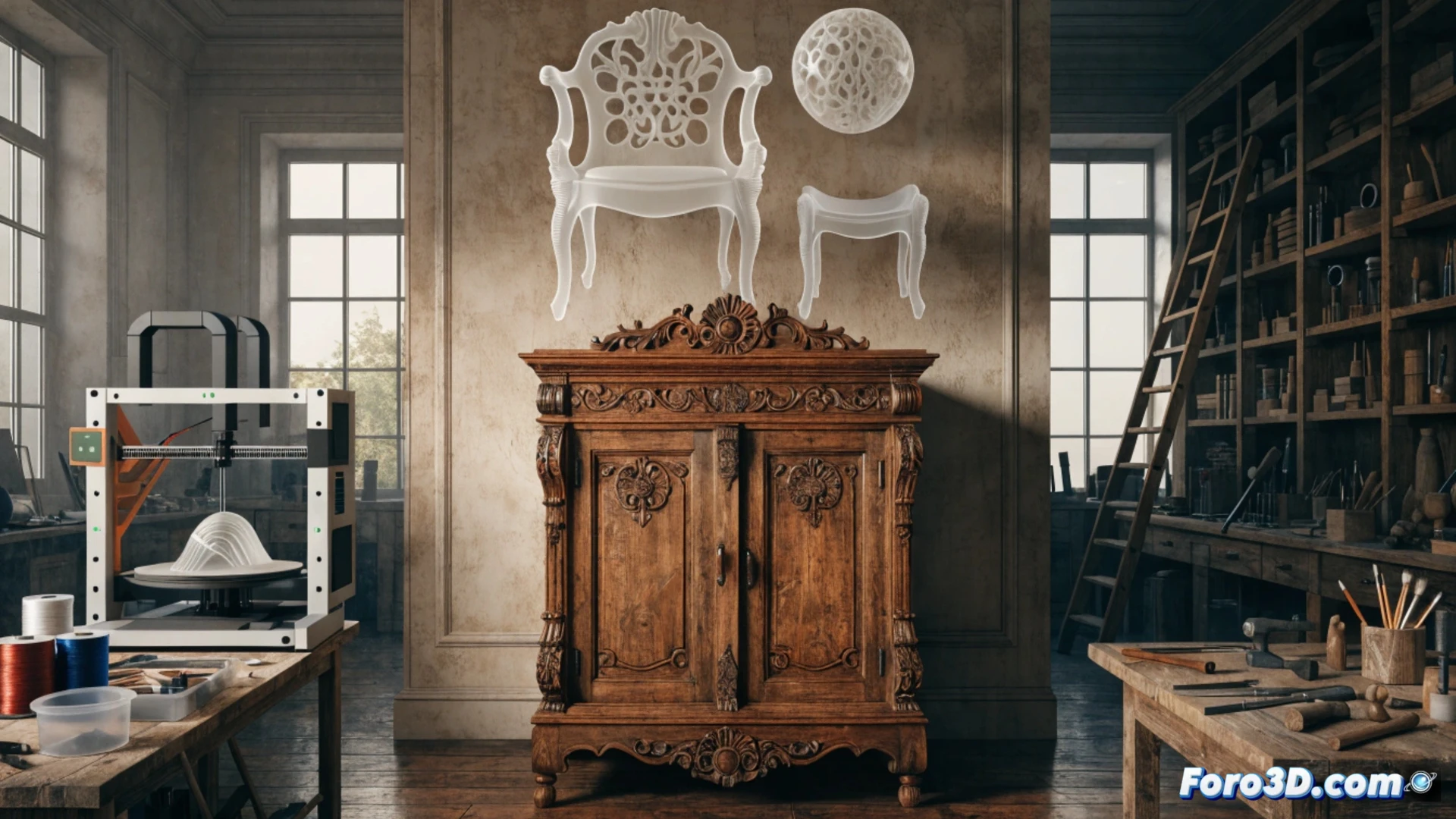
Parametric modeling and 3D milling for custom parts 🛠️
The workflow begins with a 3D scan (using an app like Kiri Engine or a structured light scanner) to capture the original piece. It is then refined in parametric software like SolidWorks or FreeCAD, adjusting tolerances to tenths of a millimeter. The part is manufactured on a CNC router or 3D printer with wood filament (PLA with wood fiber). For finishing, it is sanded and stained like real wood. This allows for replicating moldings or repairing broken legs without disassembling the entire piece of furniture.
The carpenter and the printer: a creaky friendship 😅
The problem is that your client asks for a solid oak chair and you show up with a piece printed in PLA that sounds like plastic. You explain that it's a prototype, but they are already calling their lifelong cabinetmaker. The worst part: the printer jams just as you are about to print the armrest, and you spend two hours cleaning the nozzle with alcohol while thinking that being a carpenter was simpler when you only had to hammer nails.